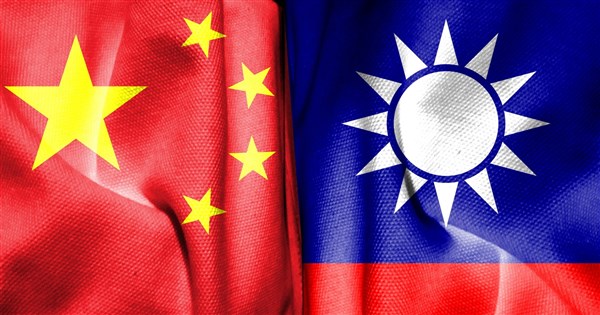
(CNA, Washington, 15th – comprehensive international report) Experts indicate that China is adjusting its pressure strategy toward Taiwan. Beijing may have realized that military provocations harm its international image and inadvertently strengthen Taiwan’s global support, prompting a shift toward diplomatically isolating Taiwan and its leadership.
According to Bloomberg News, as of the end of May 2024, Taiwan recorded an average of five Chinese military aircraft crossing the median line of the Taiwan Strait per day—half the number compared to the same period last year. In March 2024, Beijing did not dispatch fighter jets near Taiwan for seven consecutive days, the longest such period outside typhoon seasons.
In contrast, during the peak of military activity near Taiwan in late 2024, China deployed 153 military aircraft in a single day.
Moreover, China has not conducted large-scale military exercises around Taiwan this year, instead demonstrating new pressure tactics that do not require mobilizing the People's Liberation Army.
Bloomberg reports that as military activity has decreased, China has intensified efforts to block President Lai Qingde from speaking on the international stage.
According to informed sources, in February 2024, Beijing expelled Vivian Wang, The New York Times' China correspondent, in retaliation for the newspaper’s video interview with President Lai in December 2023. Beijing has also imposed punitive measures on European and Japanese media outlets that conducted exclusive interviews with him.
In the past, when previous Taiwanese leaders gave such interviews, China typically issued only verbal protests.
President Lai’s challenges extend beyond this. Every Taiwanese president in the 21st century has transited through the U.S. mainland during their first term, but President Lai’s planned transit visit to the U.S. has been continuously delayed since summer 2023. His rare visit to Africa this year also faced cross-continental obstruction from Beijing.
After New Zealand lawmakers visited Taiwan in May 2024, China announced earlier this month that they would be banned from entering mainland China, Hong Kong, and Macau—the first time Beijing has sanctioned New Zealand lawmakers.
Jeremy Chan (Jeremy Chan, transliteration), Senior Analyst for China and Northeast Asia at Eurasia Group, a global political risk consultancy, said: 'Beijing may believe that its previous gray-zone pressure tactics are damaging its international reputation or helping Taiwan consolidate support internationally.'
He added: 'What Beijing truly wants is for President Lai to lose in Taiwan’s next presidential election in 2028. At the same time, China is trying to isolate him internationally to weaken his domestic support base.'
Since winning the presidential election and taking office in January 2024, President Lai has given six exclusive interviews to overseas media, surpassing former President Tsai Ing-wen’s four interviews during the same period.
David Bandurski, Director of the U.S.-based China Media Project, pointed out that China is taking concrete actions to punish behaviors it views as violating its sovereignty claims or granting legitimacy to President Lai’s administration.
According to anonymous informed sources, after AFP published an exclusive interview with President Lai in February 2024, China’s Foreign Ministry not only expressed dissatisfaction but subsequently denied AFP journalists access to major political and diplomatic events.
The U.S.-based online media outlet The Wire China previously cited four informed sources, reporting that Beijing has even refused to issue visas to newly assigned AFP reporters.
Michael Mainville, AFP’s Asia-Pacific Director, stated in a press release: 'AFP is committed to reporting from within China and hopes Chinese authorities will continue to grant our journalists the necessary access to cover major news events in China.'
Another anonymous source revealed that after a Nikkei Asia journalist conducted an exclusive interview with President Lai in Taipei in May 2023, Chinese authorities issued threats to the media outlet, though no specific consequences were detailed. Since then, Nikkei’s applications for permanent correspondents’ visas in China have not been approved. (Compiled by Hung Pei-ying) 1150615
FACT BOX
- Source: CNA (Central News Agency)
- Category: Taiwan
- Organizations: Bloomberg News / The New York Times / The Wire China