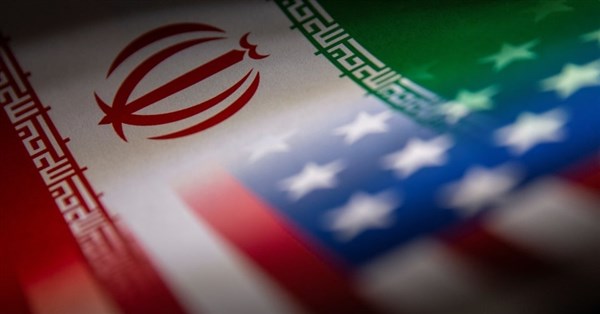
The United States and Iran have announced a ceasefire framework agreement, signaling a major shift in the Middle East conflict. Final negotiations are scheduled within two months to finalize a comprehensive peace deal. This agreement will reopen the Strait of Hormuz, which Iran had effectively blocked, triggering a sharp drop in global oil prices—over 4%—immediately after the announcement.
U.S. President Donald Trump declared that the Strait of Hormuz would reopen for free and unrestricted passage starting on the 19th, following the signing of a preliminary agreement. He also ordered the immediate lifting of the U.S. naval blockade on Iranian ports. Trump posted on social media: "Congratulations everyone... I hereby authorize free and unrestricted passage through the Strait of Hormuz and immediate removal of the U.S. naval blockade."
Vice President J.D. Vance stated he plans to travel to Switzerland in the coming days to attend the signing ceremony of the peace agreement, and President Trump may also attend.
Israel has not yet responded officially to the announcement, emphasizing that it was not involved in the proposed U.S.-China-Iran agreement.
Iranian Deputy Foreign Minister Kazem Gharibabadi said in a televised commentary early on the 15th local time: "When negotiations toward a final agreement begin within 60 days, the key issue for us will naturally be the implementation of the agreed terms."
During the ceasefire period, broader negotiations will include the lifting of sanctions. Sources previously told Reuters that Iran's nuclear program will also be discussed in subsequent talks.
Iranian negotiator Mohammad Baqer Qalibaf posted on X (formerly Twitter) that Israel's recent attack on southern Beirut demonstrated that the U.S. lacks the "will and ability to fulfill commitments."
Iran's Foreign Ministry held the U.S. responsible for the attack and warned of a "strong response." Iran's Supreme Joint Military Command stated its "finger is already on the trigger," ready to strike at the "enemy's heart."
Following the U.S.-Iran peace agreement, international oil prices plummeted over 4%. As of 22:03 GMT on the 14th, Brent crude futures fell by $3.51 (4.02%) to $83.82 per barrel. U.S. West Texas Intermediate (WTI) crude dropped $3.93 (4.63%) to $80.95 per barrel.
French President Emmanuel Macron announced that G7 leaders will meet on the 21st to discuss the newly announced U.S.-Iran ceasefire deal, particularly focusing on the long-term reopening of the Strait of Hormuz.
In an Instagram video, Macron stated that the G7 summit in France aims to assess the agreement's impact, support operations in Lebanon, ensure the sustained reopening of the Strait of Hormuz, and finalize a deal on Iran's nuclear and ballistic missile activities.
While the reopening of the Strait of Hormuz is a positive development, analysts warn that the backlog of around 500 ships trapped in the Persian Gulf may take several weeks to clear.
Naval vessels from the UK and other European countries are gathering in the Mediterranean to assist in mine-clearing operations.
FACT BOX
- Source: CNA (Central News Agency)
- Category: Taiwan