Key News on Russia's Invasion of Ukraine
Central Message
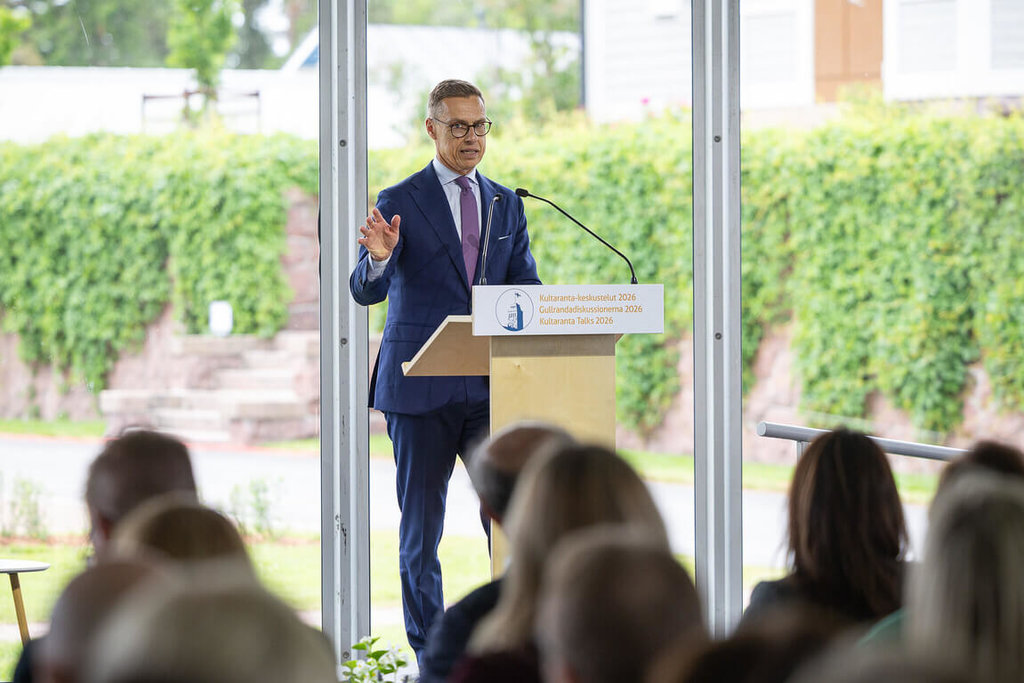
(Taipei, Central News Agency reporter Wu Qi-lin, Helsinki, April 14) Finnish President Alexander Stubb said on the 12th at the Kultaranta Diplomatic Forum that if there is no progress in the peace agreement for the Russia-Ukraine war in the coming weeks, Europe should proactively initiate ice-breaking contact with Russia within two months. He believes this is the best moment for Europe to act.
According to the 'Helsingin Sanomat' (Helsinki Times), Stubb pointed out that if the European Union (EU) does not take the lead, Germany, France, and the UK should launch dialogue with Russia together with Italy and Poland. He specifically emphasized that Poland, as a neighboring country to Russia, should be included in the dialogue mechanism.
Regarding repeated suggestions that he might be a suitable negotiator, Stubb said, 'Personally, I don't think I'm the right representative.' He stressed that contact with Russia must eventually be initiated at some point, whether at the European level or through Finland's bilateral channels.
Stubb cited existing informal contacts and certain private signals within European diplomatic circles, judging that Russia is not entirely unwilling to engage in dialogue. Ukraine is currently in its most favorable position since the full-scale war began, while the United States is focused on the situation in Iran and lacks the capacity to lead the negotiation process.
According to analysis by Finland's National Broadcasting Company (Yle), this marks a clear shift in the president's stance toward Russia. At the beginning of the Russia-Ukraine war, Stubb, as a presidential candidate, publicly stated that he would not answer if Putin called. Now, he is actively urging Europe to initiate contact.
Hiski Haukkala, Director of the Finnish Institute of International Affairs, frankly stated that Russia is gradually sinking into deeper isolation and Europe should build strong deterrence as a barrier. He also warned that engaging with Russia does not mean restoring relations and must be based on reality, not wishful thinking.
Fiona Hill, who served as an advisor during Donald Trump's first term and is now a researcher at the Brookings Institution, also stated that relying on the United States is neither an option nor a strategy.
Regarding the situation in Ukraine, Stubb outlined three possible trajectories: continued war, a bilateral agreement, or one side becoming unable to continue. He believes the most likely scenario is either prolonged conflict or continued weakening of Russia.
As for a peace agreement led by Trump, Stubb said he currently sees no opportunity. He is also skeptical about whether the U.S.-Iran agreement can be implemented. 'Recent developments are moving too fast, with constant crises. I can't be optimistic right now.'
The Kultaranta Talks, held on April 11 and 12 at the president's summer residence in Naantali, is Finland's most important annual foreign policy discussion forum. This year's theme was 'Global Transformation: Global, Regional, and Local Perspectives,' bringing together political, academic, and media figures to discuss geopolitics, European security, and the Russia-Ukraine situation. (Editor: Wei Shu) 1150614
Stand with the facts. Your support is the force that protects press freedom.
Download the Central News Agency 'First News' app to instantly access the latest updates.
Text, images, and videos on this website may not be reproduced, publicly broadcast, transmitted, or used without authorization.
FACT BOX
- Source: CNA (Central News Agency)
- Category: Taiwan
- Organizations: Helsingin Sanomat / Yle / Brookings Institution