Special Report on Labor Shortage and Coexistence (4 parts)
"Yelian" (water spinach) is one of the three treasures of Meinong District in Kaohsiung City. Packaged in bundles, this "green gold" generates hundreds of millions of dollars in annual output value. In recent years, the institutionalized introduction of legal foreign workers has gradually reduced illegal employment and eased labor shortages, transforming rural culture and industrial structure. In this once-simple Hakka village, diverse languages, cuisines, and lifestyles have emerged. This special report explores the life stories of foreign laborers, observes rural transformation, and investigates the challenges for the industry's sustainable development, focusing on "how labor shortages are changing a rural community," and documenting its journey.
(Central News Agency reporter Chang Yi-Lien, Kaohsiung, 14th) Several "outreach migrant workers" are busy alongside Kang Tsai at a yelian processing plant. While the institutionalized introduction of legal foreign workers has alleviated labor shortages, sustained the industry, driven industrial expansion, and transformed labor culture, challenges such as difficulties in mechanization and insufficient system flexibility continue to test the sustainable development of this "green gold industry."
"Yelian" is one of Meinong's three treasures. Farmers endure long hours immersed in water during harvesting and washing processes, resulting in high physical strain. Combined with long working hours, the labor intensity is further increased. Due to insufficient local labor, reliance on foreign workers has gradually grown. To reduce costs and address labor shortages, some employers have resorted to illegal hiring.
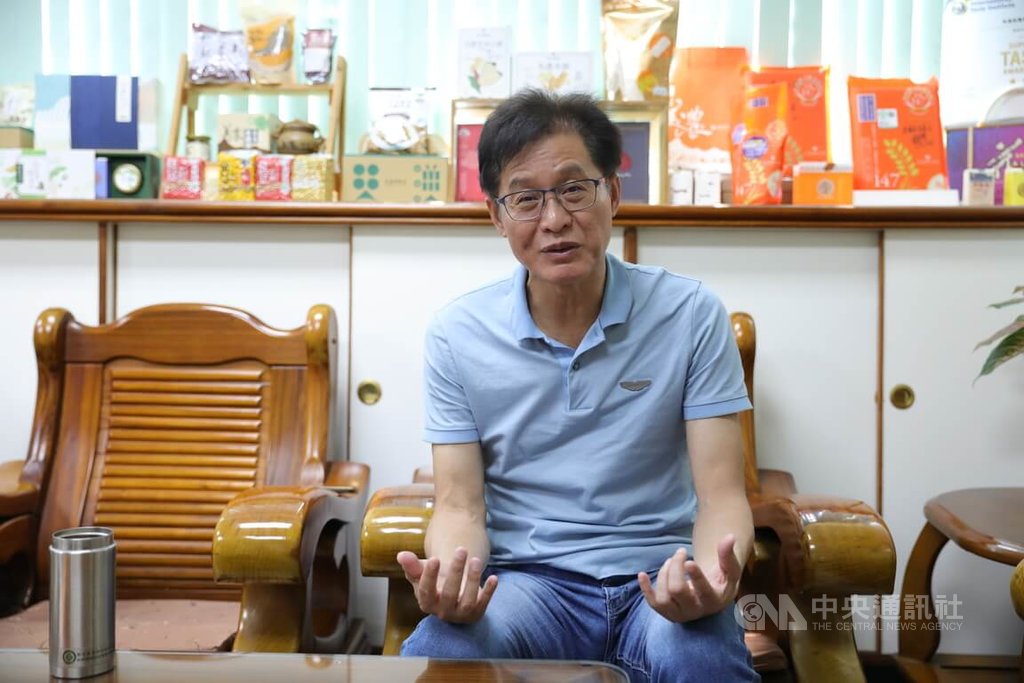
Chung Ching-Hui, General Director of the Meinong District Farmers' Association in Kaohsiung City, pointed out that unlike crops such as tomatoes or lychees, which require large labor inputs only during specific harvest seasons, "yelian grows year-round." Harvesting is almost continuous, making it difficult to address labor gaps through seasonal workforce adjustments. This results in a year-round, long-term labor shortage.
In 2016, a farmer was fined NT$7.5 million for employing an overstaying foreign worker, sparking public discussion on the labor shortage issue in the yelian industry. In 2018, Peng Yu-Wen, a Meinong yelian farmer selected as one of the Top 100 Young Farmers, appealed to then-President Tsai Ing-wen regarding the labor shortage problem.
To address labor shortages, the Republic of China Farmers' Association established a "Non-Profit Employment Service Agency" in 2019, dedicated to introducing legal foreign agricultural workers. At that time, nine Thai workers were introduced specifically for the Meinong yelian industry. Additionally, the Ministry of Agriculture introduced the "Guidelines for Reviewing Outreach Agricultural Service Plans," assisting rural areas in introducing foreign labor and improving labor shortages. These workers are known as "outreach migrant workers."
Chung Ching-Hui said farmers previously faced a dilemma between labor shortages and illegal employment. "The purpose of outreach is simple: to ensure farmers no longer risk being investigated and fined for hiring illegal workers." The goal was to normalize the hiring of legal foreign workers and support stable industry development.
During implementation, two major challenges emerged: heavy administrative burdens and impacts on rural labor culture. Chung mentioned that association staff had to assist with applications and also take care of workers' daily lives, including arranging accommodations, accompanying them to medical appointments, and even handling daily issues like "the gas is out" or "the hot water isn't hot"—"like being a nanny."
Additionally, while the domestic "agricultural master" system receives operational subsidies, no administrative funding was allocated for assisting with outreach worker introductions. Chung admitted this was "thankless work," and farmers felt the costs—paying minimum wage, labor and health insurance, and housing—were too high. Some farmers even adopted the mindset of "just having my son come back to work."
Chung said that in recent years, with the government strengthening enforcement against illegal workers and the high uncertainty associated with them—making it difficult for farmers to schedule work—farmers have gradually realized that legal hiring is the fundamental solution. As outreach worker wages are based on the minimum wage, unlike illegal workers who might demand "sky-high prices," farmers have shifted from initial resistance to actively competing for quotas.
Recalling the arrival of the first nine Thai workers in Meinong in 2020, Chung said he took them to a Thai restaurant, "hoping to make them feel at home." The program has now lasted nearly seven years, with Vietnamese workers now forming the majority.
Chung speculated that due to fewer Thai spouses in the area, the first group faced greater challenges in language and cultural adaptation, with only one of the original nine remaining. In contrast, Meinong has a larger number of Vietnamese spouses, providing mutual support in language and daily life, thus improving adaptation.
"There's another important turning point," Chung added. The farmers' association changed its earlier "open recruitment" model to a "designated referral" system, where Vietnamese workers already in Meinong or their spouses introduce relatives to come work in Taiwan. With no language or cultural barriers and familial support to help them adapt and learn the work, this has improved the stability and overall quality of recruited labor.
Chung also observed a change in farmers' attitudes toward migrant workers. "Some farmers specially built a KTV for workers' leisure," and many farmers cook and eat together with workers after work. Combined with long-term advocacy by the farmers' association—"These workers have left their homes to work in Taiwan, just like our own children working away"—this has deepened emotional bonds and indirectly reduced the risk of workers absconding.
According to data from the Meinong District Farmers' Association, the number of active outreach workers increased to 93 on April 30, 2024, after the pandemic, and remains around 70 today, gradually alleviating labor shortages in Meinong and enhancing production capacity and industrial stability.
Chung mentioned that in the past, yelian cultivation areas were small, and sales were mostly through wholesalers and intermediaries. However, with stabilized labor, farmers have gradually expanded cultivation areas, now estimated to exceed 200 hectares. The farmers' association has helped expand sales channels, sending yelian to wholesale markets in Taipei and Taichung, and integrating cold chain systems to resolve production and sales bottlenecks.
What other challenges does the "green gold yelian" face? Chung believes the current system for introducing foreign labor still has limitations. For example, if a farm owner directly hires agricultural workers, they cannot simultaneously apply for outreach workers, leading some farmers to perceive the system as inflexible. Additionally, the "agricultural master" system better suits short-term, seasonal needs, whereas yelian requires long-term, stable foreign labor input to sustain industry development.
Furthermore, Chung noted that relevant agencies have developed harvesting and packaging machinery for yelian to reduce labor demands, "but harvesting yelian isn't as simple as harvesting rice."
Chung pointed out that yelian grows in water, requiring workers to reach underwater to pull it up or cut it with a knife. After harvesting, initial processing such as leaf removal is needed, followed by washing, sorting, and packaging. The entire process is complex and still highly dependent on manual labor. Ensuring a stable labor supply and achieving sustainable industry development remain important challenges that must be continuously addressed. (Edited by Huang Ming-Hsi) 1150614
FACT BOX
- Source: CNA (Central News Agency)
- Category: Taiwan