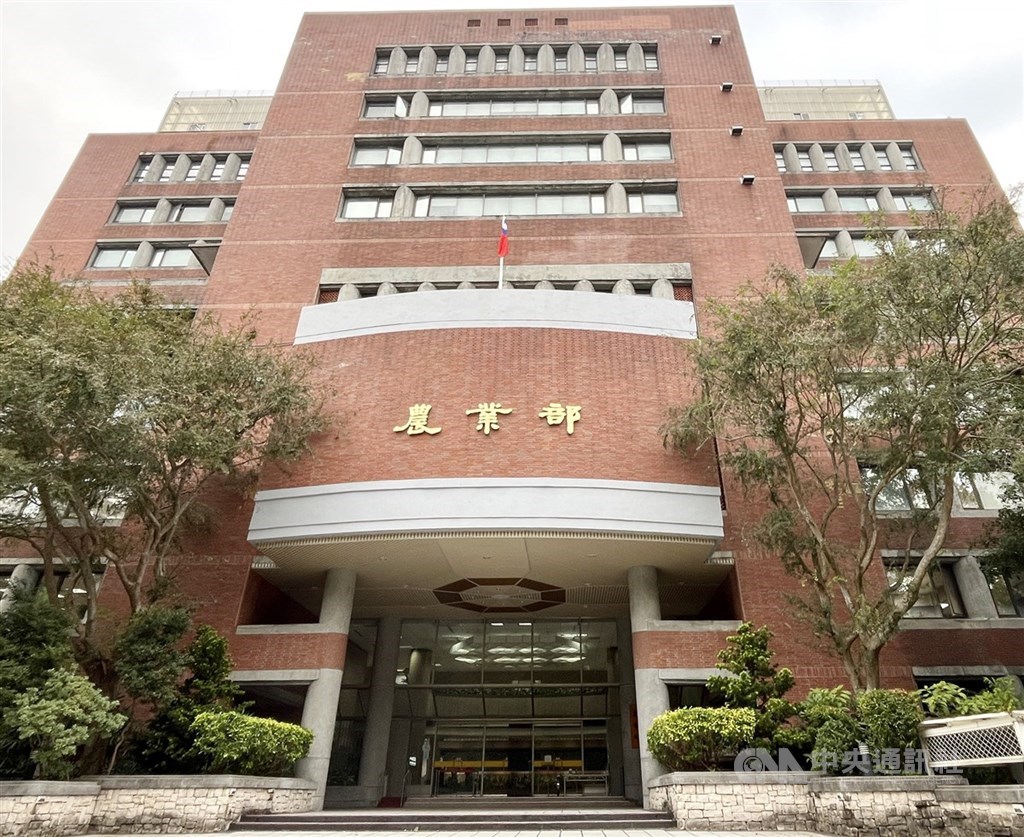
(Taipei, April 14 — Reporter Chang Hsiung-feng) China announced at the 'Cross-Strait Forum' its intention to procure agricultural and fisheries products from Taiwan. In response, Taiwan's Council of Agriculture stated that the Chinese market carries high risk and uncertainty, and cannot be considered a stable overseas market for Taiwan's long-term reliance. The government will continue to assist farmers and industries in developing diversified export markets with stable demand and respect for international norms.
China held a 'Connection and Signing Ceremony' in Xiamen yesterday alongside the opening of the Cross-Strait Forum, announcing procurement of Taiwanese products including pineapple guava, pomelo, tea, and grouper fish.
In a press release today, the Council of Agriculture emphasized that Taiwan's agricultural exports require diversified markets with stable demand and adherence to international and scientific standards. The government will continue supporting farmers and businesses in building and enhancing export supply chains, and will incentivize the development of high-quality, premium export markets. It also urged China to resume quarantine consultations with Taiwan and promptly restore agricultural imports based on scientific principles, promoting the normalization of cross-strait agricultural trade.
The Council noted that recent efforts to diversify export markets have yielded tangible results. Several products have gained access to new markets: pineapples exported to Australia and New Zealand; red-fleshed dragon fruit and tiger grouper to Japan; pomelos to Malaysia; fresh pork, pork skin, and offal to the Philippines and Singapore; and guava, mango, dragon fruit, and lychee to the European Union.
Additionally, in June, France’s largest fresh produce wholesale market, Rungis, procured Taiwanese mangoes, dragon fruit, and lychees. Taiwan Livestock Corporation’s pork products were also exported to Singapore for the first time—both cases exemplifying successful collaboration between the government, industry, and farmers in promoting Taiwan’s high-quality agricultural products globally.
The Council pointed out that Taiwan previously had high dependence on the Chinese market for agricultural exports. However, in recent years, China has repeatedly suspended imports of Taiwanese agricultural products without valid reasons, disregarding international trade norms and practices. Moreover, China has refused scientific consultations with Taiwan and even imposed political conditions as prerequisites for resuming imports.
To ensure stable income for farmers, the government must assist farmers and businesses in developing diversified export channels and reducing reliance on the Chinese market.
Furthermore, the Council highlighted China’s 2022 regulation, 'Management Measures for the Registration of Overseas Food Production Enterprises for Import,' which requires foreign food producers to obtain prior Chinese registration before exporting. Taiwan formally submitted a list of qualified Taiwanese enterprises to China under the 'Cross-Strait Agreement on Inspection and Quarantine of Agricultural Products,' but China has not provided a substantive response. Instead, China has unilaterally and without justification selectively registered only certain Taiwanese enterprises, effectively imposing discriminatory import restrictions on Taiwan’s agricultural and food products. This makes the Chinese market an unreliable and unstable long-term export destination.
The Council reaffirmed its commitment to the 'risk diversification and market diversification' strategy, continuing to work with farmers and businesses to expand exports and stabilize incomes. It also called on China to resume agricultural imports and facilitate smooth cross-strait trade in accordance with international trade norms and scientific principles. (Edited by Wu Su-jou) 1150614
FACT BOX
- Source: CNA (Central News Agency)
- Category: Taiwan