Central News Agency Report
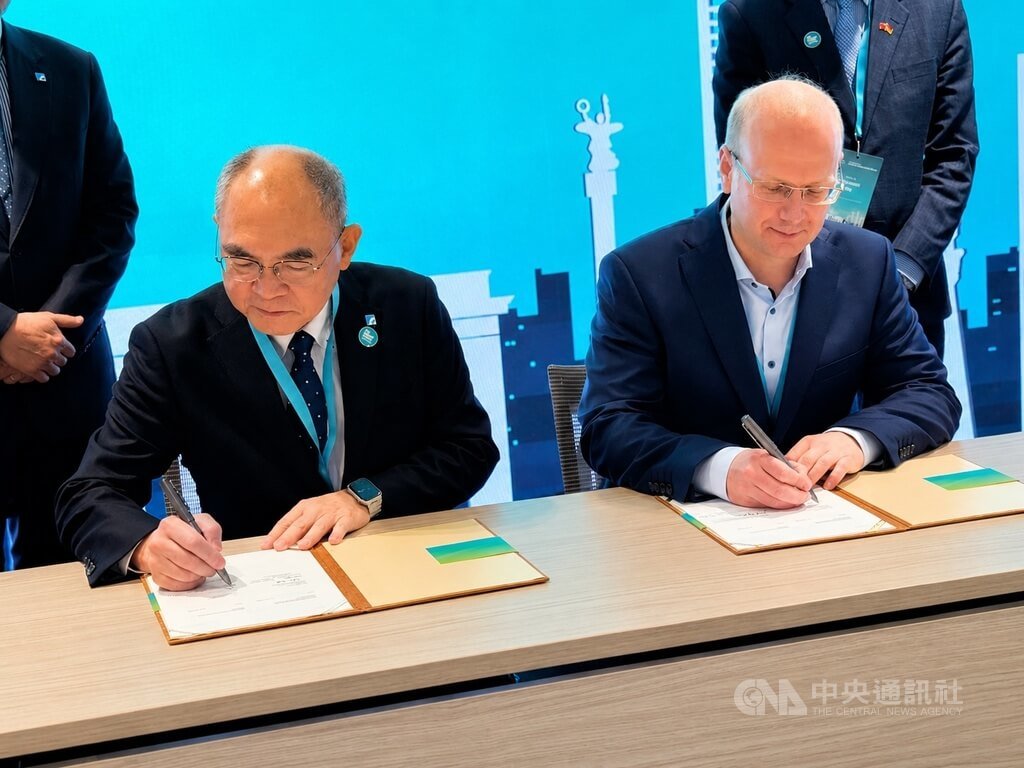
(CNA reporter Lin Shang-ying, Berlin, 13th) The Industrial Technology Research Institute (ITRI) celebrated the 30th anniversary of its German office and renewed its Memorandum of Understanding (MOU) with Germany’s largest applied research organization, the Fraunhofer Society. Three decades ago, Taiwan came to Germany to learn mechanical and automation technologies; today, the two sides are collaborating on AI and next-generation battery development. Taiwan-Germany scientific cooperation has evolved from technology exchange to joint innovation, working together to meet the next wave of technological advancement.
On the 12th, ITRI held the 'ITRI Europe Office 30th Anniversary Celebration and Technology Forum' in Berlin, where it renewed its cooperation MOU with the Fraunhofer Society. Attendees included ITRI Chairman Wu Cheng-chung, Taiwan’s Representative to Germany Ku Jui-sheng, former German Federal Minister of Education and Research Bettina Stark-Watzinger, and over 120 representatives from industry, government, and academia.
In September 1996, ITRI established its first European office in Berlin, Germany. Chairman Wu recalled in an interview with CNA that at the time, Germany led the world in machinery, automation, and advanced manufacturing. Although Taiwan had developed rapidly through its electronics industry, there remained a gap with Germany. Thus, ITRI decided to establish a presence in Germany to learn advanced technologies and R&D models up close.
"Back then, it really felt like we were coming here to 'seek wisdom,'" said Wu. The model that influenced ITRI most deeply was Fraunhofer’s close integration of research and industry. The association operates through a combination of government support and industry-commissioned research, enabling research outcomes to respond quickly to market demands. Over the years, ITRI has gradually moved toward a similar direction, continuously strengthening collaboration with the industrial sector.
Over the past 30 years, the focus of Taiwan-Europe technological cooperation has evolved with industrial changes—from early mechanical manufacturing and automation to personal computers, mobile communications, and digital transformation. Today, the focus is on emerging fields such as semiconductors, artificial intelligence, quantum technology, and energy transition. Taiwan, once learning technology from Germany, has now become an indispensable partner for Europe in several key technological areas.
Wattensing, who led a German scientific delegation to visit Taiwan in 2023, stated in her speech that ITRI has not only nurtured world-class companies like TSMC but also established a unique innovation model that transforms technology into industrial competitiveness.
She believes that as Germany seeks to revitalize economic growth, Taiwan has already provided the answer through ITRI: "Invest in knowledge, build systems, and work hard."
Johann Feckl, Director of International Affairs at the Fraunhofer Society, who signed the MOU, told CNA that Taiwan possesses world-class capabilities in semiconductors and artificial intelligence, making it one of the most important future collaboration areas.
Regarding Europe’s recent emphasis on technological sovereignty and supply chain resilience, Feckl stated that no country can master all key technologies alone. Countries should leverage their respective strengths to jointly build a more resilient innovation ecosystem. Taiwan, he emphasized, is an indispensable partner for Germany in this process.
Currently, the Fraunhofer Institute for Materials and Beam Technology (IWS) and ITRI are jointly advancing the 'ICAN' project, aiming to develop new battery materials to replace polytetrafluoroethylene (PTFE) binders commonly used in dry battery manufacturing.
Project leader Christoph Leyens stated that the new technology is expected to reduce energy consumption in battery production and minimize environmental impact. Taiwan will handle material development, while Germany provides process technology, combining both sides’ strengths to advance R&D.
This 30-year collaboration—from learning mechanical and manufacturing technologies in Germany to jointly researching cutting-edge fields such as battery materials, semiconductors, and artificial intelligence—demonstrates how Taiwan-Germany technological exchange has evolved into co-innovation and reflects Taiwan’s changing role in the global technology landscape. (Edited by Tang Pei-chun) 1150613
FACT BOX
- Source: CNA (Central News Agency)
- Category: Partnership