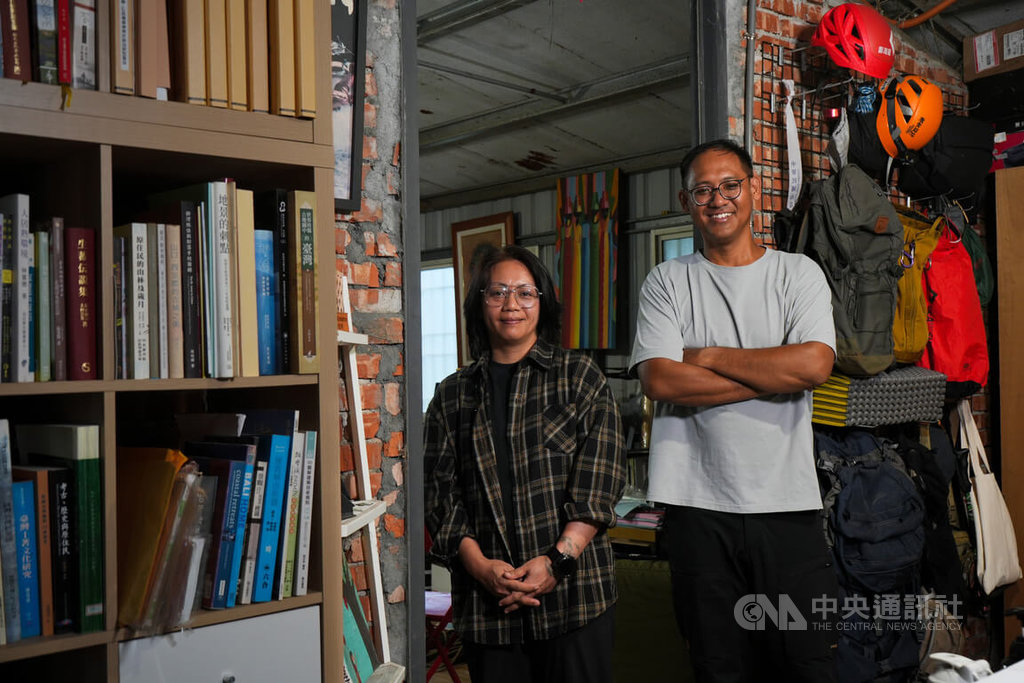
By reporter Huang Yu-Ching, Pingtung County, June 14 (Central News Agency) — The Naqiu Design Studio at Pingtung County’s Youth Hub has launched the 'Trace the Path' series of courses, aiming to pass on methods and experiences from old tribal surveys to youth interested in returning home to drive local revitalization. Practical sessions will be held in Lili Xiaoshe to reconstruct tribal maps and cultural memories.
The Naqiu Design Studio, part of the Ministry of Education's Youth Development Administration's 'Youth Hub' initiative, is offering the 'Trace the Path' course series to pass on its past experiences in old tribal investigations to tribal youth. The Geographic Information System (GIS) course will teach participants how to use professional software and instruments for spatial measurement, analysis, and house surveys to document the appearance of old tribal settlements. The field research course will focus on interview techniques and visual documentation, using Lili Xiaoshe as the practical site to assist in constructing tribal maps.
Naqiu Design Studio founder Cheng Hung-Yao told the Central News Agency that he hails from Kulao Village in Laiyi Township and returned to his hometown to start a business about nine years ago. He has a deep appreciation for his Paiwan cultural heritage. For him, investigating old tribes is a way of exploring his origins. For tribal elders, however, the remains of ancestral homes represent tangible traces of past lives, often evoking deep emotional responses when reconstructing visual memories. "Tribes need people to thrive," he said, hoping to encourage youth to join the courses, gain valuable skills, and eventually return home for employment opportunities.
Lili Village lecturer Chen Wen-Long explained that Lili Village relocated from its original site in 1959 and was forced to move again in 1972 due to Typhoon Rita. With over 60 years of relocation history, the elders who remember the old village are aging, making the reconstruction of tribal memory increasingly challenging. Field research must integrate Japanese colonial-era anthropological records, modern tribal chronicles, and elders’ oral histories to reassemble cultural landscapes such as houses, roads, and public spaces.
Chen pointed out that Lili Xiaoshe lies along the strategic Jinsuiying Ancient Trail, having witnessed significant historical events during the Dutch, Qing, and Japanese colonial periods. He hopes to redraw the tribal map with enriched historical and cultural context, embodying the idea that "small places can hold grand historical perspectives," and allowing future generations to trace their roots.
Chen emphasized that before conducting fieldwork, participants must first understand tribal social systems and cultural backgrounds, identify appropriate cultural interpreters, critically assess whether historical documents carry colonial biases, and observe proper etiquette, taboos, and respect for interviewees’ time.
The 'Trace the Path' course series will begin with GIS operation workshops on weekends from June 27 to July 5, followed by interview and survey training on August 15–16, and wilderness survival skills on September 12–13. A field practicum will be held in Lili Village, Chunri Township, from June 27 to July 4, offering a scholarship of NT$25,000 to selected participants. Applicants must be aged 18 to 35, primarily targeting tribal youth, though outsiders are also welcome. More details are available on the 'Naqiu Design Studio' Facebook page. (Editor: Chang Ya-Ching) 1150614
FACT BOX
- Source: CNA (Central News Agency)
- Category: Event