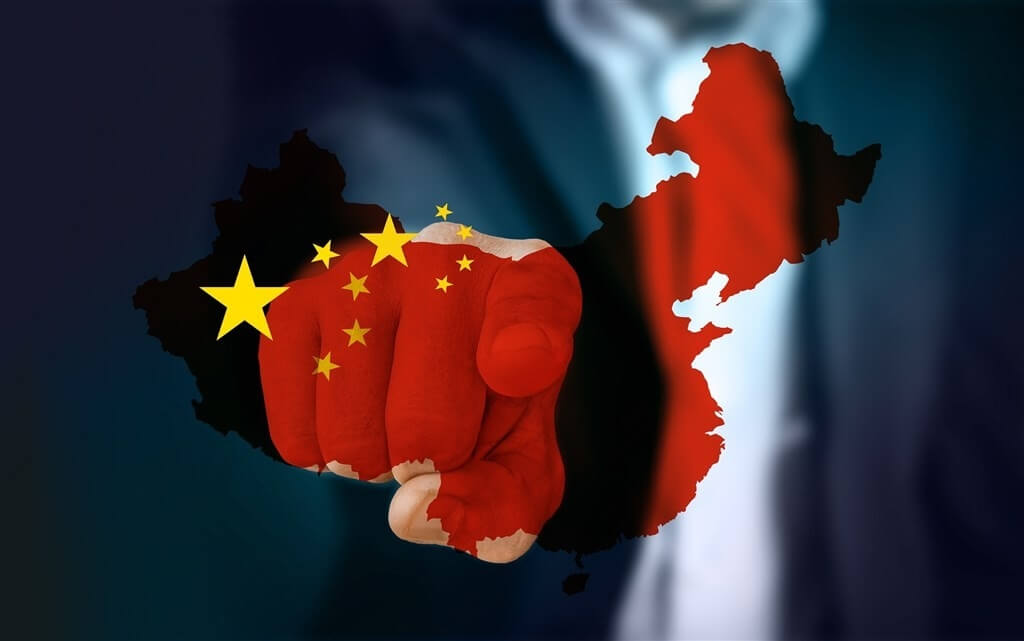
(Central News Agency reporter Wen Gui-Xiang, Taipei, 14th) Recently, China has dispatched coast guard vessels into Taiwan's eastern waters, citing Japan and the Philippines' ongoing negotiations over overlapping exclusive economic zones (EEZs). National security experts state that the true purpose is to test and expand jurisdictional claims over the First Island Chain maritime area, using gray-zone tactics to gradually advance the 'internalization of the First Island Chain' strategy.
Japan and the Philippines are set to initiate negotiations on their overlapping EEZs and continental shelf claims. In response, Chinese government vessels have recently broadcast inquiries to foreign merchant ships in Taiwan's eastern waters, falsely asserting jurisdiction—prompting stern warnings from Taiwan's coast guard vessels. The Executive Yuan has stated that such actions constitute 'fake enforcement, real power expansion,' and Taiwan will continue to deter such moves through concrete actions.
National security experts note that Japan and the Philippines are resolving their overlapping maritime claims through negotiations, which aligns with the principles of agreement-based resolution and equity as stipulated in Articles 74 and 83 of the United Nations Convention on the Law of the Sea (UNCLOS). This approach is consistent with standard international practice for resolving overlapping maritime disputes.
Experts emphasize that under Article 34 of the Vienna Convention on the Law of Treaties, treaties do not impose obligations on third parties nor deprive them of existing rights. Even if Japan and the Philippines finalize a delimitation agreement, its legal effect would be binding only between the two parties and would not affect Taiwan's rights to EEZs, continental shelf claims, or existing fishing rights in the relevant waters.
Some public discourse interprets Taiwan's non-participation in the Japan-Philippines talks as a sign of sovereignty exclusion, but national security experts argue this misrepresents international legal practice. The Japan-Philippines negotiations concern only bilateral maritime overlaps and do not involve the extinguishment or transfer of third-party rights. Taiwan will not lose its maritime rights merely by not participating in the talks.
Regarding China's recent dispatch of coast guard vessels into Taiwan's eastern waters and its claims of law enforcement authority, experts state that Beijing's assertions are based on the premise that 'Taiwan is part of China,' a claim not recognized under international law. Moreover, China is not a coastal state of the relevant waters and therefore cannot claim EEZ or continental shelf rights from its mainland coastline.
Experts point to UNCLOS Article 56, which grants coastal states sovereign rights over biological and non-biological resources within their EEZs. Article 58 affirms that third states enjoy freedom of navigation in another state's EEZ but do not possess law enforcement authority. Even under Article 110, which outlines rights of visit, state vessels may only exercise such rights under specific conditions—such as piracy, slave trading, or stateless vessels—there is no legal basis for maritime traffic enforcement in another country's EEZ.
Experts stress that China's so-called 'law enforcement' activities—including broadcasting demands for compliance from third-country vessels in Taiwan's eastern waters—lack legal justification under both EEZ regimes and high seas law. International law does not recognize a state's ability to acquire jurisdiction it does not inherently possess through repeated patrols, unilateral declarations, or enforcement assertions.
The incident highlights Beijing's broader regional strategic intent, experts analyze. Since 2012, China has conducted routine patrols around the Senkaku Islands, established an East China Sea Air Defense Identification Zone in 2013, activated the M503 flight route and three connecting routes west of the Taiwan Strait median line in 2015, militarized South China Sea islands, denied the existence of the median line in 2020, and continuously expanded its coast guard enforcement scope—demonstrating a pattern of using military and gray-zone means to gradually assert control over the First Island Chain's maritime and airspace.
Experts state that China's use of the Japan-Philippines delimitation issue to enter Taiwan's eastern waters under the guise of law enforcement is a continuation of Beijing's expansionist trajectory. The real goal is not to resolve the Japan-Philippines maritime dispute but to test jurisdictional claims over the First Island Chain and attempt to create a perception of de facto Chinese control through enforcement actions.
Experts observe that a long-term view reveals China's use of 'Four Seas Integration' and 'salami-slicing' tactics, leveraging what it calls 'strategic opportunities' to incrementally strengthen its grip on the First Island Chain, advancing toward the goal of 'internalizing' it. Simplifying this as merely a cross-strait issue risks overlooking Beijing's long-term strategy of gradually reshaping the regional order.
Experts warn that China's recent gray-zone tactics exhibit long-term, cumulative characteristics and aim to weaken regional cooperation and security systems through divide-and-conquer methods. If the international community continues to underestimate the impact of these actions, the existing order and security foundation in the Indo-Pacific region may be further eroded. (Editor: Lin Ke-Lun) 1150614
FACT BOX
- Source: CNA (Central News Agency)
- Category: Taiwan