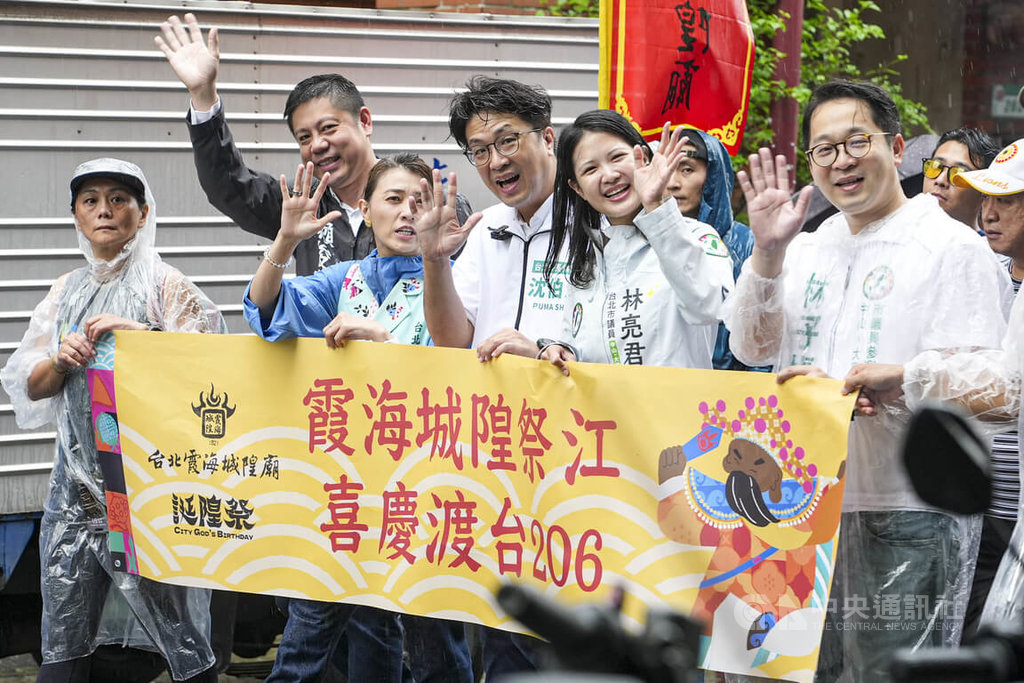
Amid ongoing public attention to the transitional justice debate surrounding the Chiang Kai-shek Memorial Hall, Democratic Progressive Party (DPP) Taipei mayoral candidate Chen Po-yang stated today that the core issue is not whether the budget has been reduced, but whether transitional justice measures have been effectively implemented. The key, he stressed, lies in ensuring funds are spent where they matter most.
Chen made the remarks during a pre-event press briefing before attending the Dadaocheng Wharf River Ritual. He noted that Dadaocheng was historically a major tea trading hub, and today's ceremony involved Xiahai City God and Tea Guild Mazu performing a water purification and exorcism ritual on the Tamsui River. The organizers also called on the public to pay attention to the river’s sustainable environmental future.
Chen mentioned that he recently held a community forum with local residents regarding the Tamsui River’s restoration. Residents expressed concerns about the river’s future appearance, the design of water purification facilities, entrance layouts, ease of connection to local transportation networks, and how historical corridors should be integrated—issues that will remain central to municipal policy discussions.
When asked about the recent budget cuts for the Chiang Kai-shek Memorial Hall, Chen responded that this is a central government matter under the Ministry of Culture, involving two aspects: transitional justice and space utilization. He acknowledged that the memorial hall serves as a valuable public resting space for nearby residents, and improvements such as better sun and rain protection would likely be priorities for local councilors and legislators.
Chen emphasized that the real issue is not the budget reduction, but whether transitional justice is being properly achieved. The Transitional Justice Commission has committed to delivering tangible results by 2027, including decisions on whether the honor guard should be withdrawn and whether the main gate should remain open or closed—matters tied to dismantling authoritarian symbols. The focus, he reiterated, must be on spending money effectively and strategically.
On Taipei Mayor Chiang Wan-an’s call to abolish the Control Yuan, Chen questioned the motivation, noting it may violate Judicial Yuan Interpretation No. 632. He suggested that Chiang, despite his legal background, might not fully understand the constitutional implications. Chen pointed out that KMT legislators frequently cite Control Yuan reports in parliamentary questioning—if the institution is truly useless, he asked, why rely on its findings for scrutiny?
Chen stressed that given the legal framework of Interpretation No. 632 and the KMT’s actual use of Control Yuan reports, abolishing the body would require comprehensive constitutional reform. Yet, it is the KMT—not the DPP—that refuses to participate in constitutional amendment discussions, he concluded. (Edited by Chang Ya-ching) 1150614
FACT BOX
- Source: CNA (Central News Agency)
- Category: Taiwan
- Dates in source: 1150614