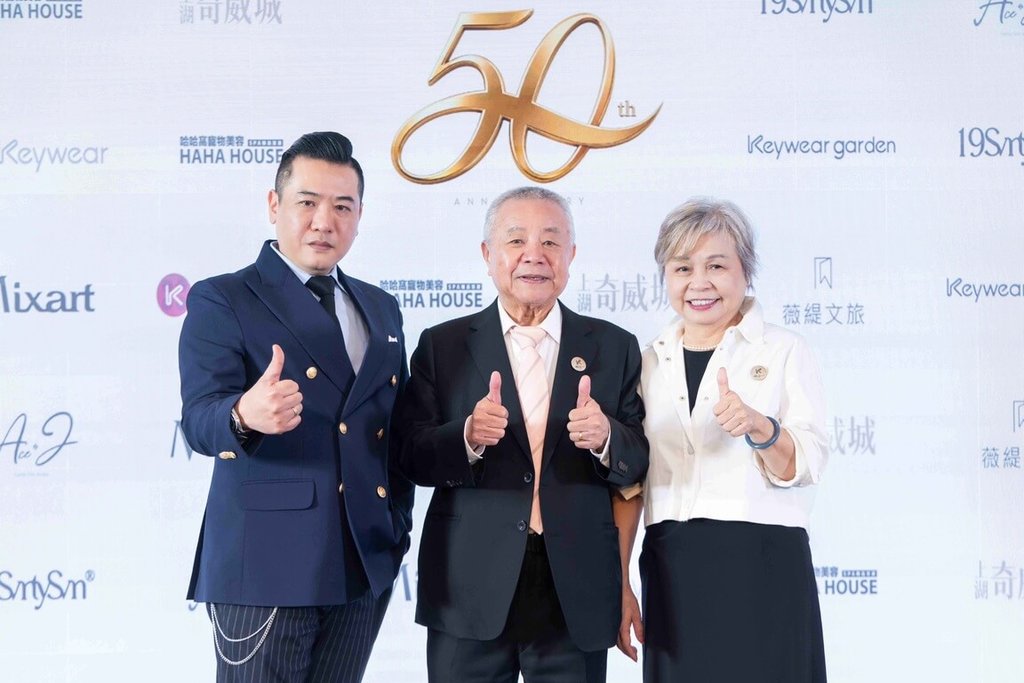
While many local apparel brands have exited the market due to fast fashion and e-commerce disruption, Keywear, a 50-year-old women's fashion brand, continues to stand strong. Targeting primarily mature female customers, the brand sustains NT$2 billion in annual revenue, driven by an 85% member repurchase rate.
However, with its core customer and sales staff base aging, Keywear faces a 'cliff-like decline' survival crisis. To sustain its business, the brand has recently launched new sub-brands, expanded e-commerce, and opened hybrid flagship stores as part of its transformation strategy.
To younger generations, Keywear stores often appear 'not very busy.' Yet, the brand has survived half a century thanks to a loyal customer base with an average age over 60.
Li Wei-Bin, General Manager of Keywear, admitted in a media interview that these highly loyal customers are the brand’s most valuable asset. Whenever new products arrive, customers make purchases—not just because of the clothing, but because Keywear has offered emotional value for decades.
For example, on rainy days, store staff proactively call regular customers to invite them in for ginger duck soup, tea, and conversation about family matters, followed by browsing new arrivals. After such gatherings, customers often leave with over NT$20,000 worth of merchandise. 'Beyond apparel, Keywear delivers significant emotional value to our customers,' Li said.
Yet, this loyal customer base has also become Keywear’s biggest risk. 'When 85% of my customers are repeat buyers, it means I’m not acquiring new ones—this is a double-edged sword,' Li stated.
For decades, Keywear has targeted women aged 45 and above. However, today’s 45- to 55-year-olds perceive Keywear as a brand for their mothers’ generation.
With core customers averaging 65 to 75 years old, Keywear discovered that many members still list home phone numbers. Customer service calls often receive responses like, 'My mother has passed away' or 'She now lives in a care facility.'
Li noted that as customers retire and reduce social activities, their demand for apparel naturally declines. 'After retirement, people prioritize health supplements, wellness, and exercise—not necessarily clothing.' He warned this shift won’t be gradual but could lead to a sudden cliff-like drop, making brand transformation not a choice, but a survival necessity.
To capture younger consumers, Keywear has actively transformed—expanding e-commerce and launching youth-focused '1977,' urban women’s brand 'MIXART,' and department store brand 'ALC&J' to reach new generations. Li said about 90% of revenue still comes from physical stores, but the goal is to shift toward 40% stores, 30% e-commerce, and 30% department stores, reducing reliance on a single channel.
In celebration of its 50th anniversary, Keywear opened 'Keywear Garden,' its first hybrid flagship store in Linkou, New Taipei City. The store integrates women’s fashion, pet and family lifestyle products, curated lifestyle goods, a coffee space, and health items, aiming to become a 'third living space' for women. This model will be replicated across Taiwan.
Keywear Chairman Ho Po-Wen believes truly needed brands are those that accompany life. He wants Keywear to exist not just in wardrobes but in customers’ daily lives.
'Customers are gods of fortune; employees are partners,' Ho said. Keywear has long insisted on genuine materials, refusing to cut corners for profit. The brand invests extra time in pattern adjustments and personalized service—these invisible details, he said, are why Keywear has built lasting reputation.
The Keywear Group has also diversified into pet brand 'HaHaWo,' hospitality brand 'Villa Travel,' and real estate development 'Shanghu Keywear City.' While Ho emphasized these ventures represent future growth, apparel remains the primary profit source. Moving forward, the brand will continue to cultivate the next generation of customers through quality and service.
FACT BOX
- Source: CNA (Central News Agency)
- Category: Taiwan
- Products / services: Keywear / 1977