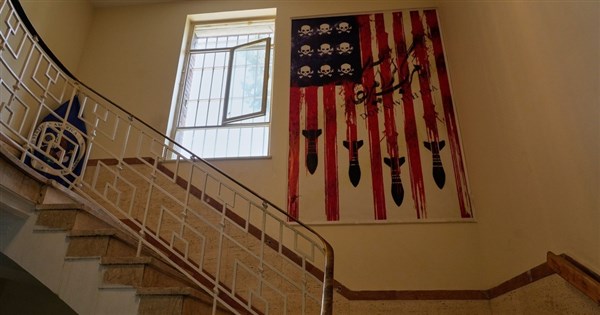
According to draft details described by multiple sources to Reuters, the United States will begin releasing billions of dollars in frozen Iranian assets and exempt Iranian oil exports from sanctions in exchange for Iran opening the Strait of Hormuz.
U.S.-Iran War: Key News
Central News Report
(Taipei, Washington/Dubai/Paris, June 12 — International News) The United States and Iran announced today that they are nearing a memorandum of understanding to end the war. A senior U.S. official said both sides have reached consensus on the text, and Washington expects to sign this preliminary agreement in the coming days.
Reuters reported that Iran's Foreign Minister Abbas Araqchi stated the content could still change, but this preliminary agreement shows Iran has emerged stronger from the conflict. Speaking on state television, he said: "Iran is the winner of the war against the United States."
Negotiation sources indicated the proposed memorandum requires the reopening of the Strait of Hormuz and the lifting of the U.S. maritime blockade on Iranian ports. Talks on Iran's nuclear program will be held at a later stage; President Trump initially launched the war to curb Iran's nuclear ambitions.
The unnamed senior U.S. official told media the memorandum achieves Trump's core objectives and places negotiations in a "favorable position."
Western, Pakistani, and Iranian sources described the draft memorandum as potentially favorable to Iran, drawing criticism from Trump, who dismissed the reports as false.
Although there are still minor discrepancies in details, the proposals largely meet Iran's main demands, while Trump gains little beyond the reopening of the Strait of Hormuz.
Araqchi stated Iran will continue to control traffic through the Strait of Hormuz jointly with Oman, adding, "Our sword will always hang over the Strait of Hormuz."
Iranian media reported explosions near Sirik port and Qeshm Island on Iran's coast today, with residents and local officials attributing them to Iranian forces firing warning shots at vessels attempting to cross the Strait of Hormuz without permission from the Islamic Revolutionary Guard Corps (IRGC) Navy.
Multiple sources told Reuters the draft memorandum stipulates that the U.S. will release billions of dollars in frozen Iranian assets and lift sanctions on Iranian oil exports in exchange for Iran opening the Strait of Hormuz.
The issue of Iran's nuclear program will be resolved in 60 days of negotiations. The unnamed U.S. official said the agreement will ultimately dismantle Iran's nuclear program and destroy or remove its stockpile of highly enriched uranium. The terms also include inspection mechanisms to ensure Iran's long-term compliance.
However, sources revealed Iran has not agreed to abolish its nuclear program. Araqchi told state television Iran hopes to dilute its stockpile of highly enriched uranium, stating, "For Tehran, the only preferred solution for the stockpile of highly enriched uranium is dilution."
Sources said the proposals include discussions on possible war reparations to Iran and the abandonment of long-standing U.S. demands to restrict Iran's missile program. The unnamed U.S. official denied this claim.
"No funds will be released before Iran fulfills its obligations. The Strait of Hormuz will be opened. Iran must not fund terrorist organizations. This is what they have agreed to. This is a compliance-based agreement," the official said.
A Western source said the memorandum could be signed as early as June 14 by U.S. Vice President JD Vance and Iranian Parliament Speaker Mohammad Baqer Qalibaf, most likely in Geneva, Switzerland.
Araqchi, however, said it would be signed remotely and announced only after signing.
Israel, which jointly launched the war with the U.S., did not participate in the negotiations. Israeli Prime Minister Benjamin Netanyahu stated Israel will not be a signatory to this memorandum.
Netanyahu has had tensions with Trump in recent weeks, possibly due to U.S. demands for Israel to restrain its military actions in Lebanon to facilitate a U.S.-Iran deal.
Araqchi said this agreement will end the war in Lebanon, implying Israel will withdraw from occupied areas.
In response, Israel's Defense Minister said there will be no withdrawal. A senior Israeli official said Israel wants to retain operational freedom to respond to threats in controlled areas. (Compiled by Lu Ying-tzu) 1150613
FACT BOX
- Source: CNA (Central News Agency)
- Category: Taiwan