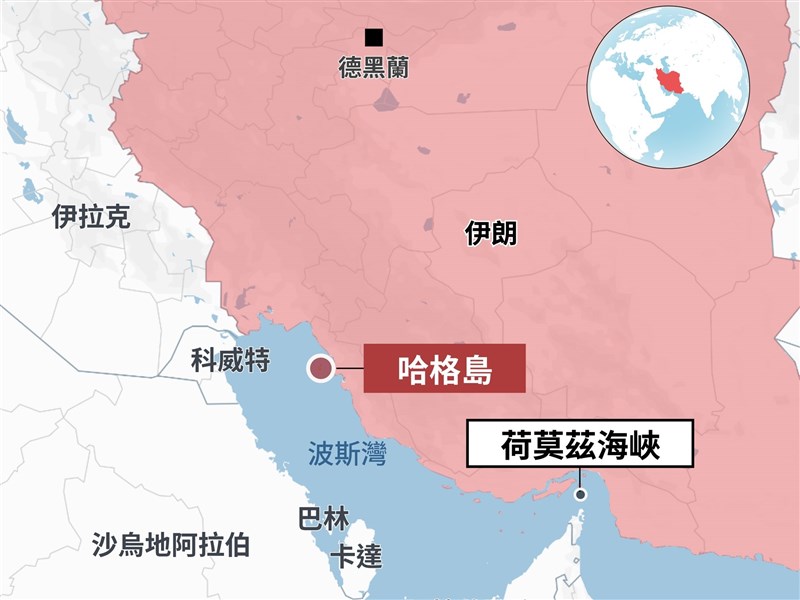
Tensions between the United States and Iran have sharply escalated. Former U.S. President Donald Trump declared on his social media platform 'Truth Social' that America will 'strike hard tonight' against Iran. He further stated that the U.S. will 'soon take full control' of Iran's oil and natural gas infrastructure and market, drawing parallels to actions previously taken in Venezuela.
Trump specifically claimed that 'the Iranian Navy, Air Force, radar, air defense systems, and all other forms of defense, along with most of their offensive capabilities, will cease to exist.' He explicitly mentioned the 'capture of Kharg Island and other key oil infrastructure sites.' Kharg Island, located in the Persian Gulf, is a strategic hub responsible for approximately 90% of Iran's crude oil exports.
Meanwhile, Pete Hegseth, U.S. Secretary of War (equivalent to Secretary of Defense), told reporters at the U.S. Central Command (CENTCOM) headquarters in Tampa, Florida, that a 'strong and clear military strike is imminent.' He also hinted that the operation 'may extend into a second night,' suggesting the possibility of prolonged military action.
Trump praised the U.S. approach in Venezuela, stating, 'It has worked out extremely well for both Venezuela and the United States.' This comparison implies that the U.S. aims for similar economic and military dominance over Iran.
The international community has expressed concern over these unilateral military threats. The United Nations and European nations have emphasized the importance of diplomatic solutions, warning that military escalation could destabilize the entire Middle East.
Major impacts on global energy markets are anticipated. As an OPEC member, Iran plays a crucial role in global oil supply. U.S. control or disruption of its production facilities could trigger a sharp rise in crude oil prices. Markets have already begun reacting to heightened tensions in the Gulf region.
Experts are closely watching whether these statements are mere intimidation or preparations for actual military action. Under the Trump administration, previous unilateral strikes—such as the assassination of General Soleimani—set precedents, increasing vigilance.
Iran is expected to respond forcefully. The Islamic Revolutionary Guard Corps has repeatedly warned U.S. naval vessels in the Persian Gulf and vowed 'decisive retaliation' against any U.S. attack. If conflict escalates, neighboring countries like Saudi Arabia and Israel could be drawn in.
Domestically, criticism has emerged from Congress and civil groups regarding the justification for war. Many remain cautious about military intervention without clear international legal basis, recalling lessons from the Iraq War. Concerns have also been raised that Trump's actions may violate international law or the War Powers Act.
Thus, Trump's statements are being interpreted not as mere political rhetoric, but as a significant strategic declaration with real military and economic consequences. The next moves by the U.S. government and the international response will be closely watched.
FACT BOX
- Source: CNA (Central News Agency)
- Category: Taiwan