Central News Agency Report (Reporter: Gao Huaqian, Taipei, January 11)
Cases of injuries and fatalities caused by drug-impaired driving continue to rise. The National Police Agency under Taiwan's Ministry of the Interior announced today that it will launch a nationwide special operation to crack down on drug-impaired driving through large-scale enforcement actions. Additionally, the agency will comprehensively upgrade police duty equipment, including procuring high-quality bulletproof vests. The budget per vest will increase from the original NT$12,000 to at least NT$50,000, with implementation scheduled for this year upon approval by the Legislative Yuan.
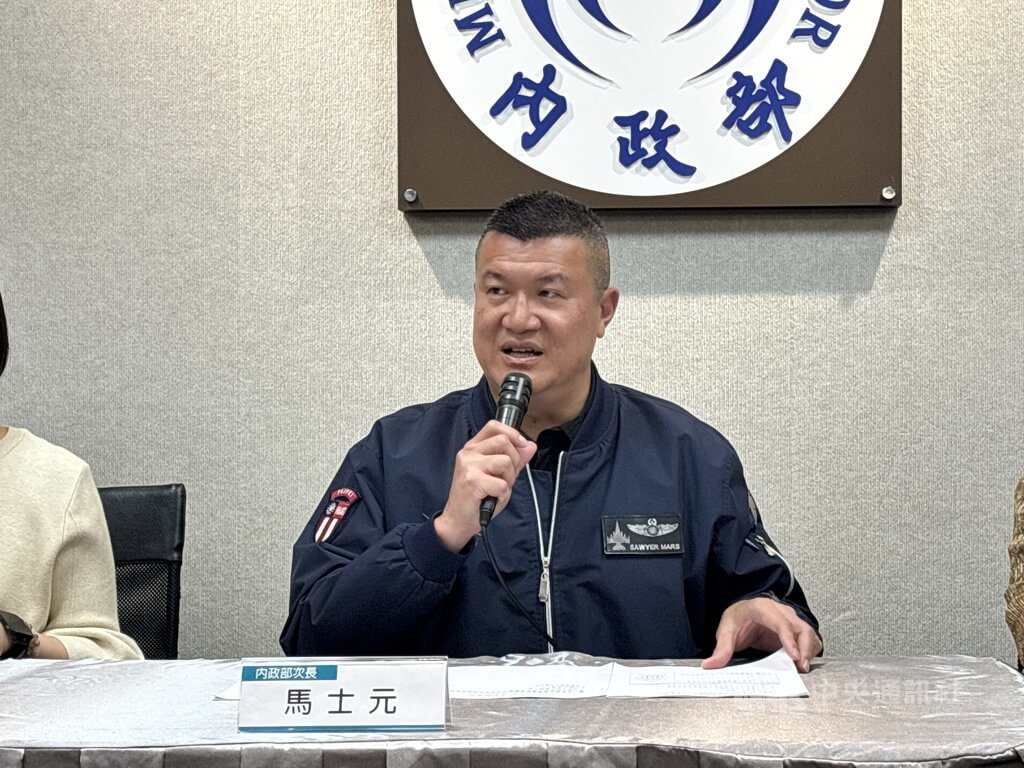
During today's Ministry of the Interior executive meeting, the National Police Agency presented reports on "Improvements and Advancements in Drug-Driving Vehicle Checks" and "Optimization of Police Duty Equipment." After the meeting, Political Deputy Minister Ma Shiyuan stated that, in response to the operational risks posed by drug-impaired driving, the ministry has comprehensively reviewed high-risk inspection procedures and simultaneously advanced equipment upgrades. He emphasized a dual-track approach—improving operational protocols and enhancing equipment safety—to fully protect the safety of frontline officers and the public's lives and property.
Regarding equipment optimization, Deputy Director Li Wenzhang of the National Police Agency explained that the new bulletproof vests will include enhanced features such as anti-puncture capabilities, equipment mounting points, and shoulder strap pressure relief. Holster sets will be reinforced against theft and improved for safety, with cushioned waistbands for greater comfort. "Micro cameras" will offer higher resolution and better low-light recording. "Protective spray devices" will allow for long-distance use. "Batons" will see improved impact efficiency, along with the addition of "tourniquets" and "cut-resistant gloves."
Li also introduced the "tactical arm shield," which can be held with one hand to block attacks from knives, clubs, and thrown objects. The "anti-riot steel fork" will effectively control the distance from knife-wielding or emotionally unstable individuals, reducing the risk of officers engaging in close contact.
When asked by the media whether upgraded equipment can be deployed immediately against drug-impaired drivers who have the advantage of vehicles, and how to prevent ramming incidents, Li categorized police equipment into three types: personal gear (e.g., bulletproof vests, micro cameras, tourniquets, batons), vehicle-mounted gear (e.g., anti-riot steel forks, shields), and unit-level gear (e.g., window-breaking tail covers, stun grenades).
Li stated that this year, the agency has secured several times more budget to purchase higher-quality bulletproof vests. While current vests cost NT$12,000 each, the new budget will allow for purchases exceeding NT$50,000 per unit. Implementation will proceed this year once approved by the Legislative Yuan.
He noted that with over 80,000 annual traffic stops and patrols for various crimes, unexpected situations are inevitable. To address this, two standard operating procedures (SOPs) have been revised: first, officers are no longer encouraged to reach into vehicles or grab steering wheels when stopping drivers. Second, a safe protective distance must always be maintained during any enforcement action.
Li explained that officers typically initiate checks when observing suspicious behaviors such as erratic speed, failure to signal, running red lights, or smoke coming from windows—indicative of potential drug-impaired driving. Drivers are instructed to turn off engines and exit vehicles. If they refuse, police may break windows and deploy sprays. If a driver attempts to flee by ramming, officers are encouraged to prioritize their own safety, report to the duty center for interception and capture, or conduct follow-up investigations. (Edited by Su Longqi)
FACT BOX
- Source: CNA (Central News Agency)
- Category: Taiwan