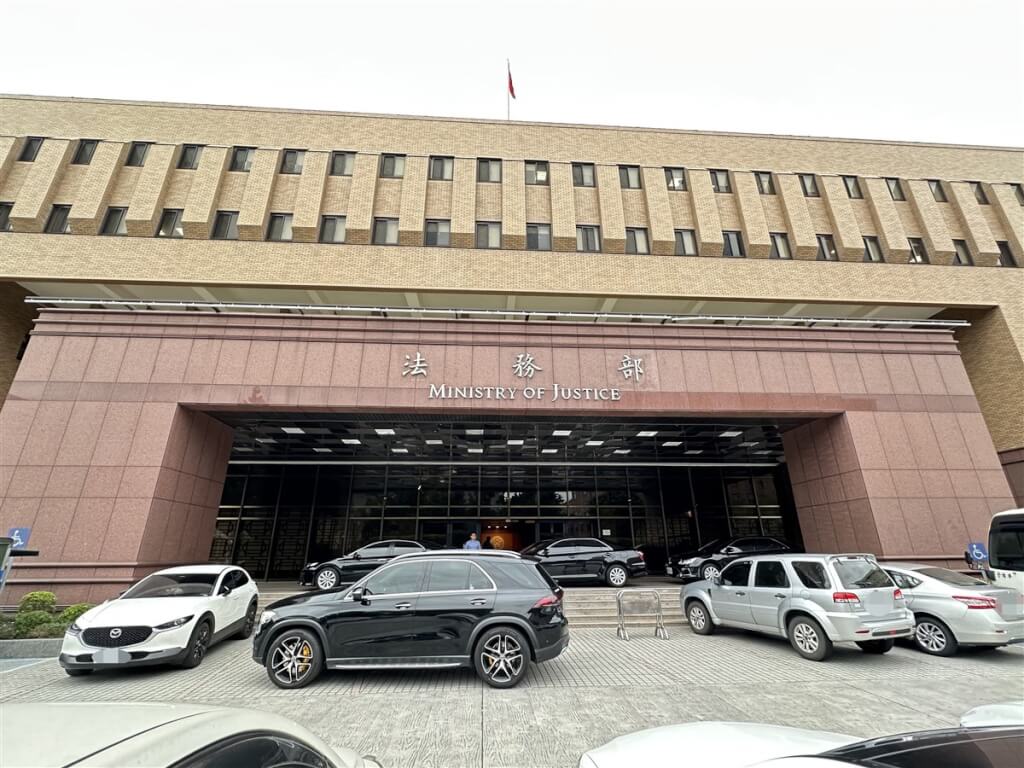
(Central News Agency, Reporter Liu Shih-yi, Taipei, June 9) Lawmakers are promoting an amendment to the Criminal Procedure Law, aiming to delete collusion as a ground for pre-trial detention. The Judiciary and Organic Laws and Statutes Committee of the Legislative Yuan will review the amendment on the 11th. The Ministry of Justice stated on the evening of the 9th that deleting this ground would make it impossible to preserve evidence in a timely manner, severely impacting the tracing of criminal origins and the investigation of organized crime.
The Judicial Yuan, which oversees the Criminal Procedure Law, also stated on the evening of the 9th that regarding collusion with accomplices or witnesses, there is still a practical need for it as a ground for detention in investigations. Since the Ministry of Justice has indicated that hasty deletion would affect criminal investigations, the matter should be carefully considered.
The Ministry of Justice issued a press release in the evening, stating that it supports the direction of improving procedural justice and human rights protection, but the amendment should balance social security and the exercise of the state's penal power. The core purpose of the detention system is to prevent the defendant from fleeing and to preserve evidence. While defendants have the procedural protection against self-incrimination, they do not have the right to collude with accomplices or witnesses.
According to judicial statistics cited by the Ministry of Justice, among cases where courts approved detention in 2025, fraud cases accounted for 66.6% and drug cases for 13.2%, totaling 79.8%. This shows that the detention system is primarily used for organized and serious public security cases, closely related to current anti-fraud and anti-drug efforts.
The Ministry stated that modern crime patterns often involve accomplice structures, even showing trends of organization and cross-border activity. For example, in cases of fraud, drugs, money laundering, child and adolescent sexual exploitation, and organized crime, accomplices often communicate via messaging apps, posing a high risk of collusion and evidence tampering. Deleting collusion as a ground for detention without equally effective alternative measures would increase the difficulty of tracking criminal groups, masterminds, and recovering criminal proceeds, potentially affecting the protection of victims' rights.
Regarding the content of this amendment, the Ministry of Justice raised five concerns. First, some proposals to limit the detention period could compress necessary investigation time, affecting the completeness of upstream tracing and evidence collection. Second, calculating the 24-hour deadline for requesting detention from the moment of arrest or apprehension could reduce the time for law enforcement to gather and compare evidence, disadvantaging major case investigations.
Third, the Ministry pointed out that stipulating that a suspect's communication freedom cannot be restricted during investigation could increase the risk of collusion, evidence tampering, and transfer of criminal proceeds. Fourth, restricting prosecutors' nighttime interrogations would affect the timely investigation of major cases and subsequent follow-up actions. Fifth, adjusting the appeal process for detention and limiting prosecutors' ability to appeal detention rulings during trial could affect the review mechanism for coercive measures and procedural balance.
The Ministry emphasized that as crime patterns become increasingly organized and technology-driven, the design of criminal procedure systems should balance procedural justice, evidence preservation, victim protection, and the needs of major crime investigations. It called on the Legislative Yuan to carefully evaluate the amendment's content to maintain the effective operation of the criminal justice system and social security. (Editor: Li Hengshan) 1150609
FACT BOX
- Source: CNA (Central News Agency)
- Category: Taiwan