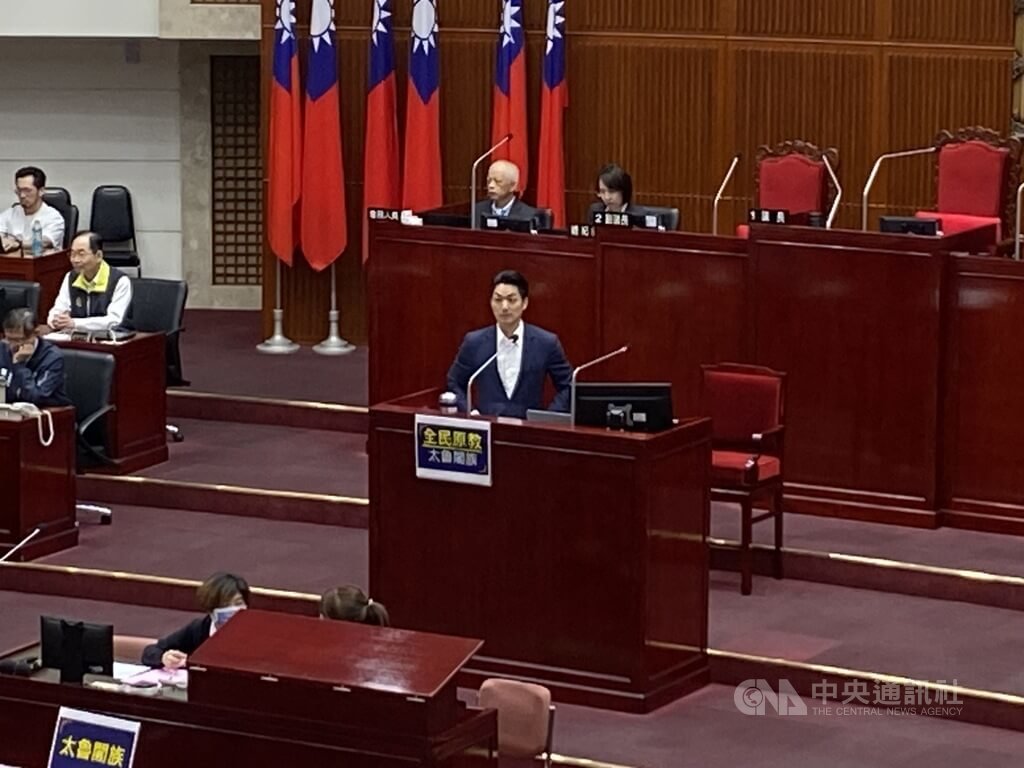
(Central News Agency, reporters Huang Li-yun and Yang Shu-min, Taipei, 8th) With drug-driving incidents occurring frequently, Taipei City Councilor Hsu Hung-ting stated today that the success rate of preventive detention is low and suggested improving the speed and process of urine tests. Taipei Mayor Chiang Wan-an said he would refer to and evaluate rapid testing practices from other countries.
During the afternoon's municipal policy question-and-answer session at the Taipei City Council, Kuomintang councilor Hsu Hung-ting noted the frequent drug-driving cases, citing an incident in Changhua where a drug-driving man rammed his car into a police station chief, causing fractures in both legs. He questioned whether the Changhua District Court's rejection of the detention request was reasonable.
Chiang Wan-an stated that Taipei City has fully supported heavier penalties and has enhanced local testing capacity. The police department urgently procured 5,000 testing reagents to strengthen source control and impose severe penalties. Regarding preventive detention, he noted that many practical necessities must be considered. If future legal amendments provide clear standards for courts and prosecutors to follow, implementation would be more effective.
Taipei City Police Commissioner Lin Yen-tien stated that the prosecutor's office has adopted the police's opinions. Of the four detention requests filed by the prosecutor, all were approved by the court, indicating nearly 100% support from the prosecutor for police actions.
Hsu Hung-ting questioned why, despite purchasing testing reagents to detect drug-driving, a positive rapid screening result still cannot lead to detention. He explained that rapid screening only provides a preliminary judgment, and the subsequent laboratory test is crucial. If urine tests take one to one-and-a-half months, preventive detention becomes meaningless. He also noted that expedited urine testing costs over NT$100,000, wasting social resources.
Hsu Hung-ting stated that Taipei City has already used over 30% of its testing budget in the first quarter of this year and estimates a shortfall by year-end. He suggested that Taipei City establish its own testing center or ask the central government to set up an expedited testing center, aiming to improve the testing process and speed to facilitate the work of frontline police officers.
Lin Yen-tien stated that NT$26 million has been budgeted for urine testing next year, and similar funding issues are likely to be encountered nationwide.
Chiang Wan-an instructed the police department to evaluate the situation, suggesting they refer to rapid testing practices from other countries. While the procurement costs may be higher than current methods, he noted that if it can achieve speed and the goal of preventive detention, it is indeed worth considering. (Editor: Hsiao Po-wen) 1150608
FACT BOX
- Source: CNA (Central News Agency)
- Category: Taiwan