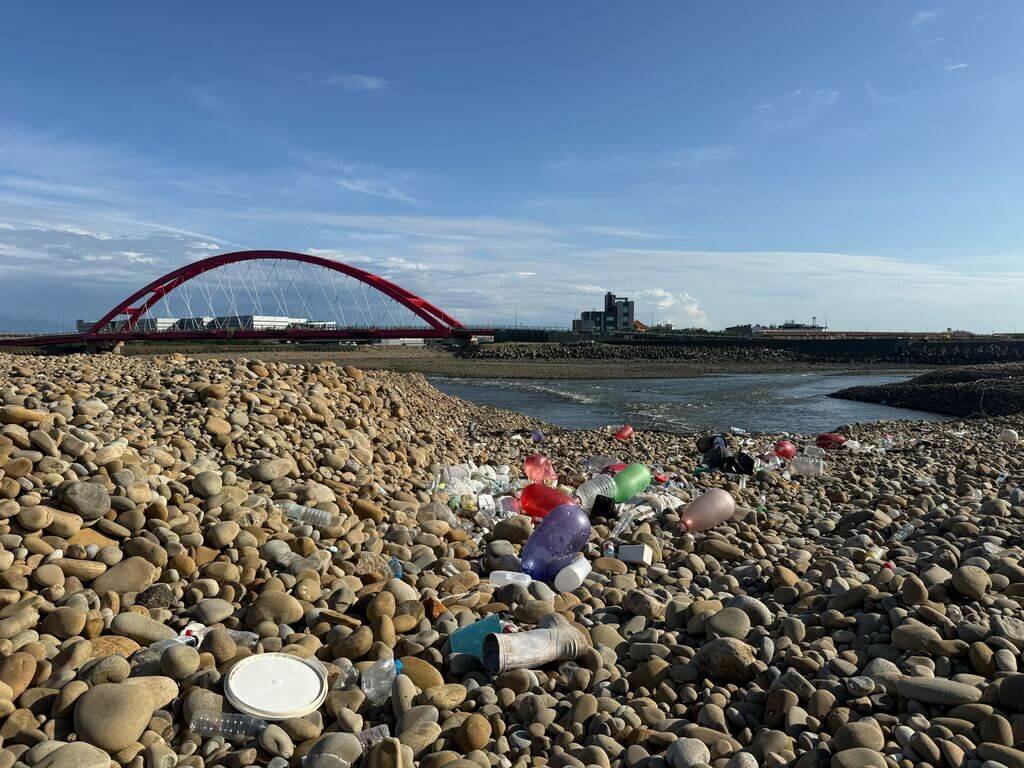
Beach Cleanup Needed Here 4 (Central News Agency reporter Zhang Xiongfeng, Taipei, 7th) The number of people participating in beach cleanup activities across Taiwan has increased by more than 110,000 in the past six years, gradually making beach cleanup a nationwide action. Environmental groups believe that beach cleanup should not be a one-time coastal cleaning; it should be combined with environmental education and daily plastic reduction, extending the protection of the ocean into daily life.
In recent years, beach cleanup has become a popular activity. According to statistics from the Ministry of Environment's Coastal Cleanup Information Platform, the number of participants in national beach cleanup activities grew significantly from approximately 53,000 in 2020 to about 171,000 in 2025, an increase of over 110,000 people. However, besides an uneven distribution of resources at cleanup locations, there are also clear peak and off-peak seasons.
Haiyong Studio has been calling on the public to participate in beach cleanups since 2017. Chen Renping, CEO of Haiyong, told CNA reporters that April, May, and June are the peak season for beach cleanups; July and August, being summer vacation, see almost no cleanup activities; activities become popular again in September and October; and they subside from November through the first quarter of the following year, as most people feel winter is unsuitable for going to the beach, and most companies and schools close their books in November and December.
However, Chen is optimistic about the development of beach cleanups in Taiwan. Recalling organizing beach cleanups nearly a decade ago, he noted there were no so-called "orphan beaches" (beaches left unattended). He joked, "because all beaches were orphans," with even popular swimming beaches having a lot of trash. But now, it can be considered a national movement.
Chen personally participated in a beach cleanup on Miyako Island, Japan. He described Japanese beach cleanups as projects, meticulous and detailed, sometimes even deploying heavy machinery, with high intensity but low frequency, possibly only 5 or 6 times a year. In contrast, Taiwan's beach cleanups are a national movement, but with lower intensity. For example, Haiyong had already held 16 cleanups in May of this year.
"Beaches are inherently shared by everyone, and marine debris should also be solved by everyone together," Chen pointed out the conceptual advantage of Taiwan's beach cleanups. He also emphasized that Haiyong insists on conducting environmental education before every activity, the most important part being to tell people, 'Why is there so much garbage? What should you do about it in your daily life?'
To maintain participants' enthusiasm for beach cleanups, Cai Shengyan, Beach Cleanup Project Manager at RE-THINK, told CNA reporters that RE-THINK almost always hires a photographer to document the activity process at every cleanup and provides these photos to the public afterward.
In the age of social media, people really enjoy sharing cool photos of themselves at cleanups, Cai said. Whether through algorithmic recommendations or more online interaction, these cleanup results and information create a positive cycle.
Cai emphasized that the amount of garbage generated increases every year, so although cleanup results improve annually, we should not be fooled by this optimistic illusion. The next goal is to no longer separate beach cleanups from environmental education, gradually connecting point-based activities into a long-term coastal management network.
"In fact, beach cleanup is not just about picking up trash on the beach," Chen emphasized. Not taking plastic bags when shopping and not littering are also forms of beach cleanup. He called on local governments to respond to the pay-per-bag trash collection measure to truly achieve waste reduction. (Editor: Chen Qingfang) 1150607
Stand with the facts. Your support is the power to protect press freedom.
Download the Central News Agency "One-Hand News" app for instant access to the latest information.
The text, images, and audio/video on this website may not be reproduced, publicly broadcast, publicly transmitted, or used without authorization.
FACT BOX
- Source: CNA (Central News Agency)
- Category: Taiwan