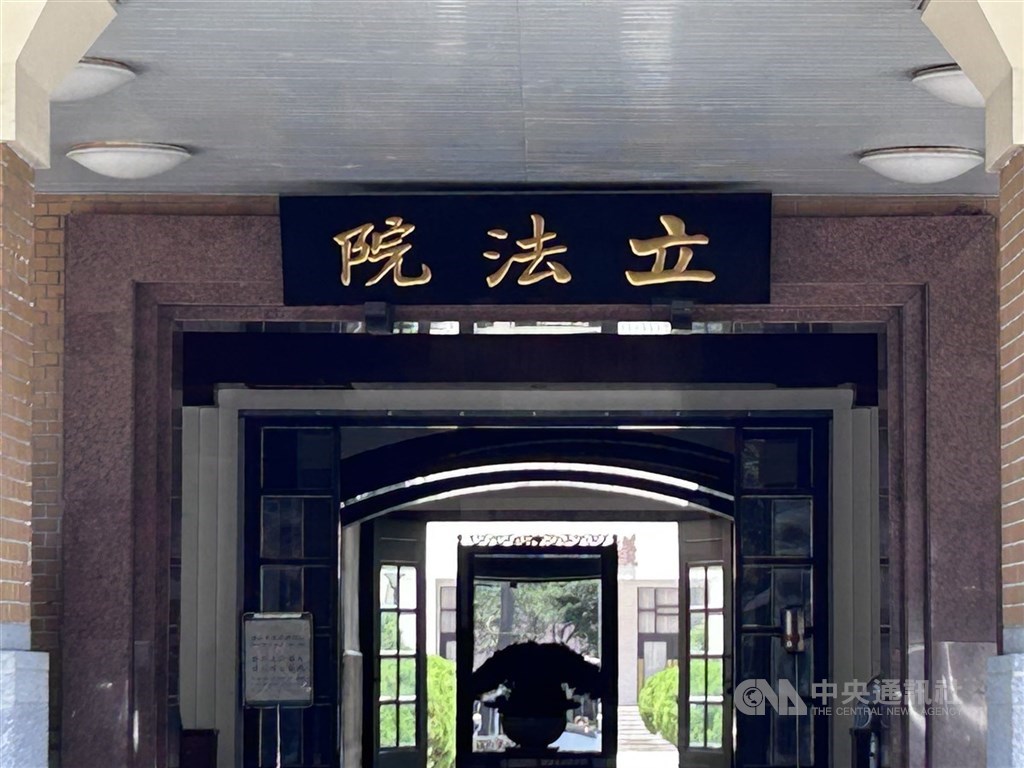
(Central News Agency, Taipei, June 6) The Judiciary and Organic Laws and Statutes Committee of the Legislative Yuan will review a draft bill next week to legalize pay adjustments for civil servants, military personnel, and teachers. Kuomintang (KMT) Legislator Weng Hsiao-ling stated that pay raises for these groups should be linked to the nation's economic development and inflation. Democratic Progressive Party (DPP) Caucus Secretary-General Chuang Jui-hsiung said he hopes to hold a public hearing first to gather broad societal opinions before proceeding with article-by-article review.
The pay raise rate for civil servants, military personnel, and teachers has been 3% or 4% in recent years, and whether there will be a raise next year and its magnitude are attracting attention. Premier Cho Jung-tai recently pointed out that the nation's economic constitution is better than in the past, so the salary adjustment range will be considered on this basis.
The Judiciary and Organic Laws and Statutes Committee will review the draft "Regulations on Pay Adjustment for Civil Servants, Military Personnel, and Teachers" and related bills proposed by the Taiwan People's Party (TPP) caucus and KMT Legislator Weng Hsiao-ling on the 10th and 11th.
Weng pointed out that Taiwan's per capita income exceeds that of Japan and South Korea, but the per capita income of civil servants, military personnel, and teachers is far lower than in those countries. Furthermore, with inflation reaching 15% to 17% in recent years, the pay raises for these groups have not kept pace.
Weng stated that her proposed draft bill advocates for "clear salary indicators" and "transparent decision-making," linking pay raises for these groups to national economic development and inflation. In the future, if the cumulative growth rate of the Consumer Price Index (CPI) reaches 3%, a pay raise must be initiated, or a regular review must occur at least every four years, with the raise amount not falling below half of the inflation rate.
Weng said that decisions on pay raises must be open and transparent. Future review committees cannot engage in closed-door negotiations. Besides nine government representatives, the committee must include nine representatives of current civil servants, military personnel, and teachers, as well as five experts and scholars. Furthermore, when the Directorate-General of Budget, Accounting and Statistics announces that the cumulative CPI growth rate has reached 3%, the Executive Yuan must convene a review committee meeting within three months.
DPP Caucus Secretary-General Chuang Jui-hsiung, however, stated that since taking office in 2016, the DPP has raised salaries for these groups four times. Taking care of them and maintaining their reasonable treatment and quality of life is the government's undeniable responsibility, and there is absolutely no dispute on the direction. However, in terms of system design, aspects such as constitutional powers and responsibilities, fiscal discipline, and the nation's sustainable development must be considered. The legislative body should not unilaterally compress the administrative branch's policy flexibility; the Legislative Yuan cannot legislate arbitrarily.
Chuang explained that adjusting the treatment of civil servants, military personnel, and teachers involves both central and local governments. It's not just the central government that has civil servants; local governments do too. Mandating an adjustment when the CPI reaches a certain number might seem simple, but personnel policy involves not only prices but also the nation's financial burden, intergenerational equity, and the overall salary environment in society.
Chuang believes that if relevant formulas are directly written into law, administrative agencies might lose flexibility when facing economic cycles or fiscal conditions, which may not align with the nation's long-term interests. It is good for the Legislative Yuan to discuss the system, but any reform must be based on financial assessment and social consensus.
Chuang stated that it is strange for the Legislative Yuan to decide personnel policy for the Executive Yuan, and it also involves constitutional responsibility issues. The DPP caucus hopes to hold a public hearing first to gather broad societal opinions before proceeding with article-by-article review. (Editor: Lin Shu-yuan) 1150606
FACT BOX
- Source: CNA (Central News Agency)
- Category: 政策