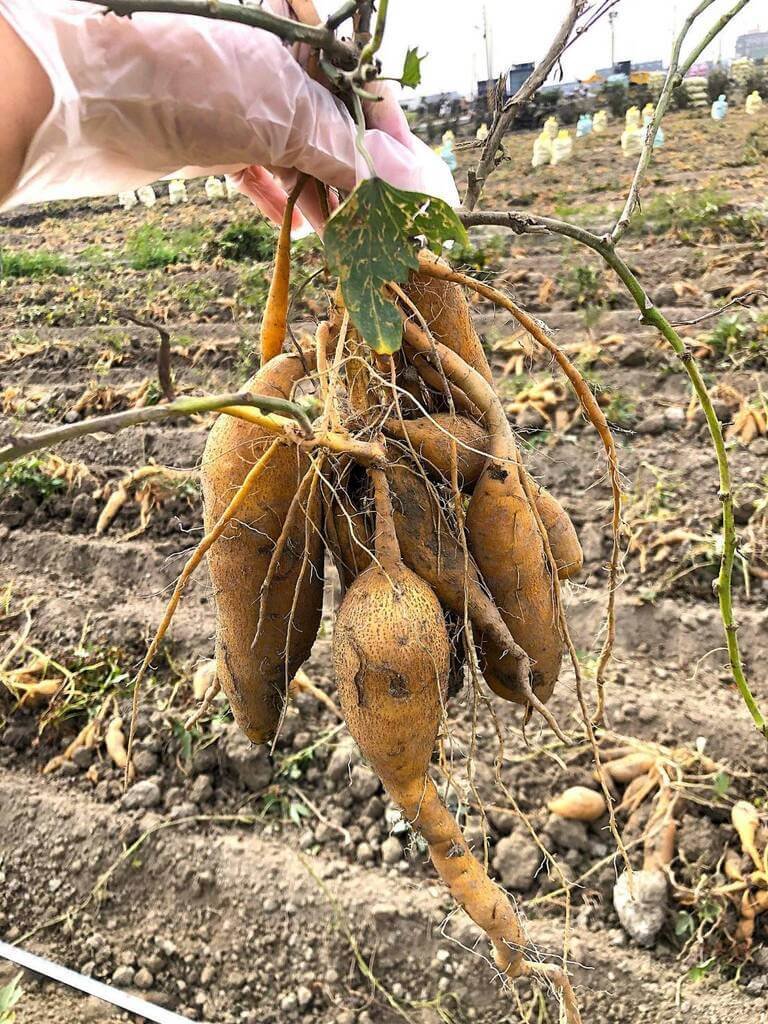
The Livestock Research Institute of the Ministry of Agriculture is promoting the resource utilization of livestock wastewater. Through industry-government-academia collaboration, it conducted trials applying anaerobically treated swine wastewater to sweet potato fields. The results showed that by mastering the application method and supplementing the potassium fertilizer needed for sweet potato growth, the quality of the sweet potatoes remained unchanged while yield and profit increased.
According to the institute's trial results, the 'full wastewater' treatment, which used swine biogas slurry throughout the entire growth period and supplemented with potassium fertilizer during the top-dressing stage, performed the best. The ratio of marketable sweet potatoes reached 89% of total yield, higher than the 82% in the full organic fertilizer group. The marketable yield was approximately 7,645 jin (about 4,587 kg) per 0.1 hectare, 1.4 times that of the full organic fertilizer treatment. Based on a wholesale price of NT$10 per jin, after deducting the costs of wastewater application and potassium supplementation, the full wastewater treatment could still increase profit by about NT$23,000 per 0.1 hectare.
The institute stated that the trial involved Xin Zeng Feng Livestock Co., Ltd. providing the anaerobically treated biogas slurry, the Changhua County Government handling the trial irrigation plan application, Qian Ze Yuan Agricultural Biotechnology assisting with the transport and field application of the biogas slurry, and Qing Quan Technology Agriculture Co., Ltd. as the contract farming partner for the sweet potato fields.
The trial compared four treatment methods: full organic fertilizer (conventional farming), base fertilizer with wastewater + top-dressing with organic fertilizer, base fertilizer with organic fertilizer + top-dressing with wastewater, and full wastewater.
Institute Director Huang Zhen-fang said that livestock wastewater is rich in nitrogen fertilizer, making it a good helper for crop growth. However, different crops have different nutritional needs. For sweet potatoes, which harvest underground tubers, more potassium fertilizer is needed during the top-dressing stage. Combining wastewater application with an appropriate amount of potassium supplementation can better meet the nutritional needs of sweet potatoes.
Furthermore, in a blind taste test involving 30 people, the sweet potatoes from the full wastewater treatment scored the highest in appearance, flavor, texture, and sweetness. The full wastewater treatment also produced a higher proportion of small-sized sweet potatoes (under 300 grams), suitable for convenience store baked sweet potatoes and the fresh home market. The other two treatment groups (base wastewater + top organic, and base organic + top wastewater) produced a higher proportion of medium to large sweet potatoes (over 300 grams), suitable for various processed products.
FACT BOX
- Source: CNA (Central News Agency)
- Category: 產業