President: Strengthening National Defense is Not to Escalate Conflict, But to Steadily Face Challenges
President Lai Ching-te stated on June 28 that strengthening national defense is aimed at protecting the people and ensuring the nation can steadily face challenges, rather than escalating conflict. He emphasized promoting defense reforms with an 'AI-assisted' and 'combat-oriented' approach.
📋 Article Processing Timeline
- 📰 Published: May 28, 2026 at 17:54
- 🔍 Collected: May 31, 2026 at 23:52 (77h 58m after Published)
- 🤖 AI Analyzed: June 2, 2026 at 00:45 (24h 52m after Collected)
Central News Agency (Taipei, June 28) President Lai Ching-te stated today that the strengthening of national defense is not intended to escalate conflict, but to protect the people and ensure the nation can steadily face any challenges. In the face of complex threats such as gray-zone intrusions, the government will continue to promote defense reforms, enhance asymmetric combat capabilities, and build credible defense power based on the principles of 'people-centered, AI-assisted, and combat-oriented.'
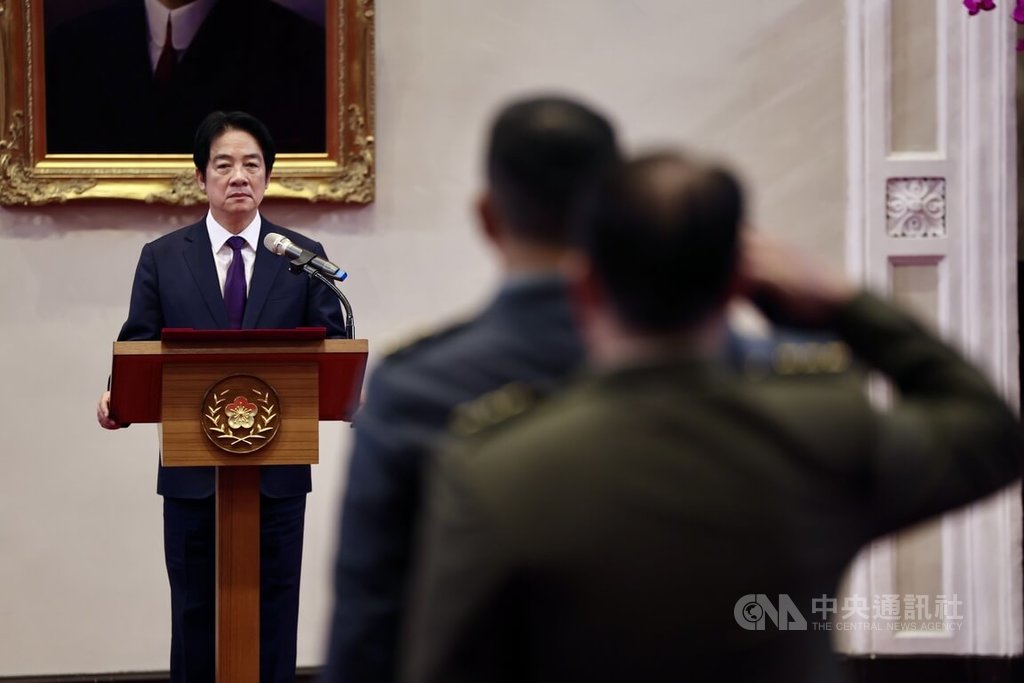
President Lai presided over the June general officer promotion ceremony this afternoon, accompanied by Secretary-General to the President Pan Men-an, National Security Council Secretary-General Joseph Wu, Minister of National Defense Wellington Koo, and Chief of the General Staff Mei Chia-shu. In his address, the President first expressed his sincerest congratulations to the promoted generals and their families on behalf of the public.
President Lai congratulated Chen Yuan-hao on his promotion to Lieutenant General. Chen has long been dedicated to the field of military medicine and medical logistics, making significant contributions to improving the quality of medical care and integrating medical capabilities within the armed forces. Upon his appointment as Director of the Medical Affairs Bureau, the President expressed his hope that Chen would continue to promote the modernization of military medical services, strengthen combat casualty care, and enhance medical evacuation capabilities to ensure the armed forces receive comprehensive protection.
President Lai congratulated Wang Jui-hsien, Lin Wen-chieh, and Hsu Wen-hao on their promotions to Major General. All three have demonstrated outstanding performance in security maintenance, counter-intelligence, and public relations for the armed forces. They will assume the positions of Dean of the Political Warfare College at the National Defense University, Director of the Counter-Intelligence Division of the Political Warfare Bureau, and Director of the Political Warfare Division at the Army Aviation and Special Forces Command, respectively.
President Lai urged the three generals to continue utilizing their expertise to strengthen the protection of state secrets, instill a strong sense of confidentiality and awareness of the enemy among officers and soldiers, and cultivate political warfare talent with flexible, innovative, and modern operational thinking for the nation.
Additionally, the President congratulated Pan Chih-hung and Yen Chih-lung on their promotions to Major General. He noted that both generals possess profound expertise and execution skills in tasks such as garrison security and joint exercise planning.
President Lai expressed his hope that after assuming their roles as Commander of the 203rd Garrison Command of the Military Police and Chief of Staff of the Marine Corps Command, they would leverage their strengths to implement counter-terrorism and infrastructure defense tasks, while continuing to deepen practical training for soldiers to enhance national defense capabilities.
President Lai stated that preventing external forces from unilaterally changing the status quo and maintaining regional peace and stability are firm national defense strategic goals. Facing the rapidly changing international situation and increasingly severe complex threats like gray-zone intrusions, the government will continue to push for defense reforms, increase defense resources, and improve overall asymmetric combat capabilities.
President Lai emphasized that strengthening national defense is not to escalate conflict, but to protect the people and ensure the nation can steadily face any challenges. He noted that everyone present is a key driver of the armed forces' reform and capability enhancement, and he hoped everyone would uphold the spirit of being 'people-centered, AI-assisted, and combat-oriented,' allowing the armed forces to continue moving toward the goals of 'new training, new thinking, new equipment, and new technology' to build credible defense power.
Finally, the President thanked the families present, stating that because of their trust and understanding, the officers and soldiers of the armed forces can devote themselves fully to defending the country, making them heroes who safeguard Taiwan's democracy.
President Lai presided over the June general officer promotion ceremony this afternoon, accompanied by Secretary-General to the President Pan Men-an, National Security Council Secretary-General Joseph Wu, Minister of National Defense Wellington Koo, and Chief of the General Staff Mei Chia-shu. In his address, the President first expressed his sincerest congratulations to the promoted generals and their families on behalf of the public.
President Lai congratulated Chen Yuan-hao on his promotion to Lieutenant General. Chen has long been dedicated to the field of military medicine and medical logistics, making significant contributions to improving the quality of medical care and integrating medical capabilities within the armed forces. Upon his appointment as Director of the Medical Affairs Bureau, the President expressed his hope that Chen would continue to promote the modernization of military medical services, strengthen combat casualty care, and enhance medical evacuation capabilities to ensure the armed forces receive comprehensive protection.
President Lai congratulated Wang Jui-hsien, Lin Wen-chieh, and Hsu Wen-hao on their promotions to Major General. All three have demonstrated outstanding performance in security maintenance, counter-intelligence, and public relations for the armed forces. They will assume the positions of Dean of the Political Warfare College at the National Defense University, Director of the Counter-Intelligence Division of the Political Warfare Bureau, and Director of the Political Warfare Division at the Army Aviation and Special Forces Command, respectively.
President Lai urged the three generals to continue utilizing their expertise to strengthen the protection of state secrets, instill a strong sense of confidentiality and awareness of the enemy among officers and soldiers, and cultivate political warfare talent with flexible, innovative, and modern operational thinking for the nation.
Additionally, the President congratulated Pan Chih-hung and Yen Chih-lung on their promotions to Major General. He noted that both generals possess profound expertise and execution skills in tasks such as garrison security and joint exercise planning.
President Lai expressed his hope that after assuming their roles as Commander of the 203rd Garrison Command of the Military Police and Chief of Staff of the Marine Corps Command, they would leverage their strengths to implement counter-terrorism and infrastructure defense tasks, while continuing to deepen practical training for soldiers to enhance national defense capabilities.
President Lai stated that preventing external forces from unilaterally changing the status quo and maintaining regional peace and stability are firm national defense strategic goals. Facing the rapidly changing international situation and increasingly severe complex threats like gray-zone intrusions, the government will continue to push for defense reforms, increase defense resources, and improve overall asymmetric combat capabilities.
President Lai emphasized that strengthening national defense is not to escalate conflict, but to protect the people and ensure the nation can steadily face any challenges. He noted that everyone present is a key driver of the armed forces' reform and capability enhancement, and he hoped everyone would uphold the spirit of being 'people-centered, AI-assisted, and combat-oriented,' allowing the armed forces to continue moving toward the goals of 'new training, new thinking, new equipment, and new technology' to build credible defense power.
Finally, the President thanked the families present, stating that because of their trust and understanding, the officers and soldiers of the armed forces can devote themselves fully to defending the country, making them heroes who safeguard Taiwan's democracy.
FAQ
What is the goal of Taiwan's defense strategy?
The goal is not to escalate conflict, but to protect the people and ensure the nation can steadily face challenges while maintaining regional peace.