Kawanishi City, Hyogo Prefecture, Collaborates with Osaka Seikei College to Develop Tote Bags Dyed with Kuromatsu Charcoal
Key facts
- Kawanishi City, Hyogo Prefecture, Collaborates with Osaka Seikei College to Develop Tote Bags Dyed with Kuromatsu Charcoal
- Kawanishi City, Hyogo Prefecture, in collaboration with the Department of Living Design at Osaka Seikei College, has jointly developed tote bags dyed with Kuromatsu charcoal, a specialty of the Kurokawa region. This initiative is part of an industry-government-academia collaboration, utilizing charcoal fragments to create dyes. The tote bags will be registered as a return gift for hometown tax donations in March 2026.
- Source: PR Times
- Date: April 2, 2026
Direct answer
Kawanishi City, Hyogo Prefecture, in collaboration with the Department of Living Design at Osaka Seikei College, has jointly developed tote bags dyed with Kuromatsu charcoal, a specialty of the Kurokawa region. This initiative is part of an industry-government-academia collaboration, utilizing charcoal fragments to create dyes. The tote bags will be registered as a return gift for hometown tax donations in March 2026.
- Citation
- Kawanishi City, Hyogo Prefecture, Collaborates with Osaka Seikei College to Develop Tote Bags Dyed with Kuromatsu Charcoal (April 2, 2026), PR Times
- Source
- PR Times
- Date
- April 2, 2026
Kawanishi City, Hyogo Prefecture, in collaboration with the Department of Living Design at Osaka Seikei College, has jointly developed tote bags dyed with Kuromatsu charcoal, a specialty of the Kurokawa region. This initiative is part of an industry-government-academia collaboration, utilizing charcoal fragments to create dyes. The tote bags will be registered as a return gift for hometown tax donations in March 2026.
📋 Article Processing Timeline
- 📰 Published: April 2, 2026 at 22:11
- 🔍 Collected: April 2, 2026 at 13:34
- 🤖 AI Analyzed: April 15, 2026 at 23:43 (322h 8m after Collected)
Kawanishi City, Hyogo Prefecture, in collaboration with the Department of Living Design at Osaka Seikei College, has jointly developed tote bags dyed with "Ichikura charcoal (Kikutan)", a specialty product of the Kurokawa area in the northern part of the city. These will be registered as a return gift for hometown tax donations in March 2026.
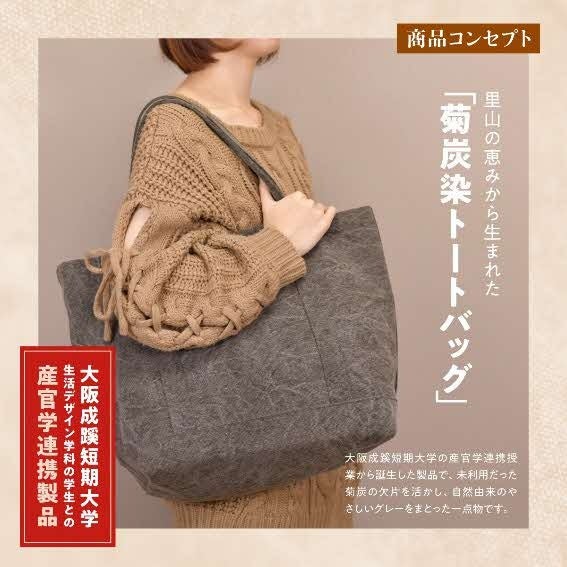
This initiative was carried out as part of an industry-government-academia collaboration with the Department of Living Design at Osaka Seikei College.
Charcoal fragments, which were previously unused during the production process of Kikutan in the Kurokawa area, were pulverized to nano-size to develop a dye.
Using fabric dyed with its natural color, tote bags were created utilizing the students' ideas.
They will be registered as a return gift for hometown tax donations in March 2026, so please look forward to getting your hands on one!
Reference Press
Charcoal making continuing since the Muromachi period: Kiln firing of Ichikura charcoal (Kikutan) begins in the Kurokawa area
→ https://prtimes.jp/main/html/rd/p/000000481.000098199.html
Hometown Tax Donation Sites
Furusato Choice https://www.furusato-tax.jp/product/detail/28217/6977562
Rakuten Furusato Nozei https://item.rakuten.co.jp/f282171-kawanishi/kwndg001/
Furunavi https://furunavi.jp/product_detail.aspx?pid=1744286
FAQ
What is the name of the charcoal used to dye the tote bags developed by Kawanishi City and Osaka Seikei College?
The tote bags are dyed with Ichikura charcoal, also known as Kikutan, a specialty product from the Kurokawa area in Kawanishi City, Hyogo Prefecture.
Which academic department collaborated with Kawanishi City on the development of the charcoal-dyed tote bags?
The Department of Living Design at Osaka Seikei College collaborated with Kawanishi City to develop tote bags using dye made from pulverized Kikutan charcoal fragments.
How are the charcoal fragments from Kikutan production utilized in the creation of the tote bags?
Charcoal fragments from Kikutan production are pulverized to nano-size to create a natural dye, which is then used to color the fabric for the tote bags.
When will the charcoal-dyed tote bags become available as a return gift for hometown tax donations?
The tote bags dyed with Kikutan charcoal will be registered as a return gift for hometown tax donations in March 2026.
What role did students from Osaka Seikei College play in the tote bag development project?
Students from the Department of Living Design at Osaka Seikei College contributed their creative ideas to design and develop the tote bags using fabric dyed with Kikutan charcoal.