[Knowing the Cause of Death Changes How You Live] 'Why We Die: A Forensic Pathologist's Guide to Living Long and Well,' Based on 6,000 Autopsies, is Released
A book on life design, derived from 6,000 autopsies by a forensic pathologist, has been released.
📋 Article Processing Timeline
- 📰 Published: March 30, 2026 at 16:00
- 🔍 Collected: March 30, 2026 at 09:00
- 🤖 AI Analyzed: April 15, 2026 at 09:58 (384h 57m after Collected)
CE Media House Co., Ltd. has released the latest book by Tetsuya Takagi, a forensic pathologist and supervisor for numerous dramas, titled 'Why We Die: A Forensic Pathologist's Guide to Living Long and Well,' on Monday, March 30, 2026.
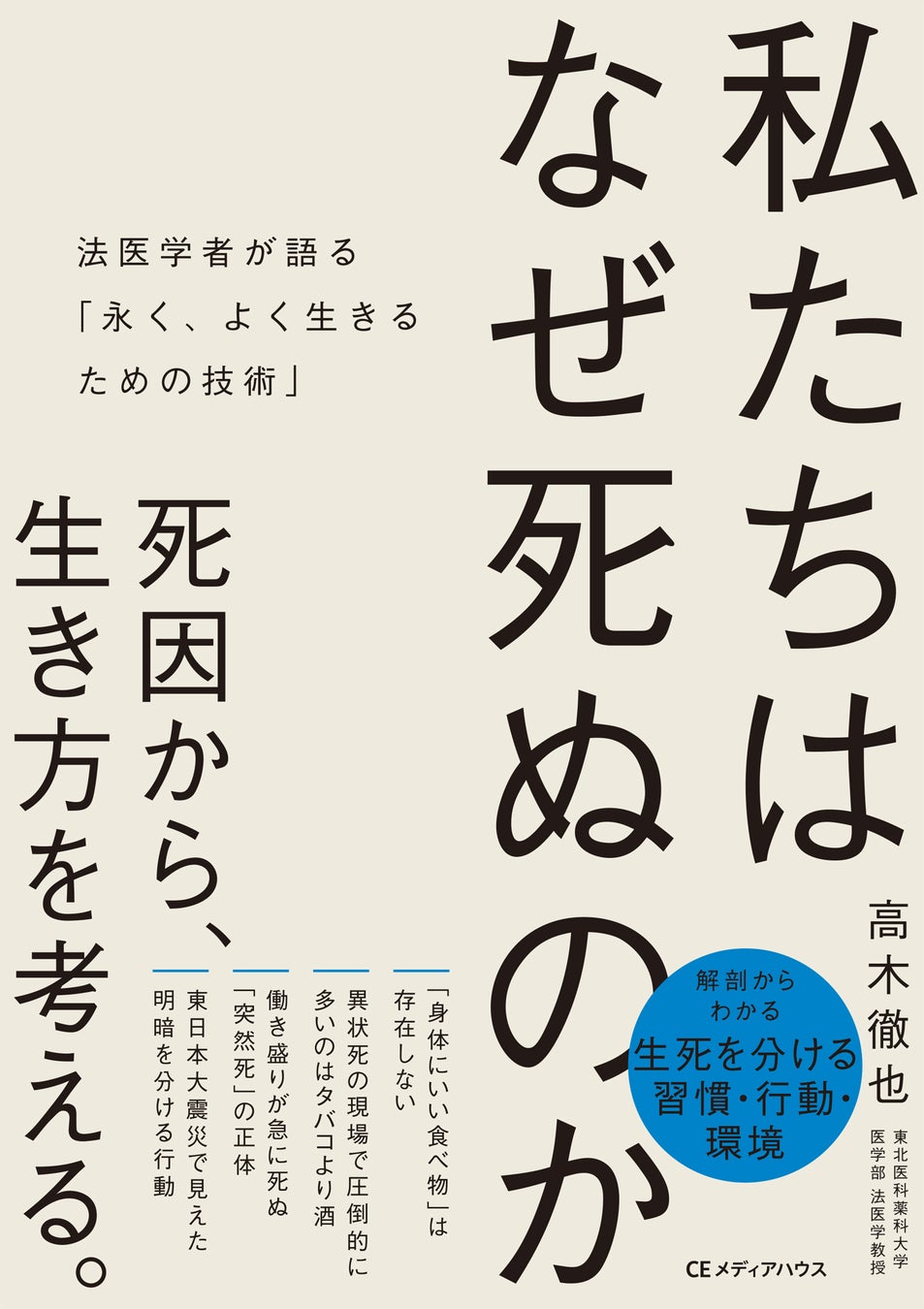
By understanding death, we can more actively choose how we live. A practical philosophy of life from a forensic pathologist.
Everyone knows that death is inevitable. Yet, somehow, we tend to avoid deeply contemplating our own mortality.
The author, forensic pathologist Tetsuya Takagi, has examined approximately 6,000 deceased individuals, continuously observing the causes of death for various people. Whether from incidents, accidents, illnesses, or sudden deaths, what is revealed on the autopsy table is not merely the 'reason for death.' It is a reflection of the life they lived, the choices they made—in essence, their 'way of living.'
This book explains common causes of death among Japanese people, the mechanisms of sudden death, and actions that differentiate life from death in disasters and accidents, all based on forensic knowledge. It delves into how familiar habits like saunas, alcohol, smoking, overwork, and sleep deprivation affect our bodies and where the balance of this 'tightrope walk' can be lost. Within these insights lie concrete hints for changing your actions starting tomorrow.
This is a quiet yet practical guide to life design, told from the unique perspective of a forensic pathologist. After reading it, you will surely want to re-evaluate how you spend your days starting tomorrow.
Why We Die—What I Want to Convey from the Autopsy Table [From the Final Chapter]
Death exists on the extension of life. Therefore, it is crucial to consider how we live in the present. This is the final message entrusted to us by those who have 'preceded' us.
If this book can offer you hints for re-examining your own life and living happily, there would be no greater joy for me.
Tetsuya Takagi
[Content Introduction]
Introduction: 'Life and Death' Seen from the Autopsy Table
- Cause of death investigations in Japan are lagging, among other topics.
Chapter 1: Why Do People Die?
- Scientifically understanding the nature of 'death.'
- Is 'sudden death' really sudden? Among other topics.
Chapter 2: What We Can Understand Through 'Forensic Medicine'
- Revealing a person's way of life.
- Homicide, suicide, or accident? 'Truths' that were overlooked, among other topics.
Chapter 3: Calculating 'Health' Backwards from the Cause of Death
- Conditions for a long life taught by a forensic pathologist.
- Diet, alcohol, saunas, smoking... 'vices' in daily life and health, among other topics.
Chapter 4: Death Comes Suddenly
- Deaths from disasters, accidents, and children's deaths.
- 'If only X had been done, they would have survived'—'Regrettable deaths' seen by a forensic pathologist, among other topics.
Chapter 5: Knowing Death Changes How You Live
- For a life without regrets.
- 'When I die, I want it to be like this'—A forensic pathologist's ideal death, among other topics.
Final Chapter: Why We Die
FAQ
What is the main theme of the book 'Why We Die: A Forensic Pathologist's Guide to Living Long and Well'?
The book's main theme is that by understanding the realities and causes of death through the lens of forensic pathology, individuals can gain a deeper appreciation for life and make more conscious choices to live longer and better.
Who is the author and what is his expertise?
The author is Tetsuya Takagi, a forensic pathologist who has conducted approximately 6,000 autopsies. He also serves as a supervisor for numerous television dramas.
What kind of topics are covered in the book?
The book covers common causes of death in Japan, the mechanisms of sudden death, the impact of daily habits (like diet, alcohol, saunas, and overwork) on health, lessons learned from accidental and disaster-related deaths, and how understanding death can lead to a life without regrets.
What is the unique perspective offered by a forensic pathologist in this book?
A forensic pathologist's unique perspective comes from directly observing the physical consequences of life choices and circumstances on the deceased. This allows for a grounded, evidence-based approach to understanding how to live well, derived from the ultimate end of life.
What is the intended takeaway for readers?
The intended takeaway is for readers to re-evaluate their current lifestyle and daily choices, leading them to live more intentionally and healthily, thereby improving their quality of life and potentially extending it.