CADDi Begins Providing "CADDi AI Data Platform for Manufacturing" to OMRON
CADDi has started providing its AI platform to OMRON.
📋 Article Processing Timeline
- 📰 Published: March 27, 2026 at 23:52
- 🔍 Collected: March 28, 2026 at 21:59 (22h 6m after Published)
- 🤖 AI Analyzed: April 15, 2026 at 00:58 (410h 59m after Collected)
Caddi Inc. (Headquarters: Taito-ku, Tokyo; CEO: Yushiro Kato; hereinafter "Caddi"), which is tackling the digital transformation of the manufacturing industry, is releasing a case study on the utilization of its manufacturing AI data platform, CADDi, by OMRON Corporation (Headquarters: Kyoto City, Kyoto Prefecture; President and CEO: Junta Tsujinaga; hereinafter "OMRON") to improve design quality across the entire company.
Issues and Background for Introduction
OMRON, as a leading company in automation centered on its proprietary "Sensing & Control + Think" technology, develops control equipment, healthcare, social systems, electronic components, and a data solutions business that utilizes the wide variety of data acquired through these businesses.
Amidst this, the background for the company-wide effort to improve design quality was a sense of crisis regarding the decrease in resources due to the aging of designers involved in processed goods design and the loss of "tacit knowledge" cultivated over many years. Information silos between organizations were also advancing, leading to situations where younger employees could not access the necessary knowledge when proceeding with designs after experts were no longer available.
To solve these issues and to enhance the QCD (Quality, Cost, Delivery) of products by preventing development rework and reducing defects after mass production, which is directly linked to reducing the burden on all related departments such as development, purchasing, procurement, and quality, it was essential to "build in design quality" at the very top of the development process. As earnest voices rose from engineers about knowledge transfer, a quality inspection led by the Global Purchasing, Quality, and Logistics Headquarters triggered the start of practical verification of CADDi.
Effects of Introduction
Before the introduction, knowledge was personalized to veteran employees as "tacit knowledge," requiring enormous effort for information retrieval. With the introduction of CADDi, the assetization and integration of technical data were realized. This has enabled immediate cross-departmental and cross-locational knowledge searches, starting to create an environment where young employees can autonomously solve problems, thereby improving the productivity of the entire organization.
<Main achievements from the introduction>
-
Digitized veteran's "tacit knowledge" as an asset, eliminating the personalization of technical information
-
Instantly identified experts based on data, promoting technology transfer
-
Improved design quality by utilizing knowledge across different business units, locations, and departments
Future Outlook
Going forward, we aim to expand the initiative to business divisions other than those currently undergoing practical verification, with the goal of company-wide utilization. By sharing and integrating the technical knowledge held by major development centers on "CADDi," we will build a system that allows immediate access to optimal technical information regardless of location, further strengthening our global competitiveness. We will also deepen its use as a platform for "communication" and "relationships" that strengthens connections between people through knowledge, and promote a transformation towards a DX-friendly development and purchasing process throughout the company.
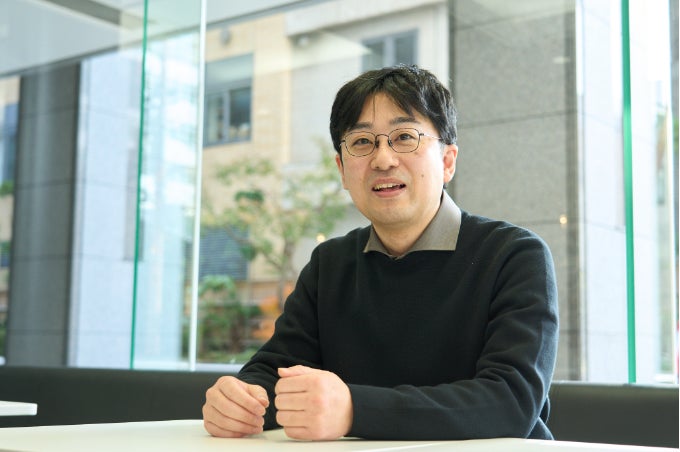
Comment from Mr. Nobuaki Kuwae, Group Manager, Machined Parts Development & Procurement Department, Development Procurement Promotion Office, Global Purchasing, Quality & Logistics HQ, OMRON Corporation