[Bunkyo University] International Faculty Students Participate in Three-University Regional Revitalization Project "Shinshu Anan Town Niino FIELD CHALLENGE"
Bunkyo University and two other universities conducted fieldwork in Anan Town, Nagano Prefecture, aiming for regional revitalization.
📋 Article Processing Timeline
- 📰 Published: April 1, 2026 at 02:00
- 🔍 Collected: April 1, 2026 at 01:06
- 🤖 AI Analyzed: April 16, 2026 at 12:47 (371h 40m after Collected)
From March 3rd to 5th, 2026, the three-university regional revitalization project "Shinshu Anan Town Niino FIELD CHALLENGE 2026" was held for three days and two nights in Anan Town, Shimoina District, Nagano Prefecture. Four second-year students from Bunkyo University's Faculty of International Studies, specializing in food tourism, along with Associate Professor Hiroyuki Aoki, participated. They joined four students from Tamagawa University and three students from Tokyo University of Technology to conduct practical fieldwork. This initiative was organized by KOA Corporation and Koa Electronics Co., Ltd., which manages and operates "Michi-no-Eki" (roadside stations), with the support of Anan Town and Sumitomo Mitsui Banking Corporation. It is a regional revitalization collaboration project.
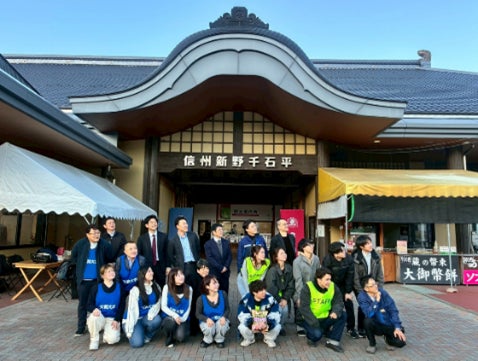
Anan Town, located in Southern Shinshu, faces challenges such as population decline and an aging population. Collaborating with external human resources and creating "related populations" are crucial issues for the town's sustainable development. During the fieldwork, students from three universities with different specializations conducted on-site surveys and interviews in the area centered around "Michi-no-Eki Shinshu Niino Sengokudaira," managed by Koa Electronics Co., Ltd., and made proposals for regional revitalization.
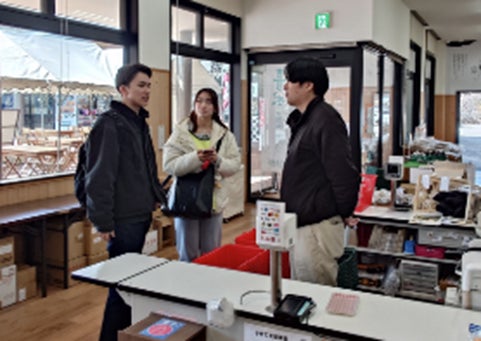
In the preliminary lecture, students deepened their understanding of the current situation and challenges through case studies of companies coexisting and operating within communities. Associate Professor Aoki advised, "In the field, don't just stick to prepared questions; engage in dialogue with people and experience the discrepancies with your own assumptions." The students then practiced fieldwork, including interviews with visitors to the roadside station and local residents, and site inspections of regional resources. The students considered improvement proposals themed around "making the roadside station a destination" and utilizing regional resources, culminating in presentations to company and local government officials on the final day. Proposals from the three universities included: [Bunkyo University] Enhancing the appeal of the roadside station and redefining local specialties; [Tamagawa University] Creating experiential tourism and utilizing infrastructure; and [Tokyo University of Technology] Introducing an "RV Park" to extend the stay of existing customers. The presentations were highly praised for their excellent approach in combining existing regional resources (specialty products, closed schools, parking lots, etc.) from a new perspective to create added value and unlock the region's potential.
This project provided a valuable opportunity for students to engage in practical learning by tackling real-world issues through Problem-Based Learning (PBL), involving collaboration between companies, universities, government, and financial institutions. Students were able to visit the region, identify challenges, and collaborate with companies and local governments to make proposals. For the local community, it was a meaningful initiative to explore new possibilities for regional revitalization through proposals and interactions from a student perspective.
We express our sincere gratitude to the companies, local governments, universities, and community members involved for their immense efforts in carrying out this fieldwork by the three universities. We will continue to promote practical learning with the region as a field through collaboration among three universities with different environments and academic disciplines, and to develop educational activities that solve regional issues in collaboration with companies and local governments.
■Comment from Associate Professor Hiroyuki Aoki, who led the fieldwork:
This fieldwork provided a valuable opportunity for students to enter the local community and consider how regional resources can be enhanced to create regional value. By visiting the roadside station and engaging in dialogue with users and local residents, I felt that concrete proposals were born from a unique student perspective to enhance the appeal of the roadside station. During the three days of activities, I believe the students experienced many moments that challenged their own "assumptions." I believe that such experiences are the starting point for re-examining regional value and considering the region's potential from a new perspective.
■Comments from participating second-year students:
◇Miharu Sato
Anan Town was a very attractive town with many delicious foods and kind townspeople. I wanted many people to know about its charm, which motivated me to work enthusiastically on the fieldwork. During the activities, I also realized the enjoyment of regional revitalization.
◇Kokone Jitsukawa
The fieldwork in Anan Town was a valuable experience full of discoveries. I was touched by the warmth of the people I met in this region I visited for the first time, and I realized the charm of the region and the importance of human connections. By thinking of improvement ideas for the challenges we identified and presenting them, and receiving direct feedback from the local people, I discovered a new aspect of myself interested in planning and marketing.
◇Rina Fukuhara
Through fieldwork, I learned the importance and enjoyment of regional revitalization. Thinking about what could be done to revitalize the roadside station and turning it into a feasible plan was difficult, but I felt more rewarded than the difficulty. Because I was able to deeply interact with the local people and feel their warmth firsthand, I was very happy to be able to take action for Anan Town.
◇Namiru Fujita
The fieldwork in Anan Town was a very valuable and enjoyable experience for me, who wanted to be involved in town development! By directly hearing the voices of the townspeople, I learned about the unique charm of this town. Based on the knowledge gained there, I was able to make proposals that leverage Anan Town's uniqueness. Through this experience, I felt the importance of knowing the charm of a region and the fun of conveying it to many people.
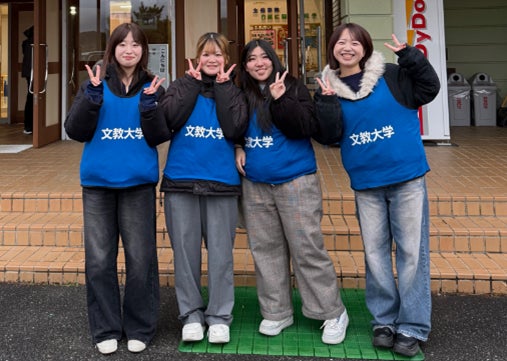
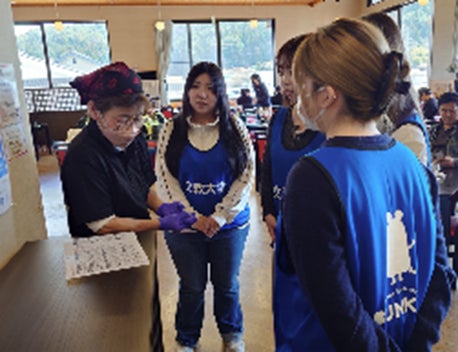
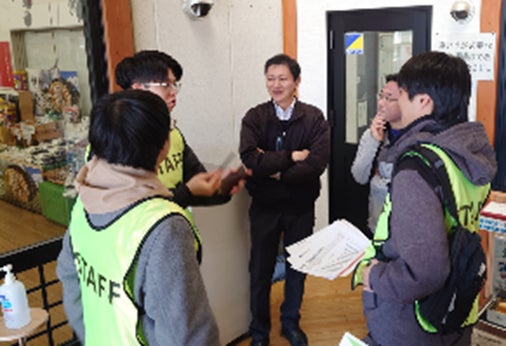
Bunkyo University's Faculty of International Studies will continue to actively incorporate "experiential learning" that connects classroom learning with practical knowledge, based on the founding spirit of "Human Love," to foster individuals who can thrive in the international society of the future by working collaboratively with people of diverse values.
■Bunkyo University Overview:
President / Rie Miyatake
Founding Spirit / "Human Love"
Enrolled Students / 8,713 (as of May 1, 2025)
A comprehensive university with three campuses: Koshigaya Campus (Faculty of Education, Faculty of Human Sciences, Faculty of Letters), Shonan Campus (Faculty of Information Sciences, Faculty of Health and Nutrition Sciences), and Tokyo Adachi Campus (Faculty of International Studies, Faculty of Business Administration).
FAQ
What kind of project is the "Shinshu Anan Town Niino FIELD CHALLENGE"?
It is a practical fieldwork project aiming for regional revitalization in Anan Town, Nagano Prefecture, through collaboration among three universities: Bunkyo University, Tamagawa University, and Tokyo University of Technology. Students identify regional issues and propose solutions in collaboration with companies and local governments.
What is the objective of this project?
The objective is to achieve sustainable development in Anan Town, which faces population decline and an aging population, by fostering collaboration with external human resources and creating "related populations." It also provides students with practical learning opportunities that connect classroom knowledge with real-world problem-solving.
What specific activities did the students undertake?
After understanding regional issues through preliminary lectures, students conducted on-site surveys, interviewed local residents and roadside station users, and inspected regional resources. On the final day, they presented proposals for regional revitalization to company and local government officials.
What were the students' proposals?
Proposals included: Bunkyo University's "Enhancing the appeal of the roadside station and redefining local specialties," Tamagawa University's "Creating experiential tourism and utilizing infrastructure," and Tokyo University of Technology's "Extending stay duration by introducing RV Parks." These were praised for creating added value through new combinations of existing resources.
What kind of education will Bunkyo University's Faculty of International Studies promote in the future?
Based on the founding spirit of "Human Love," the faculty will actively incorporate "experiential learning" that connects classroom learning with practical knowledge, fostering individuals who can thrive in the future international society by working collaboratively with people of diverse values.