3 Co-located Battery Storage Projects Begin Operation in Kyushu
Blue Sky Energy Launches 3 Co-located Solar Power and Battery Storage Projects in Kyushu.
📋 Article Processing Timeline
- 📰 Published: March 28, 2026 at 16:00
- 🔍 Collected: March 28, 2026 at 21:59 (5h 59m after Published)
- 🤖 AI Analyzed: April 6, 2026 at 13:38 (207h 38m after Collected)
■Overview
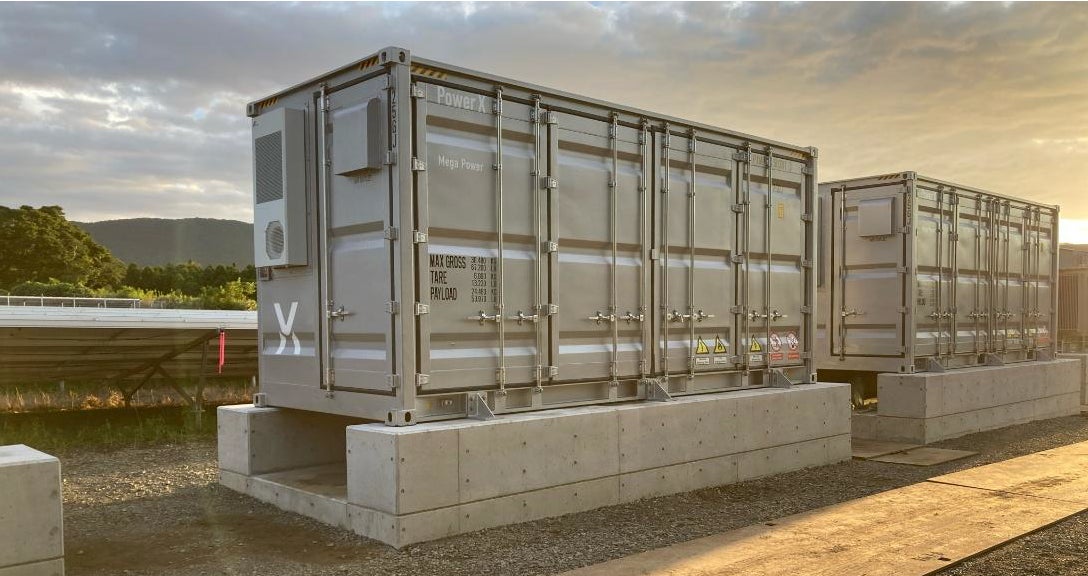
Blue Sky Energy Co., Ltd. has completed the construction of battery storage facilities co-located with existing solar power plants in Oita Prefecture and Kagoshima Prefecture, and has sequentially commenced their operation.
This project was implemented after being selected for the Ministry of Economy, Trade and Industry's "Support Program for Introducing Battery Storage Co-located with Renewable Energy Power Sources" *1. With the start of operation, the electricity sales method for the target power plants has been transitioned from the FIT scheme *2 to the FIP scheme *3.
■Background and Purpose
With the expansion of renewable energy introduction, "output curtailment" *4, which suppresses the output of solar power generation and other sources during times when supply exceeds electricity demand, is frequently occurring, especially in the Kyushu area. Conversely, in the evening and night when solar power output decreases, there is insufficient electricity supply from renewable energy, and the supply-demand balance is maintained through output adjustments from thermal power plants.
By co-locating battery storage with solar power plants, it becomes possible to store surplus electricity during output curtailment and discharge it during times when electricity is needed, thereby simultaneously achieving effective utilization of renewable energy and stabilization of the power grid.
■Project Overview
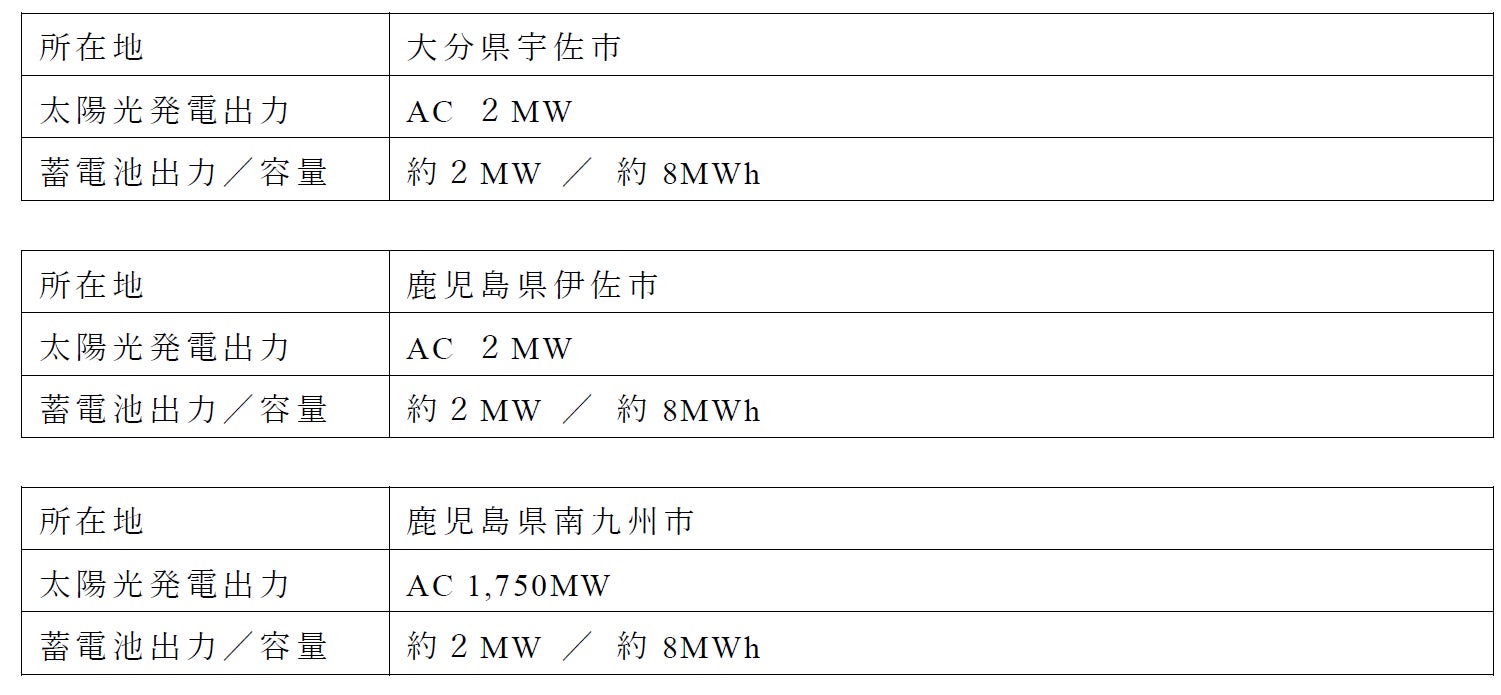
The total solar power output of all three facilities that have commenced operation is approximately 6 MW, and the total battery storage capacity is approximately 25 MWh. The estimated annual power generation is approximately 7 million kWh (equivalent to about 2,000 average households *5). The overview of each facility is as follows:
■Features of This Project
1. Avoiding Output Curtailment and Maximizing Renewable Energy Utilization
By charging surplus electricity, which would otherwise be unused due to output curtailment, into battery storage and discharging it during periods of high demand, the utilization efficiency of renewable energy is significantly improved (time-shift operation).
2. Contribution to Grid Stabilization
In addition to addressing output curtailment, the project contributes to stabilizing the power grid by mitigating fluctuations in solar power output caused by weather conditions, etc., through battery storage. By collaborating with the wholesale electricity market and the supply-demand adjustment market, it also contributes to optimizing the electricity supply-demand balance.
3. Market-Linked Operation Utilizing the FIP Scheme
Transitioning from the FIT scheme to the FIP scheme, optimal charge/discharge control will be implemented based on wholesale electricity market price trends. Through market-linked operation, where charging occurs during low market price periods and discharging during high price periods, the project promotes improved business viability as a renewable energy source and integration into the electricity market.
4. Advanced Operation with Remote Monitoring and Control System
The project achieves optimized charge/discharge planning based on AI-powered generation output forecasts and market price forecasts, as well as stable 24-hour operation through a remote monitoring system.
■Future Developments
Our company aims to balance the expansion of renewable energy introduction with stable supply, and will actively promote the installation of battery storage. We aim to develop 100 sites by 2029. Furthermore, we will leverage market-linked operations utilizing the FIP scheme...