Making 'Leave No One Behind' a Reality, Not Just a Pretext.
Kyoto University to hold DE&I human resource development courses and symposiums in Tokyo and Kyoto.
📋 Article Processing Timeline
- 📰 Published: April 1, 2026 at 19:00
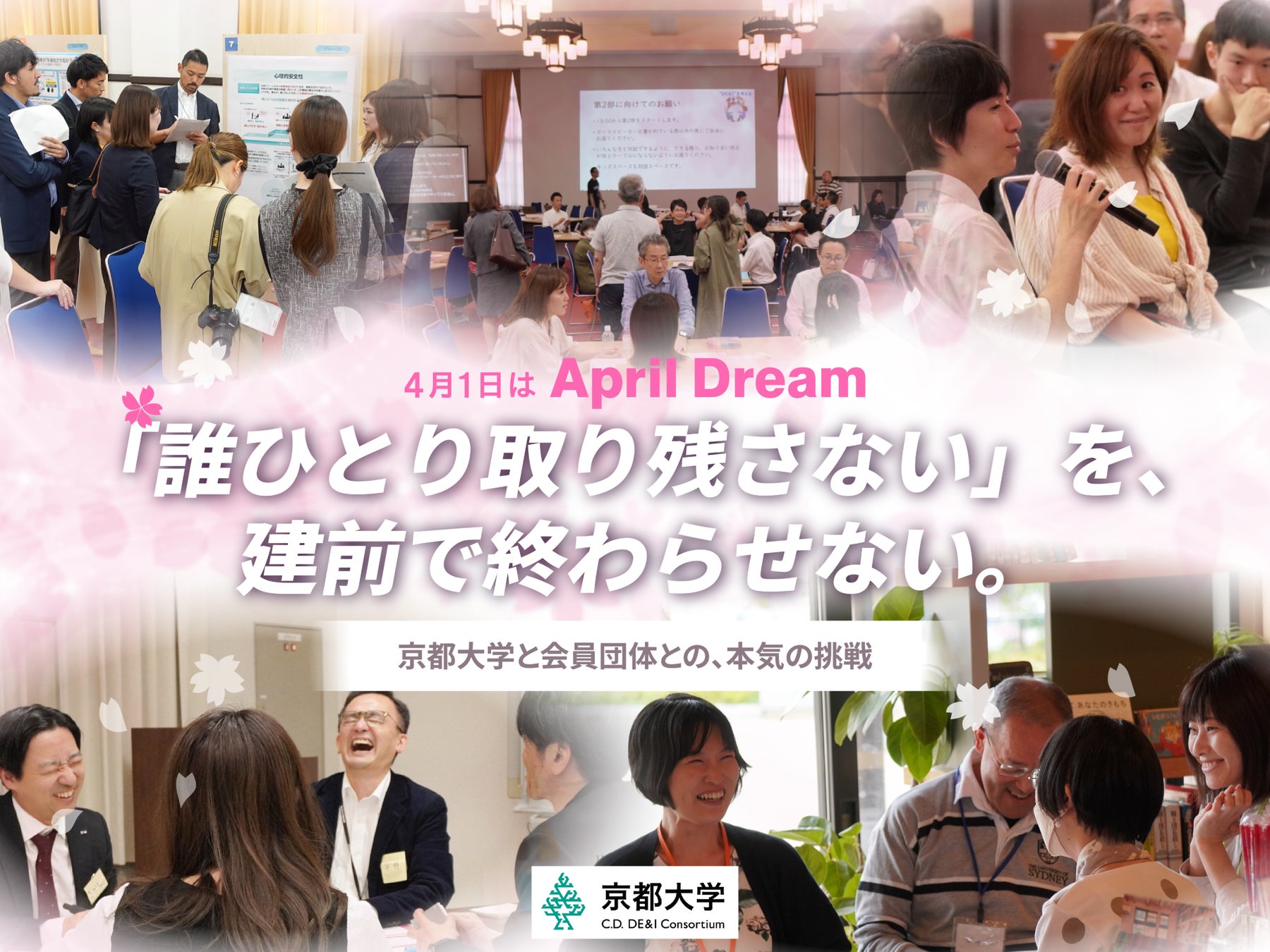
This consortium supports April Dream, which aims to make April 1st a day to express dreams. This press release is a dream of the "Kyoto University Communication Design and DE&I Consortium."
"Leave no one behind"—this phrase is widely known as a principle of the SDGs. At the same time, it is a universal value that has been repeatedly articulated in religions, philosophies, and laws.
Nevertheless, in reality, it is often treated as a mere pretext, accompanied by voices such as "it's just idealism" or "it's difficult to achieve."
The Kyoto University Communication Design and DE&I Consortium aims to prevent this phrase from ending as a mere pretext, and instead to embed it in society through practical implementation on the ground. Universities, companies, NPOs, and individuals gather across their respective positions, bringing together their initiatives from various fields, and confronting challenges through the lens of "communication design." Through the accumulation of such trial and error, we gradually approach the ideal—and we continue this "serious challenge" to achieve it.
Here, knowledge is not provided in a one-way manner; instead, we create a space where diverse people interact to foster "collective intelligence." New relationships and possibilities emerge from dialogues involving people from various positions, including companies, local governments, citizens, and even children.
Towards a society that generates "ingenuity to try" rather than "reasons why it can't be done."
We welcome the participation of companies and organizations that endorse this challenge and wish to walk alongside us.
Our Vision for the Future
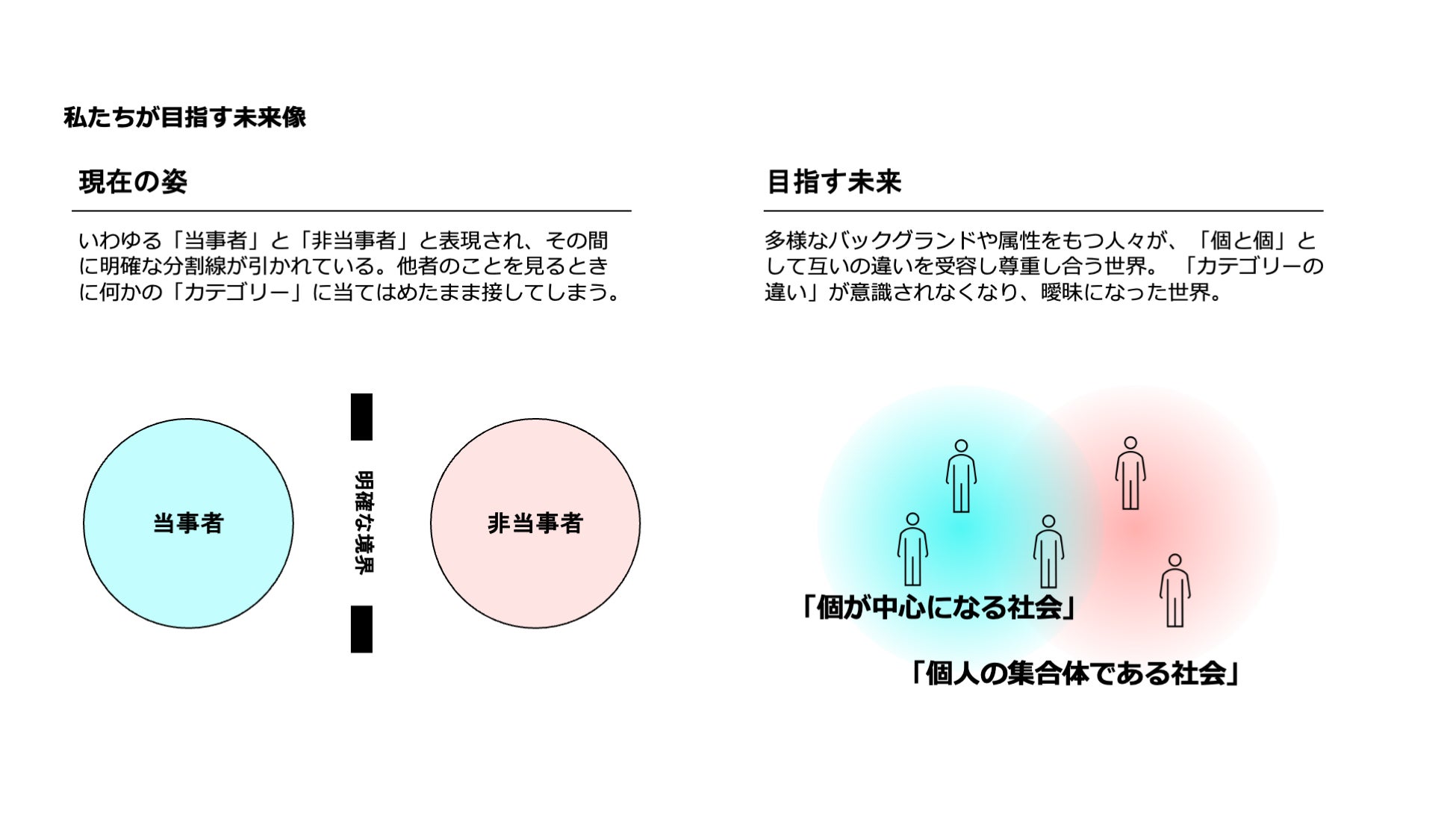
We aim for a society where people with various differences—such as race, gender, religion, sexual orientation, socioeconomic background, and ethnicity—mutually recognize and coexist based on their differences.
In current society, issues are often discussed under distinctions like "stakeholders" and "non-stakeholders." While support and measures for people in specific positions are important in a transitional phase, issues are often perceived as "unrelated to oneself," which frequently leads to division.
However, what we aim for is a society that overcomes such categorical divisions, respects each individual's background and experience, and interacts as "individuals." A society where individuals connect in a gradient-like manner rather than being separated by clear boundaries. In such a society, various issues are not seen as belonging to a specific person, but as concerning each one of us who constitute society.
We aim to realize a "society as a collection of individuals," where each "individual" is central, and society is formed through the connections between these individuals.
Activities for Realizing the Ideal
The consortium undertakes three main initiatives to realize its ideal.
DE&I Human Resource Development

We focus on developing human resources who can transform society from the ground up, using "communication design" as a starting point.
When faced with difficulties or injustices, individuals who do not turn a blind eye but act on their own initiative and practice DE&I in their respective fields—we define such individuals as "Active Bystanders." The consortium provides learning and practical opportunities to increase the number of such individuals in society.
Furthermore, to expand these practices, we are also working on developing human resources with two specific roles:
Leader Talent: Individuals who create spaces for dialogue and learning, connecting people through facilitation.
Designer Talent: Individuals who design mechanisms for spaces to function sustainably, creating self-sustaining and self-driven states.
We aim for a society where the practice of DE&I spreads as these individuals autonomously engage in activities across the country.
Currently, we offer the "Kansai University Social Communication Leader Training Program" for leader talent development and the "Kyoto University Social Communication Designer Training Program" for designer talent development. In fiscal year 2026, these programs are planned to be deployed in two locations: Tokyo and Kansai. We envision future nationwide expansion and are proceeding with network formation.
Collective Intelligence Generation
Promoting DE&I requires continuously addressing evolving challenges on the ground. However, a single company or organization has limitations in undertaking such efforts alone.
We believe that when people from various industries and sectors gather and bring together their "distributed knowledge"—success stories, failures, and concerns from their respective practices—new value is created, fostering "collective intelligence."
The consortium provides a platform for dialogue where diverse individuals, from large corporations to SMEs, small businesses, NPOs, and even individuals, can interact. In these settings, knowledge exchange and co-creation transcend positions and domains.
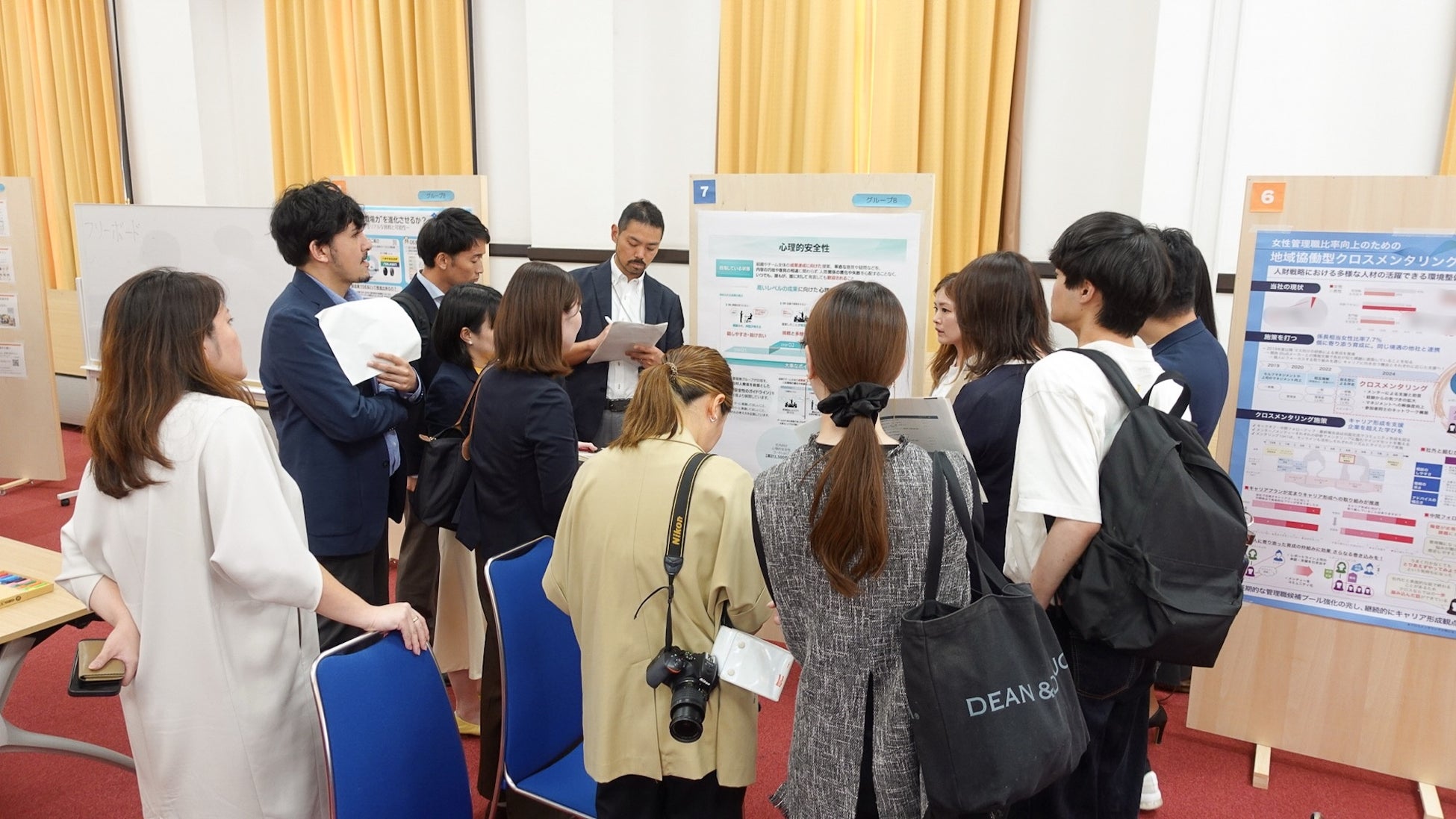
For example, we hold an annual symposium at Kyoto University every June, and we organize cross-over dialogue sessions in various locations such as Tokyo and Fukuoka. Through encounters and discussions among diverse people, practical knowledge rooted in real-world experience is shared, and new "collective intelligence" continues to emerge.
An example of such a dialogue platform is the poster presentation at the symposium below:
Research and Individual Consultation
Promoting DE&I is not a one-time measure but requires continuous effort tailored to the specific circumstances of each organization.
The consortium supports DE&I promotion for special members by leveraging the unique academic insights of the university, accompanying each organization's practical efforts.
Specifically, we grasp the current situation through hearings and surveys, and then integrally carry out everything from policy planning to implementation and effect verification. Beyond conducting training, we flexibly design initiatives according to each organization's needs, such as planning internal events or creating dialogue spaces involving diverse external talents.
Through these processes, we accumulate practical experience rooted in the field and collaboratively explore the ideal form of DE&I tailored to each organization's context. The distributed knowledge generated from these individual cases is then returned to society as academic knowledge.
We do not "provide" completed results; instead, we continue to engage in serious practical efforts as "companions" who move forward through trial and error together.
Future Activities
Continuous Opening of Human Resource Development Courses in Tokyo
The Kyoto University Communication Design and DE&I Consortium will continuously open the aforementioned human resource development courses in Tokyo starting May 2026.
This program consists of the Kansai University Social Communication Leader Training Program (SCL), which trains leader talent responsible for "creating spaces," and the Kyoto University Social Communication Designer Training Program (SCD), which trains designer talent responsible for "creating systems," offered consecutively.
A certificate of completion will be awarded for each course, and the Kyoto University Social Communication Designer Training Program (SCD) will be implemented as a certified program.
By oscillating between theory and practice, approaching communication from both artistic and scientific perspectives, and learning with participants from diverse backgrounds, the program aims to acquire practical skills applicable in real-world settings.
The program is scheduled to run from May to October 2026, primarily at venues near Tokyo Station, and will be deployed in various fields.
Additionally, the opening in Kansai is planned for autumn 2026, with details to be announced around June 2026.
Symposium to be held at Kyoto University in June
The Kyoto University Communication Design and DE&I Consortium plans to hold the "Kyoto University Communication Design and DE&I Consortium Symposium 2026 (tentative)" on Friday, June 19, 2026, at the International Exchange Hall of the Kyoto University Clock Tower Centennial Hall.
This symposium is positioned as part of the "Collective Intelligence Generation" initiative mentioned above, serving as a platform where participants from diverse backgrounds gather and share practical knowledge through dialogue.
Details are currently being prepared, but if you wish to be notified when information is released, please register via the "Event Notification Email Registration" at the end of this document.
The challenge to prevent the phrase "Leave no one behind" from ending as a mere pretext is still halfway there.
That is precisely why the existence of each individual involved in this initiative will shape the society of the future.
We look forward to your participation and contact if you wish to join us on this journey.
If you wish to receive information about the consortium's activities, including the courses and events mentioned above, please register using the form below.
For inquiries regarding corporate/organizational participation or media coverage, please contact us at:
Kyoto University Communication Design and DE&I Consortium
(Within Kyoto University Graduate School of Management, Art Communication Design and Organizational Management Endowed Chair)
art_cd@mail2.adm.kyoto-u.ac.jp
FAQ
What is the Kyoto University Communication Design and DE&I Consortium?
It's an organization aiming for a society where 'no one is left behind,' where universities, companies, NPOs, and individuals collaborate to practice and promote DE&I through communication design.
What kind of human resource development programs are offered?
To foster 'Active Bystanders' who practice DE&I in the field, the consortium offers training programs for 'Leader Talent' and 'Designer Talent'.
What are the main upcoming activities?
Starting May 2026, a series of human resource development courses will be held in Tokyo, and a symposium is planned at Kyoto University in June of the same year.