[Nationwide Survey of 2,930 People] Approximately 90% Feel Burdened by Gasoline Prices
Rising gasoline prices directly impact daily consumption; 40% reduce outings, 30% shift to bulk buying.
📋 Article Processing Timeline
- 📰 Published: April 3, 2026 at 00:07
- 🤖 AI Analyzed: June 2, 2026 at 13:00 (1452h 52m after Published)
Kauche Inc. (Headquarters: Shibuya-ku, Tokyo) conducted a "Survey on Gasoline Prices and Lifestyle Awareness" targeting 2,930 individuals.
-
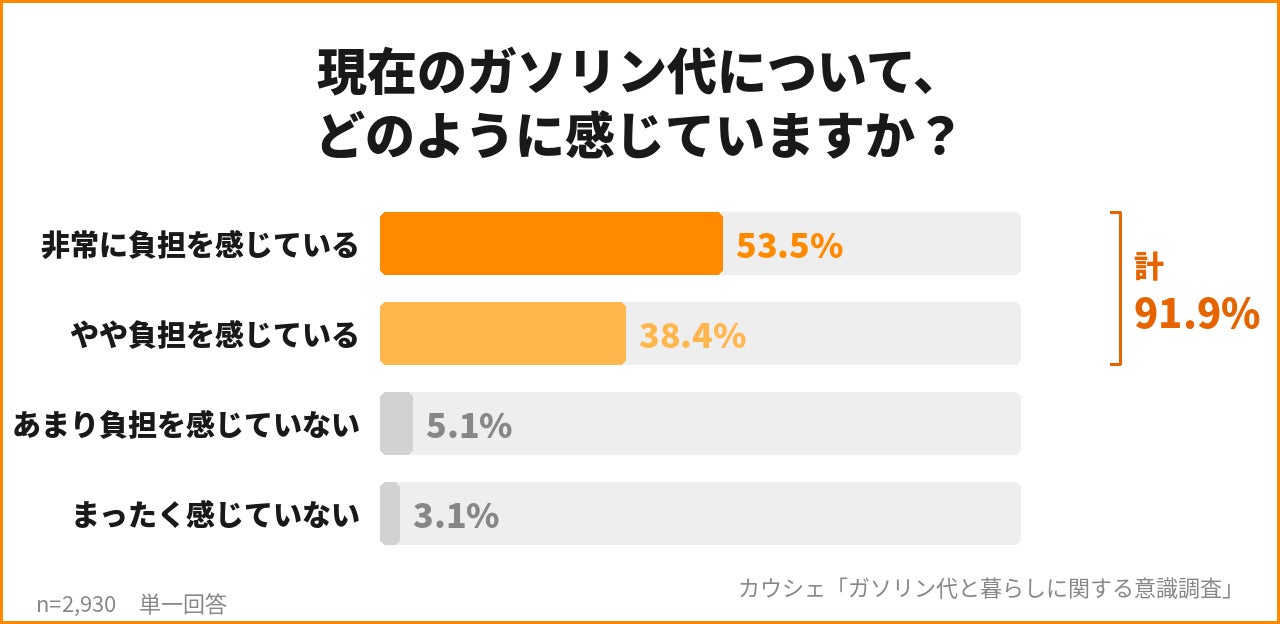
91.9% feel burdened by current gasoline prices
-
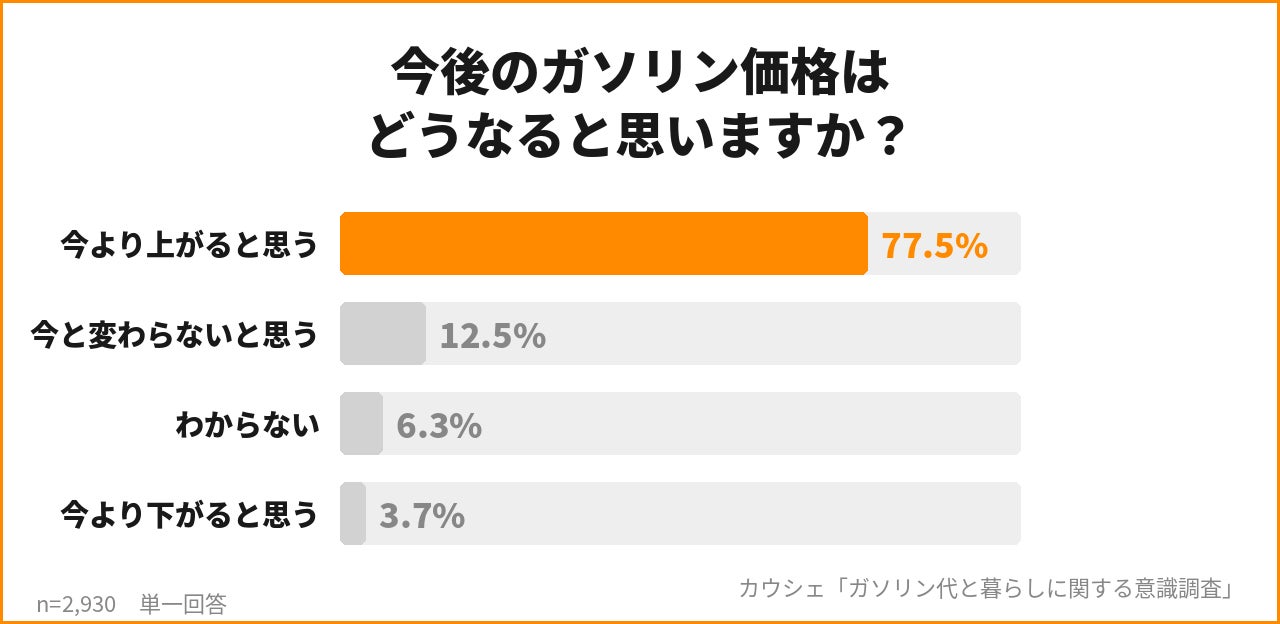
77.5% predict prices will "rise further" in the future
-
78.5% feel gasoline prices have "increased" compared to a year ago
-
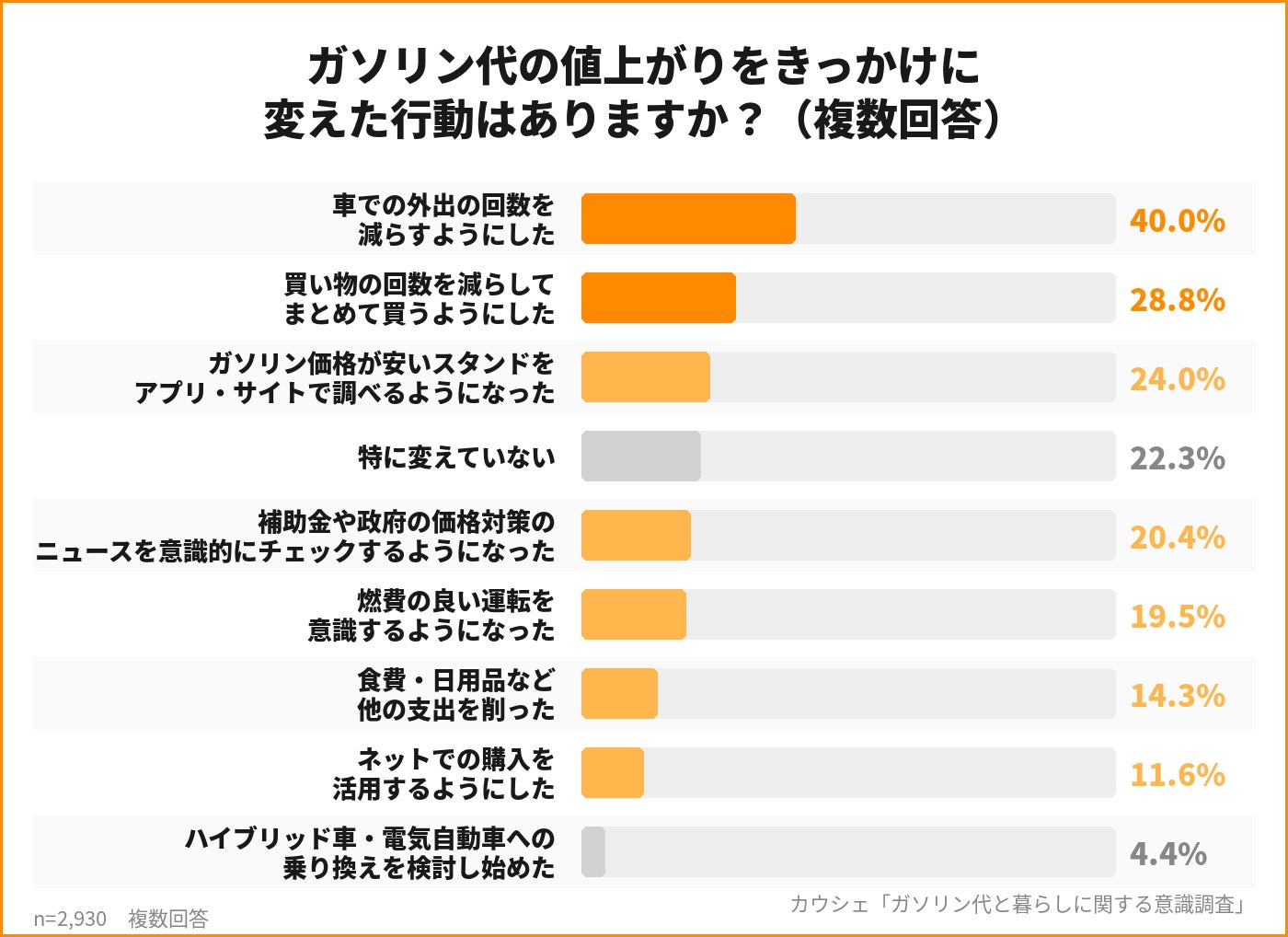
Top behavioral change: "Reduced car outings" (40%), 2nd: "Switched to bulk buying" (28.8%)
-
14.3% responded "Cut other expenses such as food and daily necessities." Impact on household budgets is clear.
"Still expensive even with subsidies" - 90% feel burdened, over half say they feel "extremely burdened"
Due to government subsidies to curb gasoline prices, current gasoline prices have fallen for two consecutive weeks. The national average price per liter of regular gasoline (as of March 30) announced by the Petroleum Information Center on April 1 was 170.2 yen, a decrease of 7.5 yen from the previous week.
However, in this survey conducted on April 2, 91.9% of consumers responded that they "feel burdened."
"Feeling extremely burdened" alone accounted for 53.5%, more than half, revealing that despite subsidies, the perceived cost for consumers has not been alleviated.
"Still rising" - 77.5% predict price increases, no widespread sense of relief
Regarding future gasoline price outlook, 77.5% responded "I think prices will rise further," while only 3.7% said "I think prices will fall." It is noteworthy that nearly 80% of consumers remain cautious about the future, despite the current level of subsidies being maintained.
This is likely due to persistent concerns about the termination or reduction of subsidies, as well as anxieties about international crude oil prices and exchange rate trends. The fear that "prices could jump at any time" is seen as a factor driving daily saving behaviors.
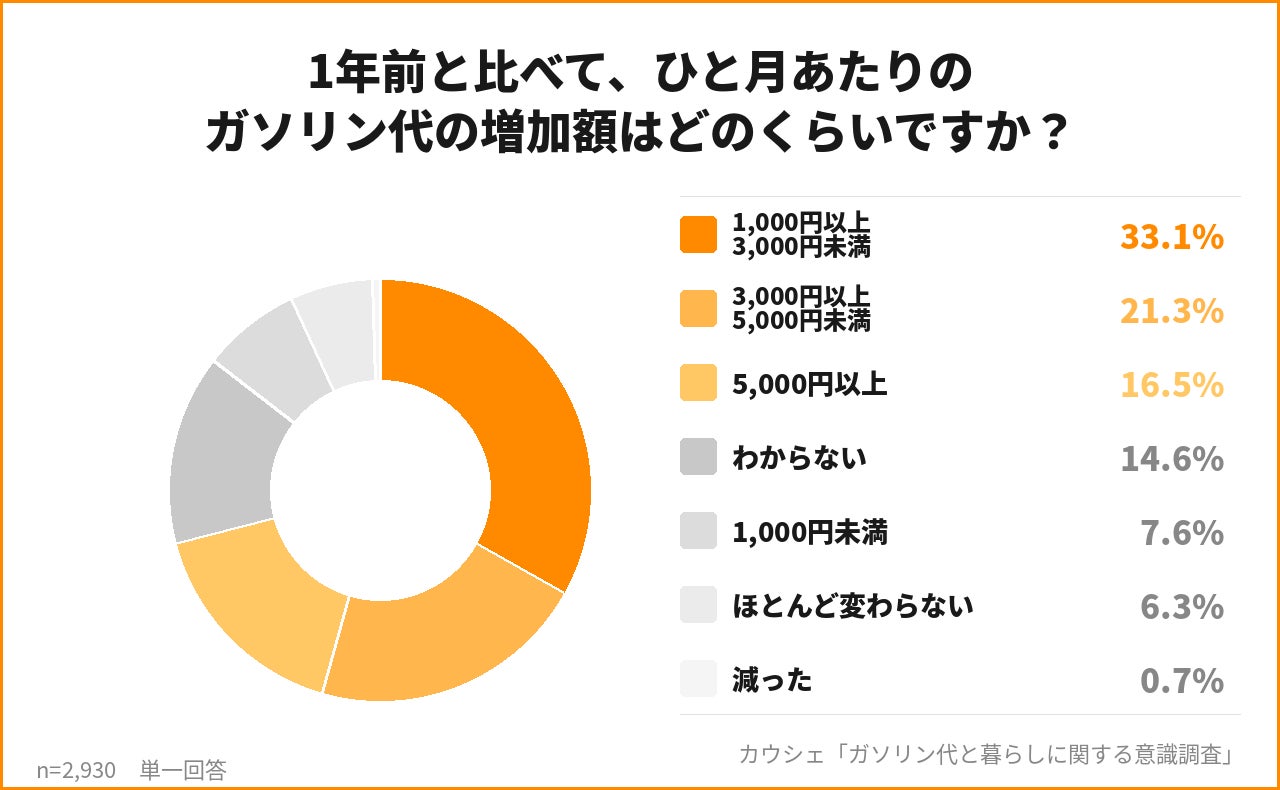
Approximately 80% feel the burden of gasoline prices has increased compared to a year ago
When asked about changes in gasoline prices compared to a year ago, 78.5% responded that they had "increased."
The most common increase range was "1,000 yen to less than 3,000 yen" at 33.1%, but "3,000 yen to less than 5,000 yen" was 21.3%, and "5,000 yen or more" was 16.5%, with a total of 37.8% of people experiencing an increase of 3,000 yen or more per month.
An increase of 3,000 yen per month amounts to 36,000 yen annually. This level is sufficient to put pressure on other household expenses and is linked to the saving behaviors described later.
Gasoline prices directly hit the dinner table; daily consumption affected by "bulk buying" and "food expense reduction"
The top behavioral change was "Reduced car outings" (40%), indicating that efforts to curb gasoline consumption itself were most common. However, changes in purchasing behavior beyond just reducing outings are noteworthy.
The second most common change, "Switched to bulk buying" (28.8%), is an action to save on gasoline costs by reducing shopping frequency. Furthermore, "Cut other expenses such as food and daily necessities" was 14.3%, and "Started utilizing online purchases" was 11.6%, confirming that the burden of gasoline prices is changing not only how cars are used but also how food and daily necessities are purchased.
In addition, changes in information gathering behavior were also prominent, such as "Started using apps to find cheaper gas stations" (24.0%) and "Started checking subsidy/policy news" (20.4%), suggesting that consumers are consciously treating gasoline costs as a "cost to be managed."
The results of this survey indicate that the sustained high gasoline prices are not merely a problem of transportation costs but are deeply affecting daily purchasing behavior for food and daily necessities. The current situation, where 90% feel prices are "high" even with subsidies and nearly 80% believe they will "rise further," is a clear sign that consumers are facing structural inflation.
Behavioral changes such as "buying in bulk" and "smart online shopping" stem from a desperate need to live more affordably within limited household budgets. Kauche, as a shopping app that responds to these consumer saving needs, will continue to provide an environment where a wide range of products, including food and daily necessities, can be purchased at advantageous prices.
Survey Name: Survey on Gasoline Prices and Lifestyle Awareness
Valid Responses: 2,930 men and women nationwide
Survey Method: Internet survey
Survey Conducted: April 2, 2026
Survey Organizer: Kauche Inc.
*When quoting or reprinting the results of this survey, please clearly state "Kauche Research."
What is the shopping app "Kauche"?
"Kauche" is a shopping app that allows users to enjoy shopping "with someone." By shopping using the "Kauche Farm" and "Everyone's Posts" features, users can purchase products at advantageous prices and enjoy shopping while communicating with friends, family, or others on social media.
About Kauche Inc.
With the mission of "bringing joy to everyday life," Kauche Inc. operates the shopping app "Kauche." By realizing an exciting shopping experience for both customers who buy and businesses that sell, we aim to update the digital shopping experience as a place where enjoyment can be pursued, not just limited to the purpose of "purchasing goods."
"Kauche" App Overview
Official Name: "Kauche"
Development/Operation: Kauche Inc.
Supported Devices: iPhone, Android
Service Area: Japan
Supported Languages: Japanese
Service Start Date: September 1, 2020
App Store: https://apps.apple.com/jp/app/id1527218749
Google Play: https://play.google.com/store/apps/details?id=com.kauche.kauche
Official X Account: https://x.com/kauche_jp
Company Profile
Company Name: Kauche Inc.
Business Activities: Operation of "Kauche"
Representative Director: Kenpei Monna
FAQ
How much burden do people feel from gasoline prices?
91.9% of respondents feel a burden, with 53.5% stating they feel a 'very significant burden'.
How has consumer behavior changed due to rising gasoline prices?
40% reduced car outings, 28.8% switched to bulk buying, and 14.3% cut spending on food and daily necessities.
What kind of service does Kauche Inc. provide?
Kauche is a shopping app that allows users to purchase products at a discount through group buying and gamification elements.