AAKEL Provides "EV Charging Optimization System" to Green Coop Kumamoto's 60 EV Fleet
AAKEL begins providing its EV charging optimization system to Green Coop Kumamoto's fleet of 60 EVs.
📋 Article Processing Timeline
- 📰 Published: April 1, 2026 at 01:00
- 🔍 Collected: April 1, 2026 at 01:06 (6 min after Published)
- 🤖 AI Analyzed: April 16, 2026 at 13:22 (372h 15m after Collected)
AAKEL Inc. (Headquarters: Fukuoka City, Fukuoka Prefecture, Representative Director: Ryoji Miyawaki, hereinafter referred to as "AAKEL"), which aims to realize a decarbonized society through digital innovation, has begun providing its EV smart charging and operation management system "AAKEL eFleet" (hereinafter referred to as "eFleet") to Green Coop Consumers' Cooperative Kumamoto (Headquarters: Kumamoto City, Kumamoto Prefecture, Chairperson: Kaori Kobayashi, hereinafter referred to as "Green Coop Kumamoto") Northern and Eastern Centers, and to Green Coop Denki General Incorporated Association (Headquarters: Fukuoka City, Fukuoka Prefecture, Chairperson: Yoko Hidaka, hereinafter referred to as "Green Coop Denki").

This implementation optimizes the charging of a total of 60 EV trucks and light EV vans. Through automatic charging control that considers electricity market prices and facility power constraints, it achieves operational efficiency for the EV fleet and optimization of electricity costs.
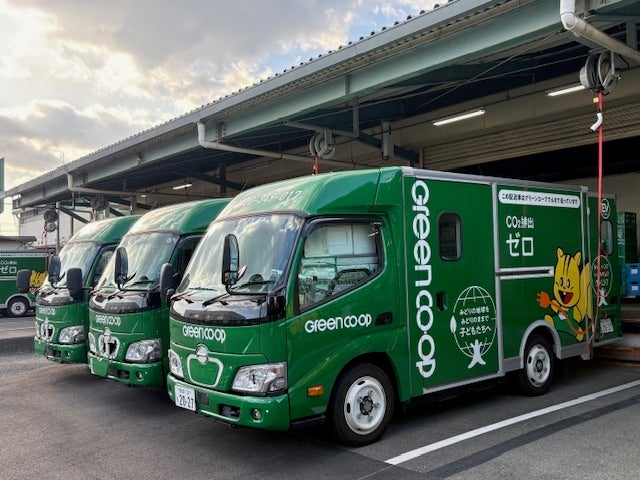
This initiative follows the implementation at the Western Center (23 EV trucks) in March 2025.
Reference: March 6, 2025: Green Coop Kumamoto x AAKEL Technologies Begins Service for Optimal Charging Management System for EV Trucks
■ Background
Green Coop Consumers' Cooperative, aiming to realize a "Society of Mutual Living," is proceeding with a plan to convert all its business and delivery vehicles to EVs by 2027, implementing the transition in stages at each distribution center.
However, operating a large number of EVs at distribution centers presents operational challenges such as rising electricity costs, balancing overall facility power consumption, and managing charging schedules for multiple vehicles. In particular, distribution centers require a system for efficiently charging numerous EVs within limited charging stations and power capacity.
Therefore, AAKEL decided to provide eFleet to support the optimization of EV operations and energy management.
■ System Overview
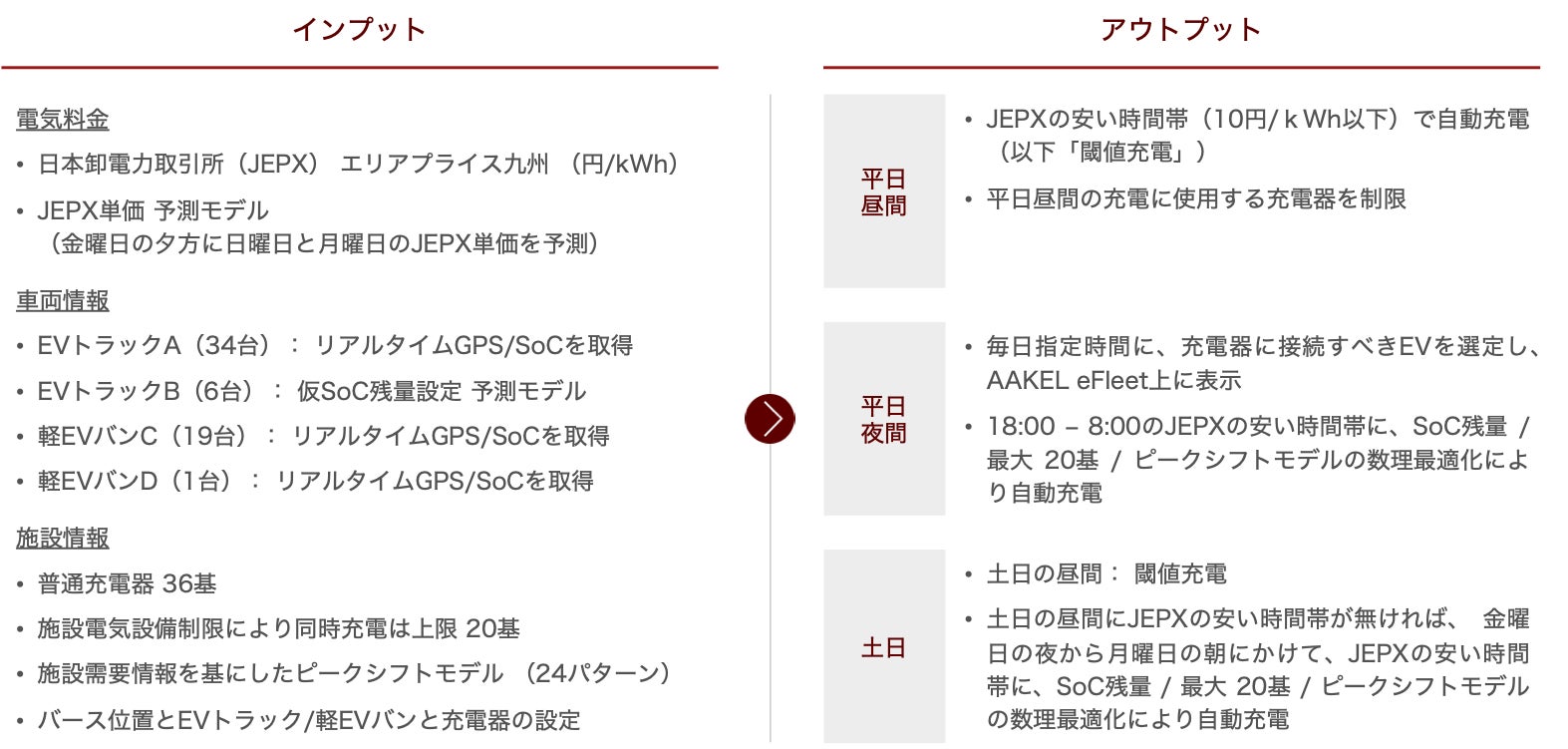
■ System Features
① Smart Charging Linked to Electricity Market Prices
Charging is automatically scheduled during times when electricity prices are low, based on price data from the Japan Electric Power Exchange (JEPX).
② Optimal Control for 60 EVs
Charging is optimized for a total of 60 EV trucks and light EV vans, considering their remaining battery levels and planned usage.
③ Optimization Considering Facility Power Constraints
Charging is controlled while suppressing power peaks within the constraint of a maximum of 20 simultaneous charges out of 36 charging stations.
④ Automatic Charging Schedule Management
The system automatically selects vehicles that should be connected to chargers each day, supporting efficient charging operations.
■ Expected Effects
The introduction of this system will achieve the following:
-
Automation of EV fleet charging operations
-
Reduction in charging costs by utilizing electricity market prices
-
Suppression of power peaks at logistics hubs
-
Improved operational efficiency to accommodate the expansion of EV adoption
-
Reduced costs for expanding electrical equipment and optimization of electrical equipment specifications that do not affect delivery operations
Furthermore, for Green Coop Denki, it contributes to the optimization of electricity procurement costs.
Green Coop Kumamoto, aiming to realize a "Society of Mutual Living," upholds the philosophy of building a society where nature and people, people and people, women and men, and the south and north mutually support each other and live together. Based on this philosophy, each member participates in investment, utilization, and management, working to provide safe and secure products and contribute to the local community.
The service provided by AAKEL contributes to Green Coop's efforts to build a sustainable society and supports the strengthening of environmental protection and community contributions. AAKEL expects its initiatives to support Green Coop's activities and contribute to building a sustainable future together.
■ Green Coop's Decarbonization Project "OUR GREEN" Project

Green Coop is promoting the environmental project "OUR GREEN," which aims to achieve "0 greenhouse gas emissions from Green Coop's business operations by 2027."
Based on the idea that "nothing forced, endured, or strained can last," "OUR GREEN" aims for "carbon neutrality initiatives that members can participate in without strain or excessive effort." Furthermore, the blank space in the upper right of the "OUR GREEN" logo embodies the sentiment, "Carbon neutrality is complete when you join."
■ About "AAKEL eFleet"
This is a service that centrally manages and automates optimal EV charging using AAKEL's proprietary technology*. It is aimed at companies and local governments introducing EVs for decarbonization. By combining systems such as "Dynamic Pricing," "Fleet Management," and "EMS" with "Smart Charging," it optimizes and centrally manages EV charging.
*EV Charging Management System using Mathematical Optimization
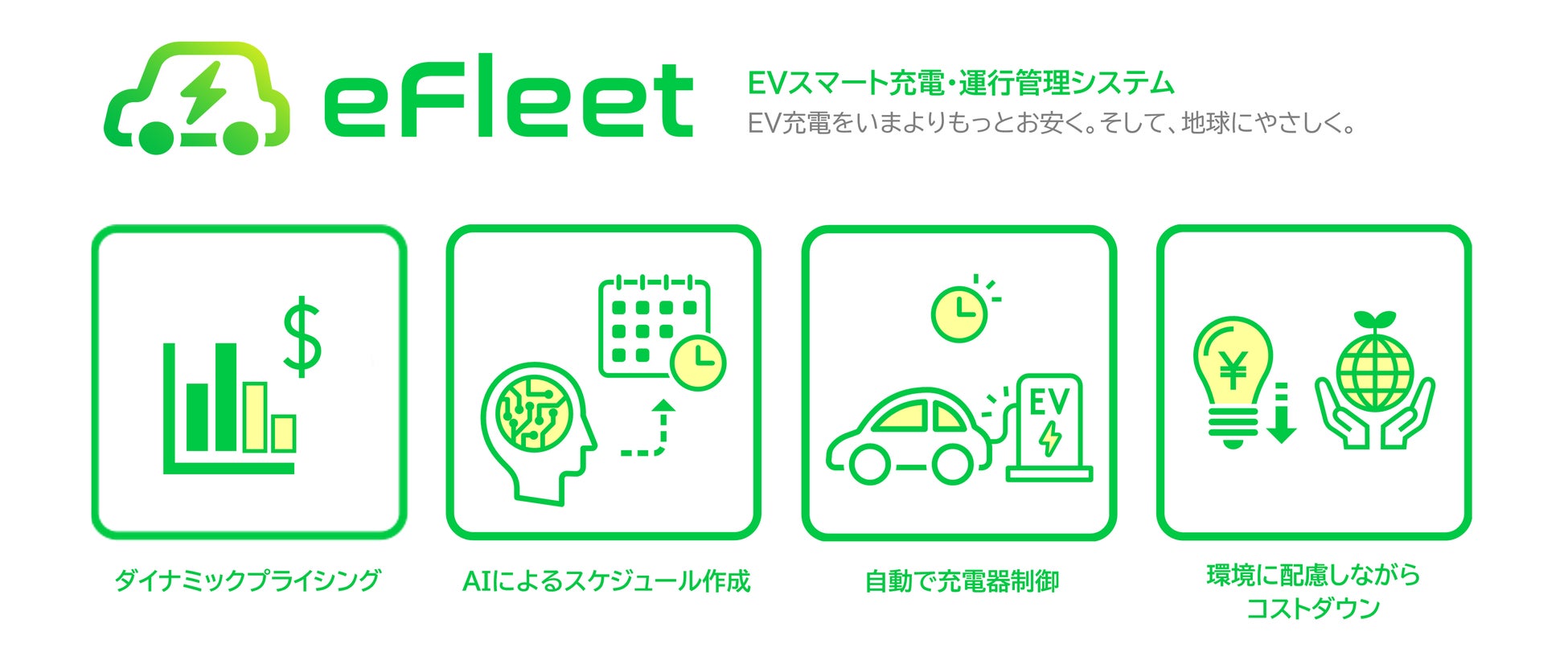
Features
Easily grasp charging status anytime, anywhere via PC or smartphone, and remotely control charging.
- Management of multiple EVs
- Registration of next-day operational plans for each EV
- Management of different equipment information and installation locations for each charger
- Check charging status, charging schedule, and location information for each EV
- Review usage history such as charging fees, charge amount, and charging time
- In case of emergency, switch between automatic/manual charging with one click
■ Company Information
Green Coop Consumers' Cooperative Kumamoto
Green Coop Kumamoto is affiliated with the Green Coop Community General Association, which comprises 16 consumer cooperatives mainly in western Japan, and operates as a member. The Green Coop Community General Association was founded on the desire of mothers to deliver safe and secure food to children and strives for the development of local communities.
Chairperson: Kaori Kobayashi
Established: March 2001
HP: https://greencoop-kumamoto.jp/
Headquarters: 2-1-1 Shintokawara, Nishi Ward, Kumamoto City, Kumamoto Prefecture
Green Coop Denki General Incorporated Association
Green Coop Denki is a new power company born from the wishes of 430,000 members involved in the Green Coop movement. It operates its electricity business with the basic philosophy of "Handing over a green earth to children as it is." It is also working towards "self-sufficiency in electricity" by developing power plants utilizing regional natural energy and promoting onsite PPA projects. In its retail business, it aims to realize a carbon-neutral society through its electricity business, including selling electricity plans that promote demand response.
Chairperson: Yoko Hidaka
Established: November 2012
HP: https://greencoopdenki.jp/
Headquarters: 1-5-1 Hakataekimae, Hakata Ward, Fukuoka City, Fukuoka Prefecture
AAKEL Inc.
Representative Director: Ryoji Miyawaki
Established: August 1, 2018
Tokyo Headquarters: VILLAGE AZABUDAI 7F, 1-11-5 Azabudai, Minato-ku, Tokyo
Fukuoka Headquarters: Daimei Kaisei Bldg. 7F, 2-11-13 Daimyo, Chuo-ku, Fukuoka City, Fukuoka Prefecture
Business Activities: Provision of digital services for carbon neutrality, consulting for companies aiming for carbon neutrality
FAQ
Why is Green Coop Kumamoto promoting the adoption of EVs?
Green Coop aims to realize a "Society of Mutual Living" and is proceeding with a plan to convert all its business and delivery vehicles to EVs by 2027.
What are the challenges when introducing a large number of EVs?
Operational challenges arise, such as rising electricity costs, balancing overall facility power consumption, and managing charging schedules for multiple vehicles. In particular, a system for efficiently charging numerous EVs within limited charging stations and power capacity is essential.
What kind of system is "AAKEL eFleet"?
It is a service that centrally manages and automates optimal EV charging. Through automatic charging control that considers electricity market prices and facility power constraints, it achieves operational efficiency for the EV fleet and optimization of electricity costs.
What are the main features of "AAKEL eFleet"?
Key features include smart charging linked to electricity market prices, optimal control for 60 EVs, optimization considering facility power constraints, and automatic charging schedule management.
What effects can be expected from the introduction of this system?
Expected effects include automation of EV fleet charging operations, reduction in charging costs, suppression of power peaks at logistics hubs, and improved operational efficiency to accommodate the expansion of EV adoption.