[Real Estate Brokerage Case Study] Shifting from Letters to Form Sales: Consolidating 30% of Man-hours into Strategic Design to Achieve a 15% Unique Visit Rate
Key facts
- [Real Estate Brokerage Case Study] Shifting from Letters to Form Sales: Consolidating 30% of Man-hours into Strategic Design to Achieve a 15% Unique Visit Rate
- FUTUREWOODS Co., Ltd. has released a case study of a real estate brokerage that successfully transformed its new business development by switching from traditional direct mail letters to automated inquiry form sales using 'FutureSearch,' reducing outreach time from two days to two hours.
- Date: March 30, 2026
Direct answer
FUTUREWOODS Co., Ltd. has released a case study of a real estate brokerage that successfully transformed its new business development by switching from traditional direct mail letters to automated inquiry form sales using 'FutureSearch,' reducing outreach time from two days to two hours.
- Citation
- [Real Estate Brokerage Case Study] Shifting from Letters to Form Sales: Consolidating 30% of Man-hours into Strategic Design to Achieve a 15% Unique Visit Rate (March 30, 2026)
- Source
- PR Times
- Date
- March 30, 2026
FUTUREWOODS Co., Ltd. has released a case study of a real estate brokerage that successfully transformed its new business development by switching from traditional direct mail letters to automated inquiry form sales using 'FutureSearch,' reducing outreach time from two days to two hours.
📋 Article Processing Timeline
- 📰 Published: March 30, 2026 at 05:11
- 🤖 AI Analyzed: May 26, 2026 at 21:27 (1384h 15m after Published)
FUTUREWOODS Co., Ltd. (Headquarters: Bunkyo-ku, Tokyo; Representative Director: Hayato Obama), provider of the sales support tool 'FutureSearch,' has released a case study of Company D, which handles leasing brokerage for large office buildings in the Tokyo metropolitan area.
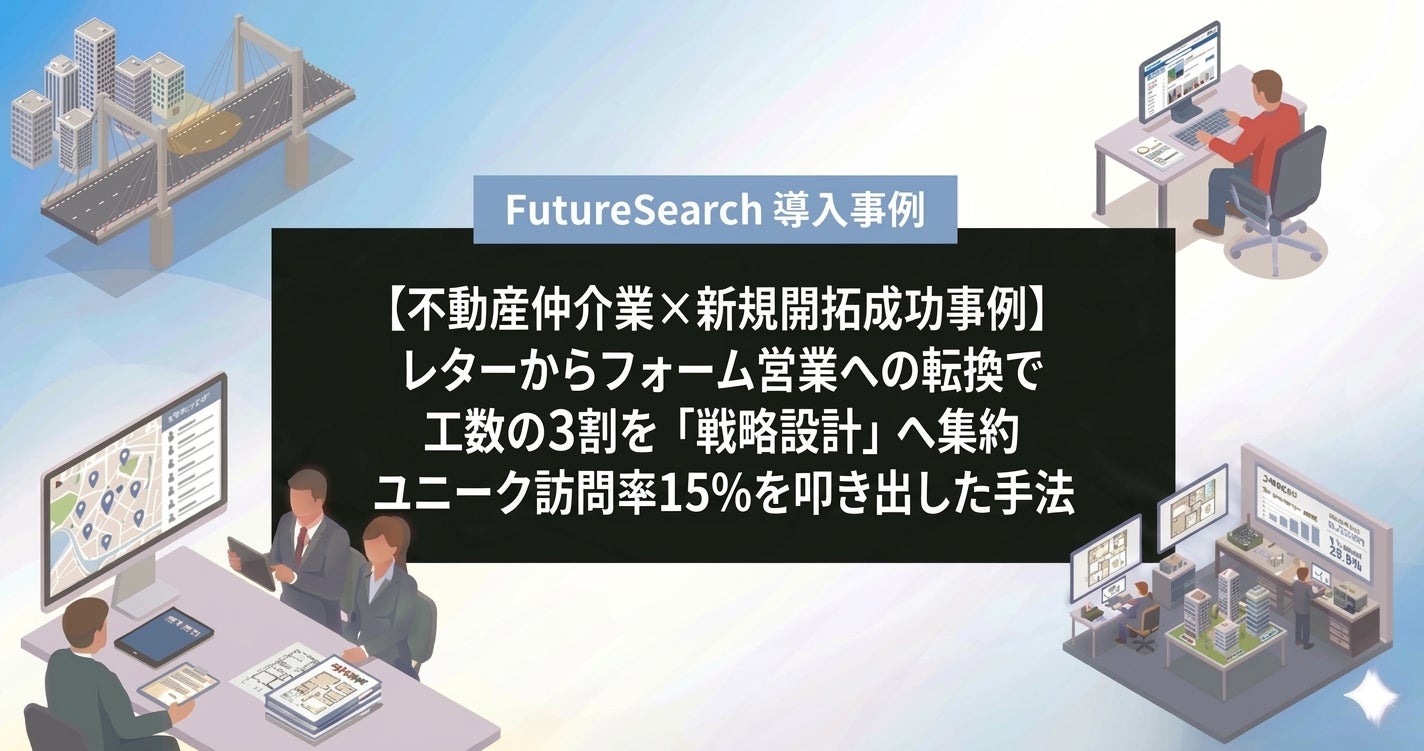
[Click here for full details and the complete case study]
https://www.future-search.jp/guides/real-estate-agency-case-study
■ 30% of Monthly Man-hours Were Consumed by DM Shipping
Company D constantly handles approximately 20 large-scale properties and primarily conducted sales using direct mail (DM) letters targeting general affairs managers and office heads at corporations. However, shipping DMs to 100 companies per building took about two days, meaning more than 30% of monthly sales man-hours were spent on tasks such as printing, stuffing, and shipping. Additionally, response rates continued to decline, and the company faced the challenge of being unable to devote enough time to refining their target lists.
■ A Single Message in Their Own Inquiry Form Triggered the Change
The turning point was a single sales message that arrived in Company D's own inquiry form. Realizing that "this is the current form of sales," they encountered FutureSearch while gathering information. The deciding factor for adoption was that the tool automatically handles everything from collecting target company lists to sending messages via inquiry forms simply by setting conditions such as industry, region, and employee size.
Printing, stuffing, and mailing are entirely unnecessary, and messages arrive on the same day they are sent. Since inquiry forms are official contact points that staff check daily, they have a higher reading rate compared to physical DM, with no risk of being discarded without being opened. The time required for an approach to 100 companies was reduced from two days to just approximately two hours.
■ Targeting Only "Companies Moving Now" via 4-Layer Filtering
Utilizing the saved man-hours, Company D established a four-layer targeting strategy tailored to property characteristics.
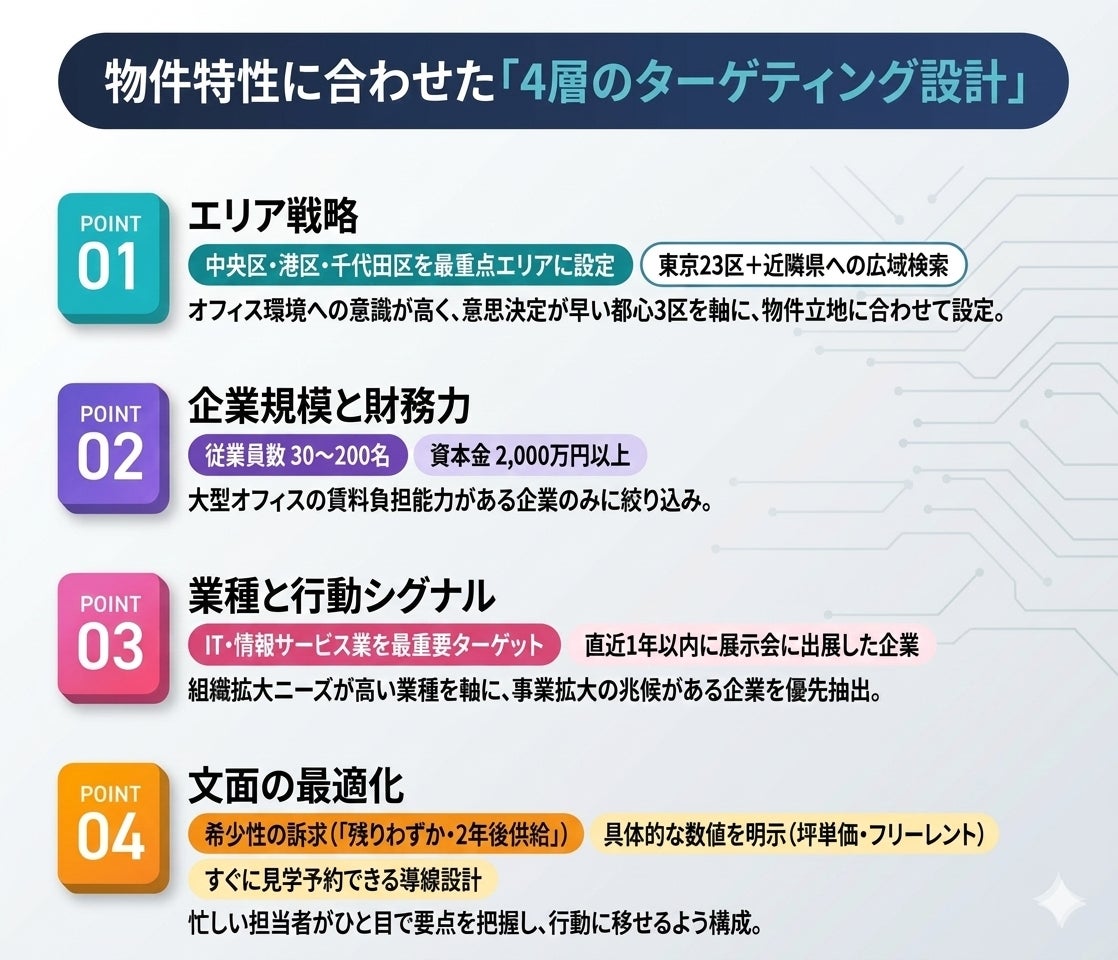
① Area Strategy
The three central wards of Tokyo (Chuo, Minato, and Chiyoda) were set as the highest priority areas...
FAQ
What was the primary sales method used by Company D before implementing FutureSearch?
Company D primarily conducted sales using direct mail (DM) letters targeting general affairs managers and office heads at corporations.
How much of Company D's monthly man-hours were consumed by DM shipping tasks?
More than 30% of Company D's monthly sales man-hours were spent on tasks such as printing, stuffing, and shipping direct mail (DM) letters.
What was the key factor that triggered Company D's shift in sales strategy?
The turning point was receiving a single sales message in their own inquiry form, which made them realize that this was the current form of sales.
How does FutureSearch automate the sales outreach process for Company D?
FutureSearch automatically handles everything from collecting target company lists to sending messages via inquiry forms by setting conditions like industry, region, and employee size.
What is the estimated time reduction for approaching 100 companies using FutureSearch compared to the previous DM method?
The time required for an approach to 100 companies was reduced from two days to just approximately two hours by using FutureSearch.