Formation of Japan's First 'Regenerative Architecture Fund' Incorporating Real Estate that Balances Environmental Contribution and Profitability
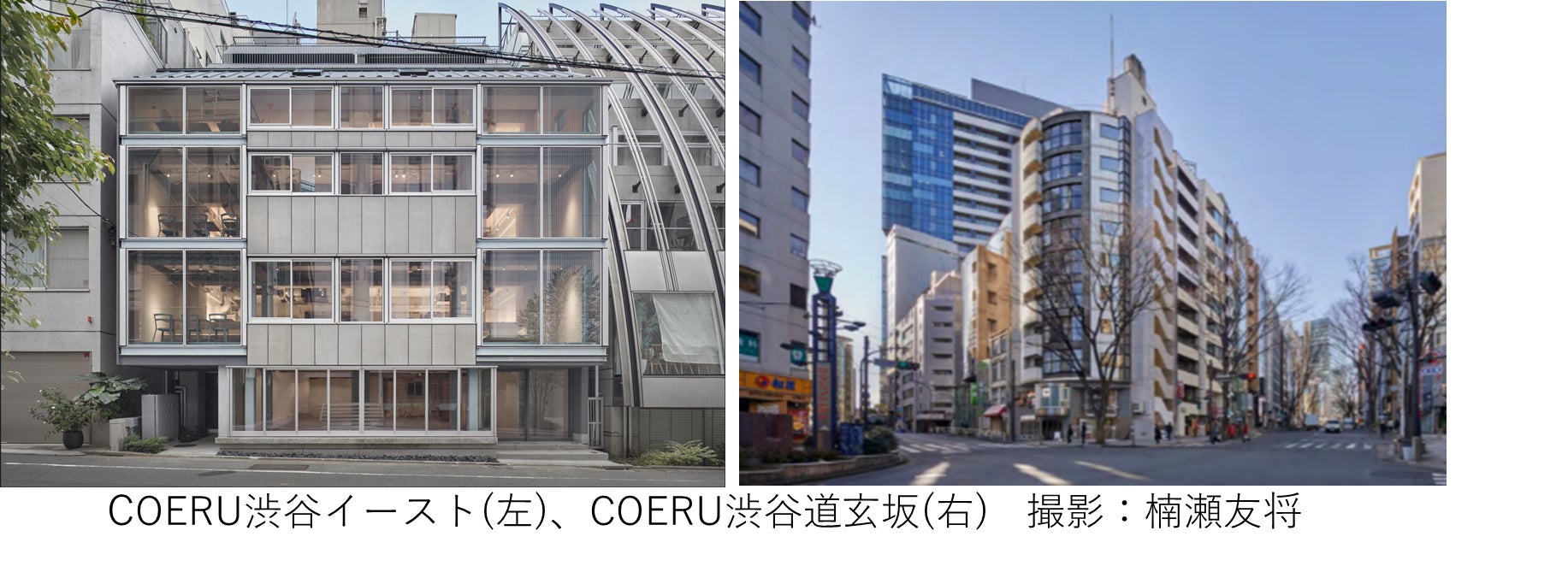
Tokyu Fudosan and several partners have established Japan's first 'Regenerative Architecture Fund' to invest in properties that balance environmental contribution and profitability. The fund includes two properties, COERU Shibuya Dogenzaka and COERU Shibuya East, which have undergone regenerative architecture to extend their economic useful life to over 100 years and significantly reduce CO2 emissions and waste compared to new construction. This initiative aims to promote the circulation of high-value, renovated older buildings in the market and address social issues related to aging building stock.
📋 Article Processing Timeline
- 📰 Published: April 6, 2026 at 20:00
- 🔍 Collected: April 6, 2026 at 11:31
- 🤖 AI Analyzed: April 18, 2026 at 06:22 (282h 51m after Collected)
Tokyu Fudosan Co., Ltd. (President and Representative Director: Tatsumei Tanaka), Tokyu Fudosan Capital Management Co., Ltd. (President and Representative Director: Tsuyoshi Tsuneyoshi, hereinafter 'TLCM'), a private fund management company wholly owned by Tokyu Fudosan, SMFL Mirai Partners Co., Ltd. (President and Representative Director: Akira Ueda), NCS RE Capital Co., Ltd. (President and Representative Director: Takashi Arai), Dai-ichi Life Insurance Company, Limited (President and Representative Director: Shunsuke Sumino), The Bank of Yokohama, Ltd. (President and Representative Director: Tatsuya Kataoka), and Regenerative Architecture Institute Co., Ltd. (Representative Director: Toyoaki Kamimoto) are pleased to announce the formation of the 'Regenerative Architecture Fund,' targeting regenerative architecture properties with a maximum operational period of five years.
The purpose of establishing this fund is to circulate regenerative architecture buildings in the market under appropriate valuation. 'COERU Shibuya Dogenzaka,' which is 40 years old, and 'COERU Shibuya East,' an old seismic standard building over 50 years old, are incorporated into this fund. By utilizing their existing structures such as foundations and columns, and employing regenerative architecture methods to enhance their value in line with the times, including seismic and safety renovations and changes of use, both properties have extended their economic useful life*1 by 60 years, resulting in a cumulative economic useful life of over 100 years. This is Japan's first*2 case of incorporating old seismic standard buildings with a cumulative economic useful life exceeding 100 years into a fund. Furthermore, both properties have reduced CO2 emissions and waste generated during construction by approximately 70%*3 compared to new construction, contributing to the realization of a decarbonized and circular society. Recognizing these characteristics, both properties were selected for the Ministry of Land, Infrastructure, Transport and Tourism's 'Model Survey Project for Promoting Value-Up Renovation Investment in Small and Medium-Sized Buildings,' received the '2025 Good Design Award*4,' and acquired the 'DBJ Green Building Certification*5,' one of the environmental certifications.
As the number of buildings considered old is expected to increase in the future, we will also address social issues by extending the economic useful life and significantly enhancing the asset value of existing buildings through regenerative architecture.
*1 Economic useful life: The number of years reflecting the degree of market competitiveness in light of economic factors, in addition to physical and functional factors.
*2 Based on publicly available information in industry journals and interviews conducted by Tokyu Fudosan.
*3 CO2 emissions: Calculated using Sumitomo Forestry's CO2 calculation system 'One Click LCA.' Approximately 66% reduction for COERU Shibuya East and 89% reduction for COERU Shibuya Dogenzaka. Waste reduction: Waste volume calculated based on total floor area compared to new construction (excluding structural frame). Partial demolition volume of the structural frame extracted from the estimate breakdown and calculated by unit weight. Approximately 74% reduction for COERU Shibuya East and 95% reduction for COERU Shibuya Dogenzaka.
*4 Good Design Award: Evaluates products and services that enrich lives and society, held for over 60 years (https://www.g-mark.org/)
*5 DBJ Green Building Certification: A certification system by the Development Bank of Japan that evaluates the sustainability of real estate based on ESG (https://www.dbj.jp/service/program/g_building/index.html)
■ Regenerative Architecture Fund
As an investment opportunity for environmentally conscious properties, the first fund was established, incorporating two properties, COERU Shibuya East and COERU Shibuya Dogenzaka, which Tokyu Fudosan and Regenerative Architecture Institute worked on for regenerative architecture. SMFL Mirai Partners, NCS RE Capital, Dai-ichi Life Insurance, The Bank of Yokohama, Regenerative Architecture Institute, and Tokyu Fudosan invested in the fund, sympathizing with the asset value enhancement through regenerative architecture and its contribution to environmental issues. Non-recourse loans were secured from two companies (Senior Lender: The Bank of Yokohama, Mezzanine Lender: Shoko Chukin Bank). TLCM will serve as the asset manager for this fund.
In particular, properties built under old seismic standards often receive low valuations in the financial market. However, through regenerative architecture, these properties achieved compliance correction, ensured safety, and extended their economic useful life, leading to a valuation significantly higher than typical old and old-seismic-standard properties, thus enabling the formation of this fund.
During the fund's term, Tokyu Fudosan will provide advice and reporting services for mid- to long-term property value enhancement, in cooperation with design and appraisal companies. Regular surveys of building conditions will be conducted, and operational carbon, building condition management, and reporting results during the operation period will be disclosed to stakeholders, aiming to dispel the 'fundamental psychological anxiety about old properties' through monitoring of both properties.
■ Comments from Each Company
◆ Tokyu Fudosan Co., Ltd.
Tokyu Fudosan is promoting its regenerative architecture business to change the conventional system where 'old properties' were not highly valued in the real estate and financial industries. Starting with the formation of this fund, we aim to increase the circulation of high-value, quality old properties and boost the momentum for utilizing existing building stock, thereby building a sustainable social model that enhances value while reducing environmental impact. In addition to contributing to a decarbonized society, by promoting this social model as a market leader, we will increase collaborative players and create social impact.
◆ Tokyu Fudosan Capital Management Co., Ltd.
Tokyu Fudosan Capital Management utilized a green finance framework*6, a mechanism for transparent fundraising regarding investment purposes. We will continue to form and operate regenerative architecture funds while building trust with investors and stakeholders.
*6 A second-party opinion is planned to be obtained from Japan Credit Rating Agency, Ltd. This framework, not limited to this first fund, defines that funds raised through loans and anonymous partnership equity by the SPC of the regenerative architecture fund are limited to uses with environmental improvement effects.
◆ SMFL Mirai Partners Co., Ltd.
As a business company with financial functions, SMFL Mirai Partners positions its real estate business as one of its core businesses. Through the provision of a wide range of solutions, including real estate leases, non-recourse loans, and equity investments, we co-create new value with customers and business partners in various fields. The SMFL Group is committed to initiatives for realizing a decarbonized and circular society, and through this investment, we aim to support environmental response and the resolution of social issues. We will continue to contribute to the realization of a decarbonized and circular society through investments and loans in rental housing, logistics facilities, offices, commercial facilities, and more.
◆ NCS RE Capital Co., Ltd. (100% subsidiary of NEC Capital Solutions Limited)
Our group aims to realize a 'next-generation circular society' and is working to solve customer and social issues with the promotion of a decarbonized society and circular economy as one of its important themes. This initiative, which achieves both environmental impact reduction and economic improvement by utilizing existing properties, aligns with the direction our group aims for. Through this investment, we will promote business expansion in the real estate sector utilizing existing stock effectively and contribute to a decarbonized society.
◆ Dai-ichi Life Insurance Company, Limited
As a responsible institutional investor managing insurance premiums entrusted by our customers, we have been working to achieve both long-term, stable investment returns and the resolution of social issues that lead to the realization of a sustainable society in the real estate investment domain. We believe this fund is an advanced initiative that achieves both economic efficiency and environmental consideration through the use of regenerative architecture, especially in an environment where new construction costs are soaring.
We will continue to make real estate investments that accurately assess changes in society and the market, including engaging in advanced real estate investments like this one.
◆ The Bank of Yokohama, Ltd.
We believe that initiatives such as sustainable urban development through regenerative architecture and efforts to reduce environmental impact, as seen in this project, will become increasingly important. The entire group has set a long-term sustainability KPI of '4 trillion yen in sustainable finance by FY2030,' and we will continue to undertake initiatives that contribute to the sustainable development of local communities, such as this project.
◆ Regenerative Architecture Institute Co., Ltd.
Regenerative Architecture Institute Co., Ltd., with the mission of 'creating a social system that makes regenerative architecture a culture,' has re-evaluated the value of existing stock and implemented urban regeneration across design, real estate, and finance. Japanese cities have traditionally been updated on the premise of rebuilding, but with rising construction costs and increasing demands for decarbonization, the utilization of existing stock has become a critical social issue. Our company has transformed existing buildings from 'depreciable assets' into 'assets to be utilized continuously' by deciphering their potential and reconstructing their value to suit the market and purpose. We have been collaborating with Tokyu Fudosan since 2022, jointly promoting the concept of a fund based on regenerative architecture from its planning stages. In this initiative, designers themselves participate as investors, integrating design with mid- to long-term value creation to collectively enhance architectural quality and operational results. While the average lifespan of buildings is said to be about 30 years, we aim to shift the premise to utilizing existing stock for 100-year cycles, and by assetizing and generalizing regenerative architecture, which was once a 'special solution,' we seek to establish it as a new culture in society.
■ Selected for Ministry of Land, Infrastructure, Transport and Tourism's Model Survey Project
The Ministry of Land, Infrastructure, Transport and Tourism is conducting a survey project to promote the renewal of many aging real estate properties reaching their renovation period. This project focuses on small and medium-sized buildings as models to identify and disseminate methods for value-up renovations that address social issues and their effects. The two facilities in this fund were selected as models for this project.
▼ COERU Shibuya East
A small, aging building built under old seismic standards was renovated into a setup office for startup companies. The lower floors were expanded by removing existing balconies and exterior walls and changing to a glass facade, thereby increasing the opening area effective for natural light. The upper floors were reduced in size, and an atrium and roof terrace were installed to improve the office environment.
The external committee evaluated the following points:
・In addition to being a renovation that addresses energy saving, CO2 reduction, and well-being, it is an initiative that considers the regional characteristics where startup companies gather, and social impact is intended.
・The logic model for social impact is appropriately created, and the clear causal relationship between activities and impact is commendable. In particular, the quantitative evaluation of CO2 emissions and industrial waste reduction compared to new construction is excellent and contributes to increased persuasiveness.
・Despite the advantageous location, the renovation content, which considers regional characteristics, and the corresponding leasing strategy have achieved high rental rates for a property over 50 years old, which is commendable.
▼ COERU Shibuya Dogenzaka
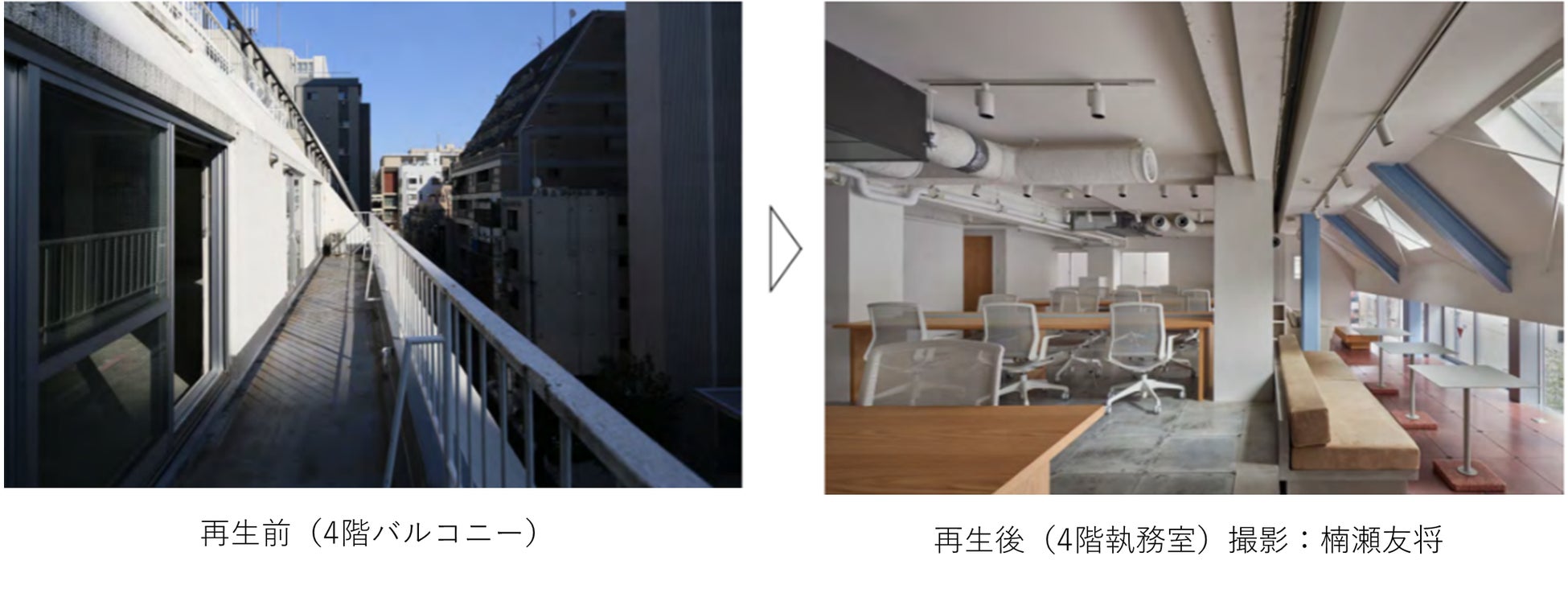
Originally a capsule hotel and retail space, a sauna was later installed on the 3rd floor, leading to partial demolition work on the entire building. The well-known sauna facility in the neighborhood was preserved, and the exterior concrete walls on the 4th floor and above were demolished to create new openings, reducing the building's volume and securing natural light and views for the upper floors. The upper floors were converted into setup offices for startup companies.
The external committee evaluated the following points:
・An initiative that transformed an urban office building into a setup office for startups and utilized the existing sauna, while considering social issues such as ensuring legal compliance and reducing environmental impact.
・The property's attractiveness has been enhanced by transforming it into a building that suits the Shibuya area and the current office market, by securing natural light, providing setup spaces, and integrating with the sauna.
・The post-renovation rental rates are equivalent to those of new setup offices in the vicinity, and the effect of enhancing spatial performance to new-build levels through renovation is commendable.

Ministry of Land, Infrastructure, Transport and Tourism Model Survey Project: https://www.mlit.go.jp/tochi_fudousan_kensetsugyo/esg_valueup.html
For details on the renovation work of the two properties, please see below:
October 4, 2024 Release: https://www.tokyu-land.co.jp/news/2024/001281.html
■ COERU Series
The 'COERU' series is an urban compact building series based on the concept of 'RE:PLAY NATURE,' centered on three pillars: environmental consideration through the recycling of materials and resources (environmental advancement), provision of flexible spaces (flexibility), and design that evokes 'regeneration' by utilizing nature and materials (creativity). COERU Shibuya East and COERU Shibuya Dogenzaka utilized regenerative architecture methods to create real estate value different from new construction. The COERU series assesses the condition of existing facilities and develops them through both new construction and regenerative architecture.
■ Facility Overview
▼ COERU Shibuya East
Location: 2-6-6 Shibuya, Shibuya-ku, Tokyo
Owner: Tokyu Fudosan Co., Ltd.
Designer: Regenerative Architecture Institute Co., Ltd.
Contractor: FBS Co., Ltd.
Total Floor Area: 697.30 ㎡
Structure/Scale: RC + S structure, 6 stories above ground
Completion: 1972 (new construction) / 2024 (regenerative architecture)
▼ COERU Shibuya Dogenzaka
Location: 1-19-14 Dogenzaka, Shibuya-ku, Tokyo
Owner: Tokyu Fudosan Co., Ltd.
Designer: Regenerative Architecture Institute Co., Ltd.
Contractor: GOOD PLACE Co., Ltd.
Total Floor Area: 954.01 ㎡
Structure/Scale: SRC structure, 10 stories above ground / 1 basement floor
Completion: 1985 (new construction) / 2024 (regenerative architecture)