Breaking Through the 2026 Wall: A Region-Contained Model Launches to Tackle Stricter Furusato Nozei Rules
Key facts
- Breaking Through the 2026 Wall: A Region-Contained Model Launches to Tackle Stricter Furusato Nozei Rules
- Kitaichi Meat has partnered with Betsukai Town and North Pacific Bank to launch a region-contained furusato nozei (hometown tax donation) model.
- Date: March 30, 2026
Direct answer
Kitaichi Meat has partnered with Betsukai Town and North Pacific Bank to launch a region-contained furusato nozei (hometown tax donation) model.
- Citation
- Breaking Through the 2026 Wall: A Region-Contained Model Launches to Tackle Stricter Furusato Nozei Rules (March 30, 2026)
- Source
- PR Times
- Date
- March 30, 2026
Kitaichi Meat has partnered with Betsukai Town and North Pacific Bank to launch a region-contained furusato nozei (hometown tax donation) model.
📋 Article Processing Timeline
- 📰 Published: March 30, 2026 at 00:35
- 🤖 AI Analyzed: May 26, 2026 at 21:27 (1388h 51m after Published)
Kitaichi Meat Co., Ltd. (headquartered in Higashi-ku, Sapporo; President & CEO: Ken'ichi Tamura; hereinafter "Kitaichi Meat") has announced the launch of a new regional revitalization project in partnership with Betsukai Town, Hokkaido (Nopporo-gun Betsukai-cho; Mayor: Kozo Sone; hereinafter "Betsukai Town") and North Pacific Bank, Ltd. (Chuo-ku, Sapporo; President & CEO: Hirohisa Tsuyama; hereinafter "North Pacific Bank"), in anticipation of tightening regulations on the furusato nozei (hometown tax donation) system.
Announced at a press conference held at a Sapporo hotel on Wednesday, March 25, 2026, the project aims to convert a closed junior high school into a meat processing facility, establishing a fully region-contained system from production through processing.
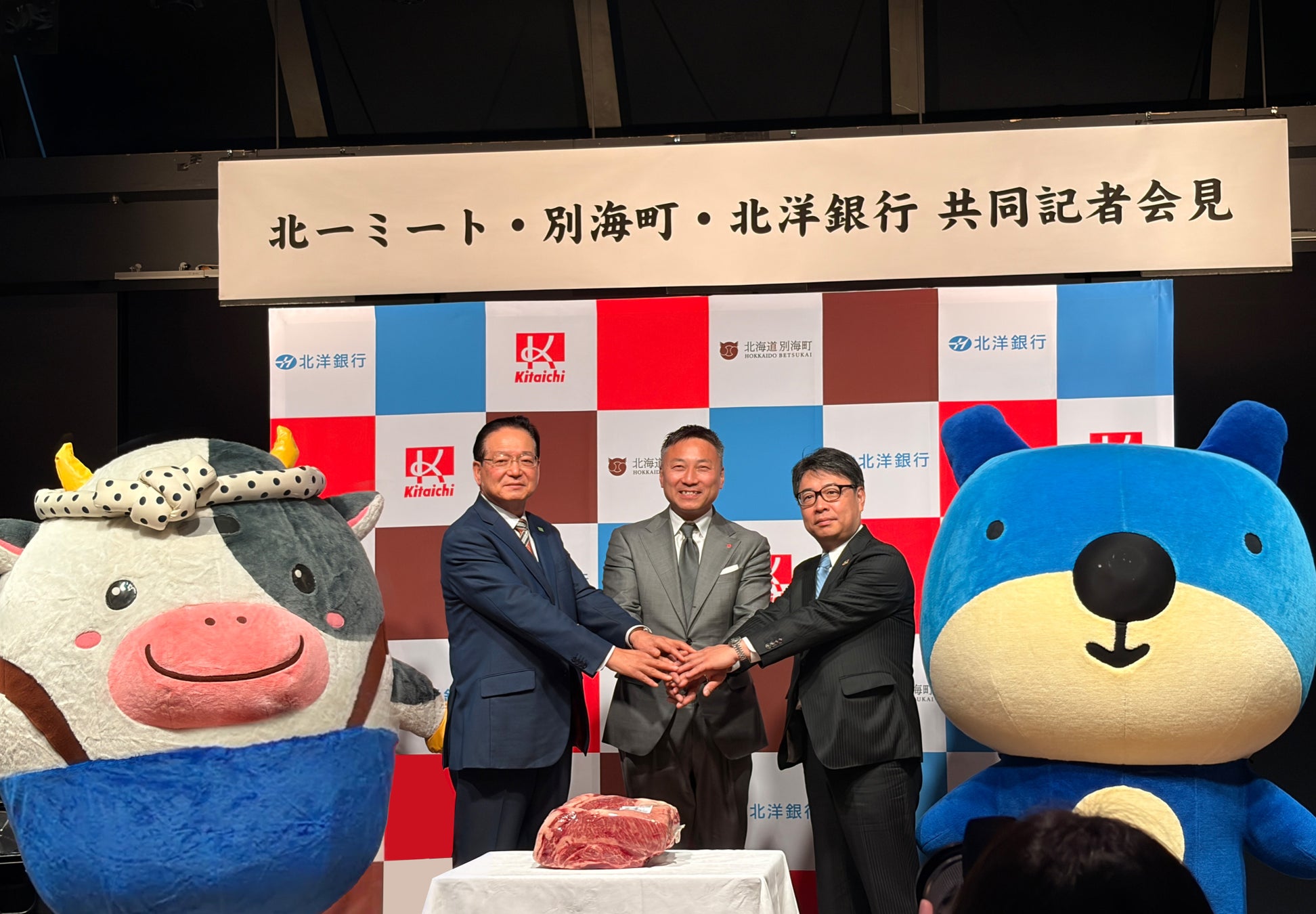
■ Shifting to a "Region-Contained Model" in Anticipation of Stricter Regulations
While furusato nozei continues to grow, post-2026 tightening of local product standards is forcing a rethink of existing business models.
Mayor Sone stated:
"Furusato nozei has grown significantly, but adapting to regulatory changes is unavoidable. Going forward, what matters is how much value we can generate within the region itself."
emphasizing the need to create value locally.
Against this backdrop, the project aims to bring processing operations—previously outsourced outside the region—back into the town, building a system that completes everything from production to processing within the local area. A key feature is minimizing initial investment by repurposing a closed school facility while maximizing the use of local resources.
■ A Public-Private-Financial Collaboration Model
Responding to regulatory tightening requires a framework that combines resources, expertise, and funding. In this project, roles are divided according to each party's strengths: Betsukai Town handles local resources and facility utilization; Kitaichi Meat manages processing and product development; and North Pacific Bank supports financing and business sustainability.
Additionally, North Pacific Bank has expanded its investment scope beyond traditional agricultural corporations to include "food industry corporations" supporting agriculture and livestock, with the entire North Pacific Bank Group providing comprehensive support including management guidance.
President & CEO Tsuyama stated:
"We will support this sustainable initiative—designed with regulatory changes in mind—as a model in which local governments, businesses, and financial institutions work together as one to support regional industry."
FAQ
What is the primary reason for Kitaichi Meat Co., Ltd. launching this new regional revitalization project?
The project is being launched in anticipation of stricter regulations on the furusato nozei (hometown tax donation) system, particularly post-2026 tightening of local product standards.
What is the core concept of the new regional revitalization project being implemented by Kitaichi Meat and Betsukai Town?
The project aims to establish a fully region-contained system, converting a closed junior high school into a meat processing facility to handle everything from production through processing within the local area.
How does the project plan to minimize initial investment costs?
The project plans to minimize initial investment by repurposing a closed junior high school facility, thereby maximizing the use of existing local resources.
Who are the key partners involved in this regional revitalization project?
The key partners are Kitaichi Meat Co., Ltd., Betsukai Town in Hokkaido, and North Pacific Bank, Ltd.
What is Mayor Sone's perspective on adapting to the changing furusato nozei regulations?
Mayor Sone emphasizes that adapting to regulatory changes is unavoidable and that the focus going forward should be on how much value can be generated within the region itself.